Mullins Elwood A, Shi Rongxin, Eichman Brandt F
Department of Biological Sciences and Center for Structural Biology, Vanderbilt University, Nashville, Tennessee, USA.
Nat Chem Biol. 2017 Sep;13(9):1002-1008. doi: 10.1038/nchembio.2439. Epub 2017 Jul 24.
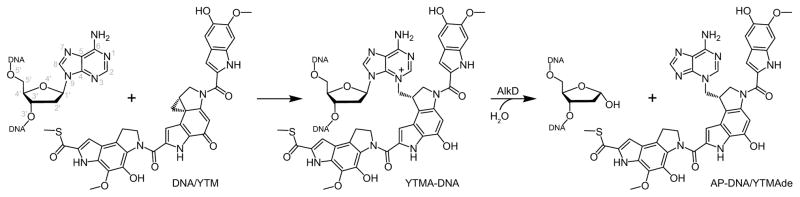
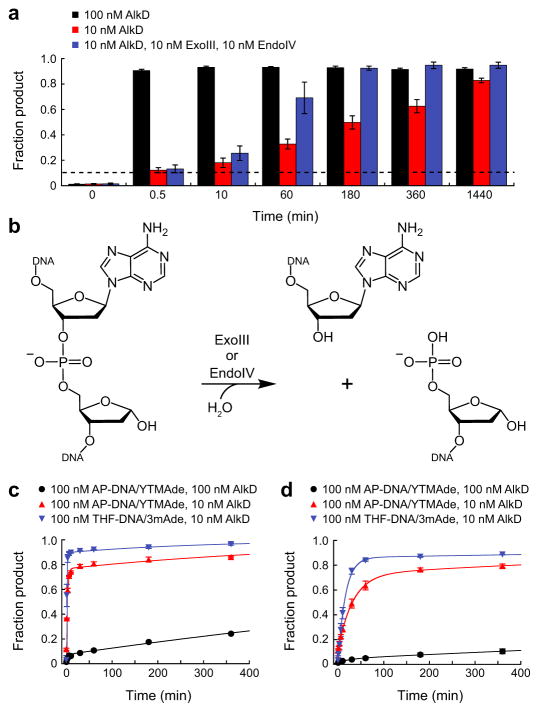
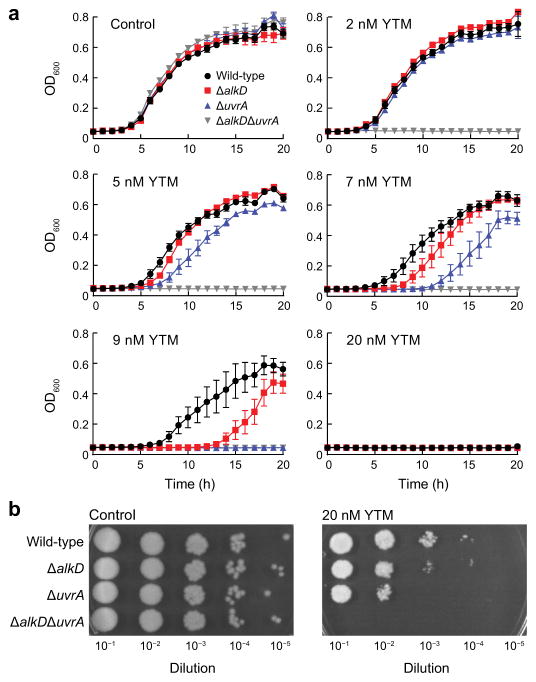
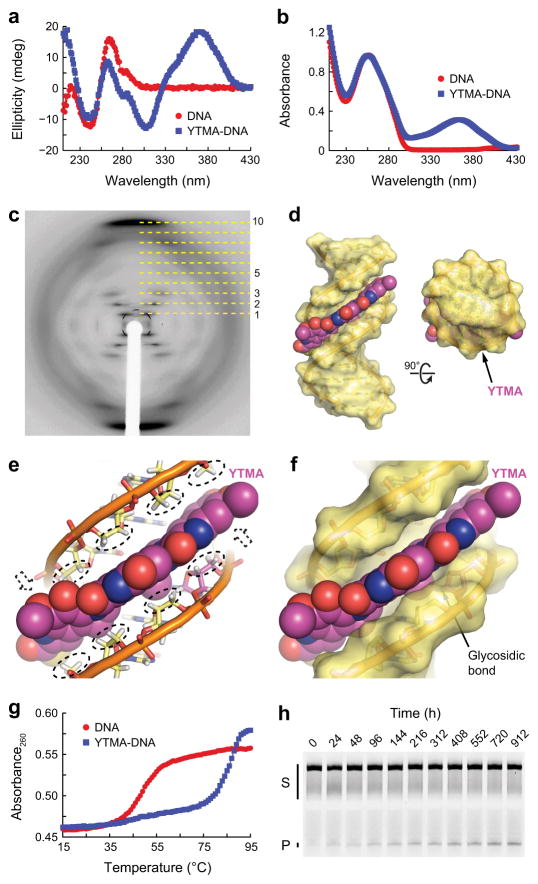
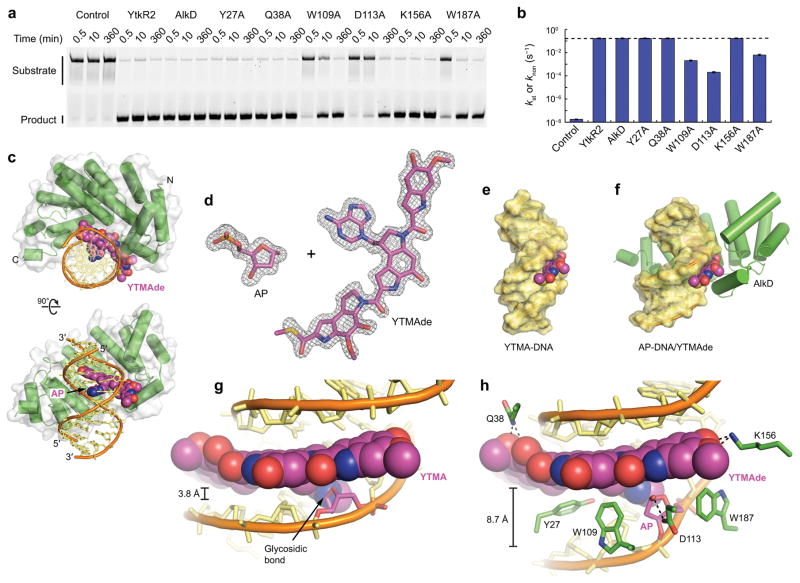
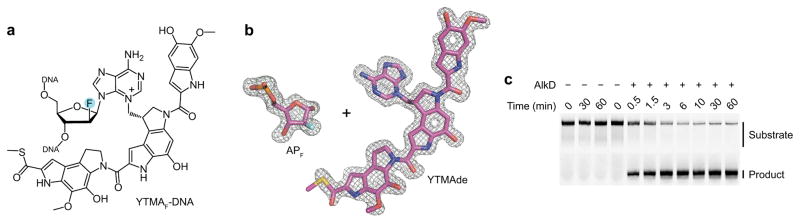
Yatakemycin (YTM) is an extraordinarily toxic DNA alkylating agent with potent antimicrobial and antitumor properties and is the most recent addition to the CC-1065 and duocarmycin family of natural products. Though bulky DNA lesions the size of those produced by YTM are normally removed from the genome by the nucleotide-excision repair (NER) pathway, YTM adducts are also a substrate for the bacterial DNA glycosylases AlkD and YtkR2, unexpectedly implicating base-excision repair (BER) in their elimination. The reason for the extreme toxicity of these lesions and the molecular basis for the way they are eliminated by BER have been unclear. Here, we describe the structural and biochemical properties of YTM adducts that are responsible for their toxicity, and define the mechanism by which they are excised by AlkD. These findings delineate an alternative strategy for repair of bulky DNA damage and establish the cellular utility of this pathway relative to that of NER.
Yatakemycin(YTM)是一种具有极强毒性的DNA烷基化剂,具有强大的抗菌和抗肿瘤特性,是CC - 1065和多卡霉素天然产物家族中的最新成员。尽管像YTM产生的那种大体积DNA损伤通常通过核苷酸切除修复(NER)途径从基因组中去除,但YTM加合物也是细菌DNA糖基化酶AlkD和YtkR2的底物,出乎意料的是,碱基切除修复(BER)参与了它们的消除过程。这些损伤具有极端毒性的原因以及它们被BER消除的分子基础一直不清楚。在这里,我们描述了导致YTM加合物毒性的结构和生化特性,并确定了AlkD切除它们的机制。这些发现描绘了一种修复大体积DNA损伤的替代策略,并确立了该途径相对于NER途径在细胞中的作用。