Pallauf Kathrin, Duckstein Nils, Hasler Mario, Klotz Lars-Oliver, Rimbach Gerald
Institute of Human Nutrition and Food Science, Christian-Albrechts-University, Kiel, Germany.
Lehrfach Variationsstatistik, Christian-Albrechts-University, Kiel, Germany.
Oxid Med Cell Longev. 2017;2017:4397340. doi: 10.1155/2017/4397340. Epub 2017 Jul 6.
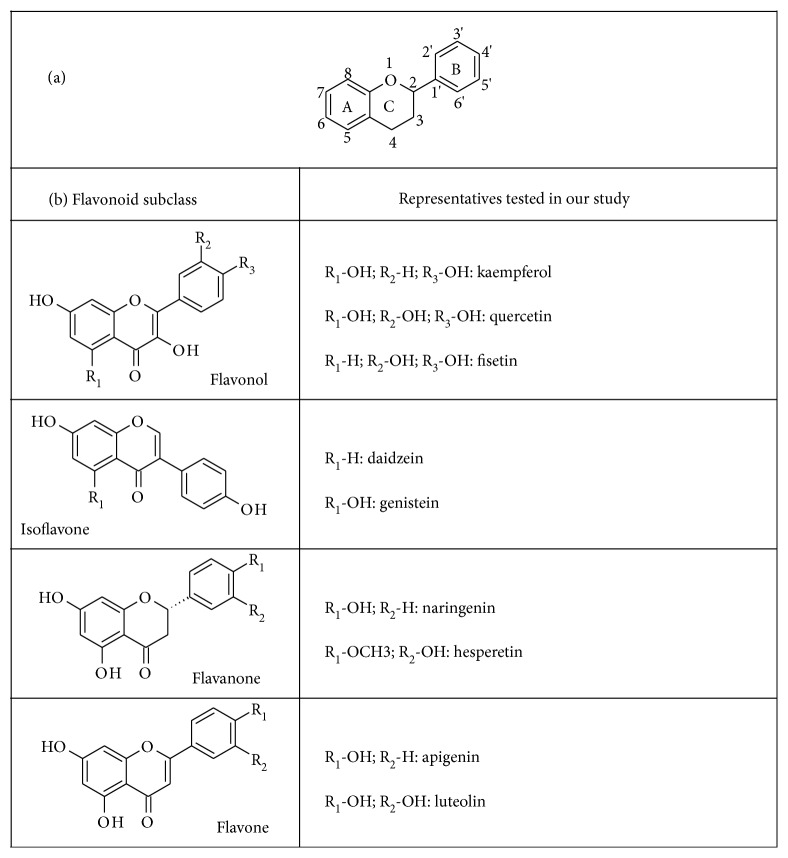
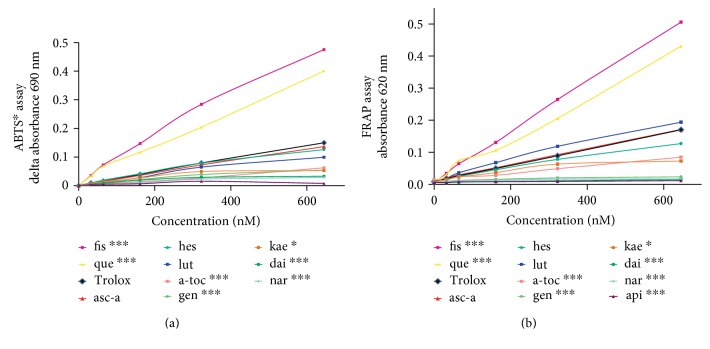
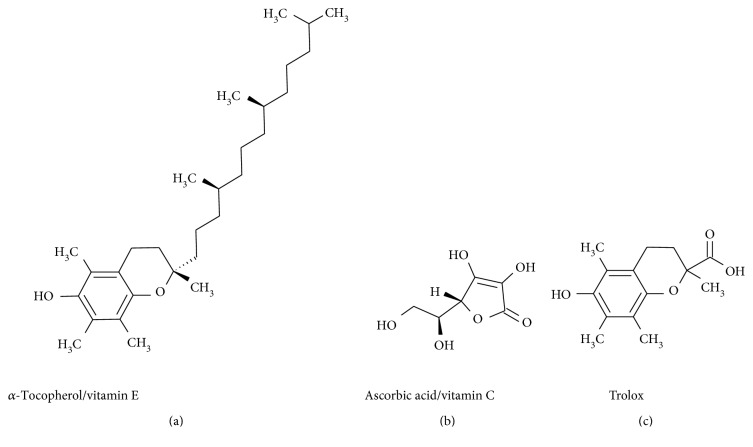
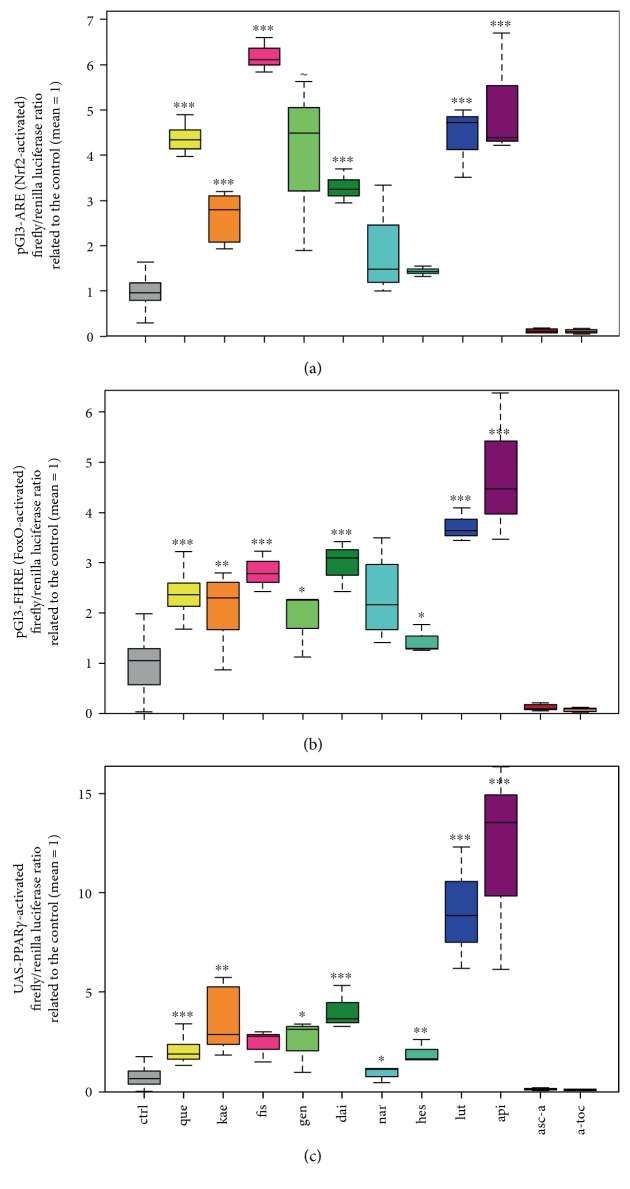
Dietary flavonoids have been shown to extend the lifespan of some model organisms and may delay the onset of chronic ageing-related diseases. Mechanistically, the effects could be explained by the compounds scavenging free radicals or modulating signalling pathways. Transcription factors Nrf2, FoxO, and PPAR possibly affect ageing by regulating stress response, adipogenesis, and insulin sensitivity. Using Hek-293 cells transfected with luciferase reporter constructs, we tested the potency of flavonoids from different subclasses (flavonols, flavones, flavanols, and isoflavones) to activate these transcription factors. Under cell-free conditions (ABTS and FRAP assays), we tested their free radical scavenging activities and used -tocopherol and ascorbic acid as positive controls. Most of the tested flavonoids, but not the antioxidant vitamins, stimulated Nrf2-, FoxO-, and PPAR-dependent promoter activities. Flavonoids activating Nrf2 also tended to induce a FoxO and PPAR response. Interestingly, activation patterns of cellular stress response by flavonoids were not mirrored by their activities in ABTS and FRAP assays, which depended mostly on hydroxylation in the flavonoid B ring and, in some cases, extended that of the vitamins. In conclusion, the free radical scavenging properties of flavonoids do not predict whether these molecules can stimulate a cellular response linked to activation of longevity-associated transcription factors.
膳食类黄酮已被证明可延长某些模式生物的寿命,并可能延缓与衰老相关的慢性疾病的发生。从机制上讲,这些作用可以通过化合物清除自由基或调节信号通路来解释。转录因子Nrf2、FoxO和PPAR可能通过调节应激反应、脂肪生成和胰岛素敏感性来影响衰老。我们使用转染了荧光素酶报告基因构建体的Hek-293细胞,测试了不同亚类(黄酮醇、黄酮、黄烷醇和异黄酮)的类黄酮激活这些转录因子的能力。在无细胞条件下(ABTS和FRAP测定),我们测试了它们的自由基清除活性,并使用α-生育酚和抗坏血酸作为阳性对照。大多数测试的类黄酮,而不是抗氧化维生素,刺激了Nrf2、FoxO和PPAR依赖的启动子活性。激活Nrf2的类黄酮也倾向于诱导FoxO和PPAR反应。有趣的是,类黄酮对细胞应激反应的激活模式与其在ABTS和FRAP测定中的活性并不一致,后者主要取决于类黄酮B环中的羟基化,在某些情况下,其活性超过了维生素。总之,类黄酮的自由基清除特性并不能预测这些分子是否能刺激与长寿相关转录因子激活相关的细胞反应。