Birkebaek N H, Drivvoll A K, Aakeson K, Bjarnason R, Johansen A, Samuelsson U, Skrivarhaug T, Thorsson A V, Svensson J
Department of Pediatrics, Aarhus University Hospital, Aarhus, Denmark.
Norwegian Childhood Diabetes Registry, Division of Pediatric and Adolescent Medicine, Oslo University Hospital, Oslo, Norway.
BMJ Open Diabetes Res Care. 2017 May 29;5(1):e000377. doi: 10.1136/bmjdrc-2016-000377. eCollection 2017.
Treatment of type 1 diabetes has been intensified aiming at normalizing blood glucose, which may increase the risk of severe hypoglycemia (SH). We aimed to compare the incidence of SH events in the four Nordic countries Denmark, Iceland, Norway and Sweden, and to assess the influence of hemoglobin A1c (HbA) and treatment modalities on the frequency of SH; particularly, to explore if a HbA target ≤6.7% (50 mmol/mol) is feasible.
Data on children below 15 years with a diabetes duration more than 1 year, registered in the national childhood diabetes databases in the four Nordic countries from 2008 to 2012, were compiled. Data completeness was more than 95%.
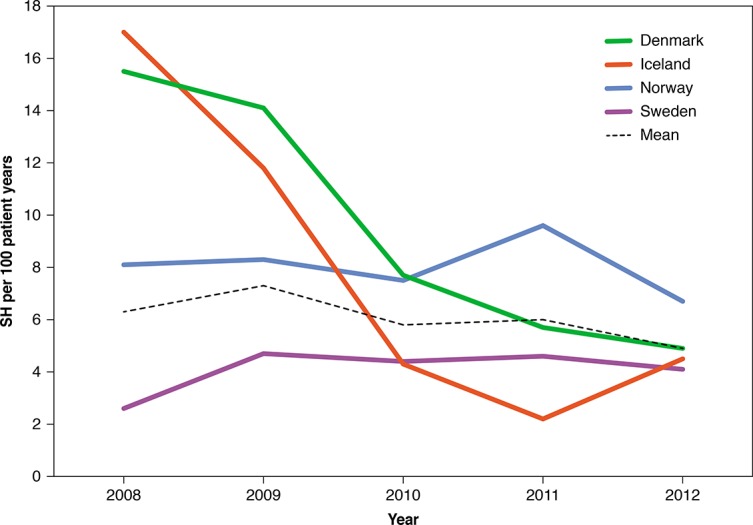
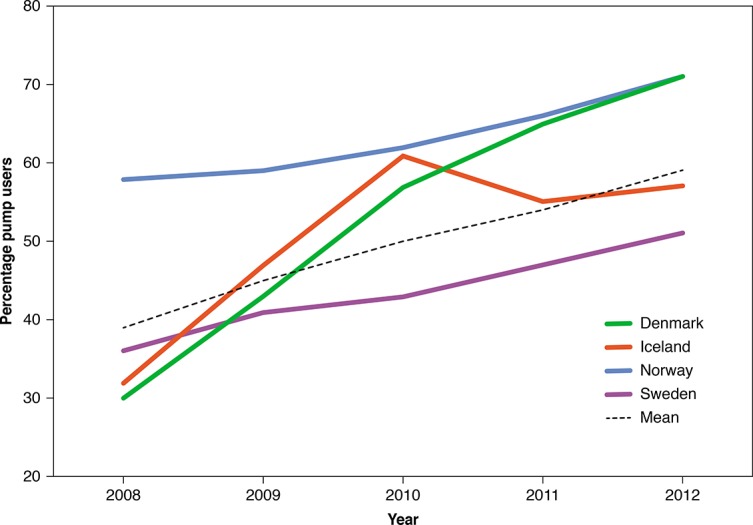
Totally 8806 (48% females) patients with 29 715 person years were included, mean age and diabetes duration were 11 years and 5.1 years, respectively. The overall rate of SH was 6.0 per 100 patient-years, and did not change during the study period. The Swedish population constantly had the lowest SH incidence while it decreased significantly in the Danish population. HbA decreased significantly over time (p<0.01), while the number of pump users increased (p<0.01). Stratifying for HbA levels showed the lowest risk of SH in patients with HbA ≤6.7% (≤50 mmol/mol), but in the statistical models adjusting for possible confounders the difference between the HbA groups disappeared. Pump users had the lowest SH risk, also after adjusting for possible confounders.
Risk of SH differs between the Nordic countries with the lowest risk in Sweden. Pump therapy was associated with decreased risk of SH. The low HbA group had the same or a lower risk of SH compared with the highest HbA groups. A target HbA ≤6.7% (≤50 mmol/mol) seems achievable without increasing the risk of SH.
1型糖尿病的治疗已强化至血糖正常化,这可能会增加严重低血糖(SH)风险。我们旨在比较丹麦、冰岛、挪威和瑞典这四个北欧国家SH事件的发生率,并评估糖化血红蛋白(HbA)和治疗方式对SH发生频率的影响;特别是探讨HbA目标≤6.7%(50 mmol/mol)是否可行。
汇总了2008年至2012年在四个北欧国家的国家儿童糖尿病数据库中登记的糖尿病病程超过1年的15岁以下儿童的数据。数据完整性超过95%。
共纳入8806例患者(48%为女性),总计29715人年,平均年龄和糖尿病病程分别为11岁和5.1年。SH的总体发生率为每100患者年6.0次,在研究期间没有变化。瑞典人群的SH发生率一直最低,而丹麦人群的发生率显著下降。随着时间推移,HbA显著降低(p<0.01),而使用胰岛素泵的人数增加(p<0.01)。按HbA水平分层显示,HbA≤6.7%(≤50 mmol/mol)的患者SH风险最低,但在调整可能的混杂因素的统计模型中,HbA组之间的差异消失。即使在调整可能的混杂因素后,使用胰岛素泵的患者SH风险也最低。
北欧国家之间SH风险存在差异,瑞典风险最低。胰岛素泵治疗与SH风险降低相关。与HbA最高的组相比,HbA低的组SH风险相同或更低。HbA目标≤6.7%(≤50 mmol/mol)似乎可以实现,而不会增加SH风险。