Ross Ashley A, Doxey Andrew C, Neufeld Josh D
Department of Biology, University of Waterloo, Waterloo, Ontario, Canada.
mSystems. 2017 Jul 20;2(4). doi: 10.1128/mSystems.00043-17. eCollection 2017 Jul-Aug.
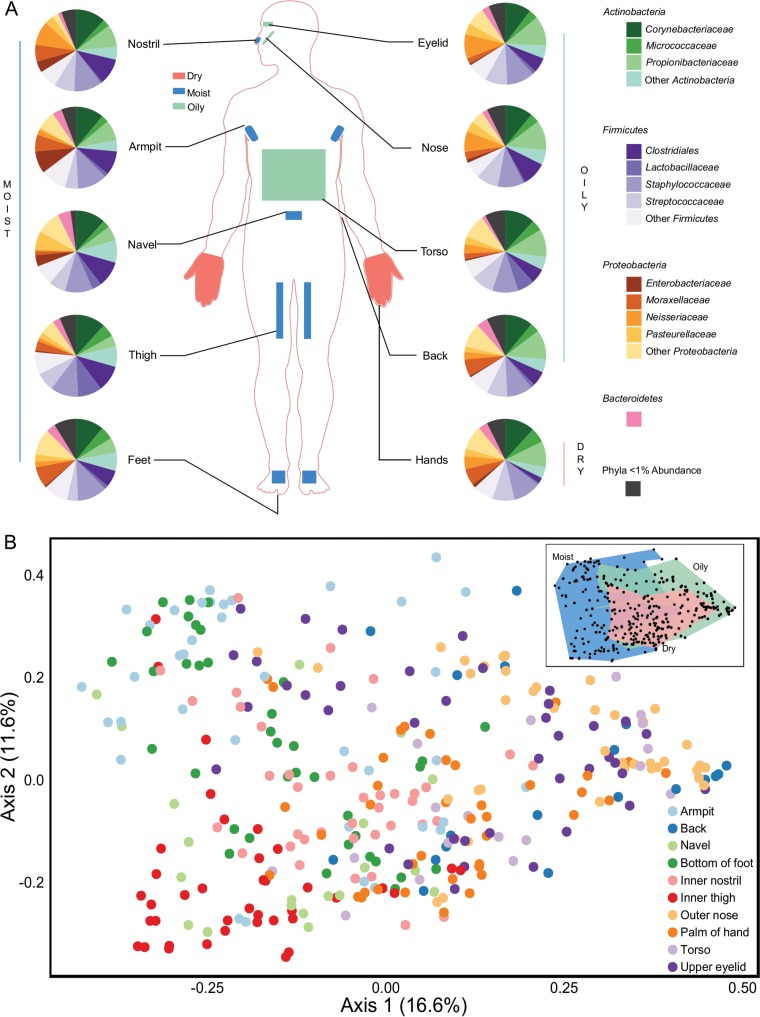
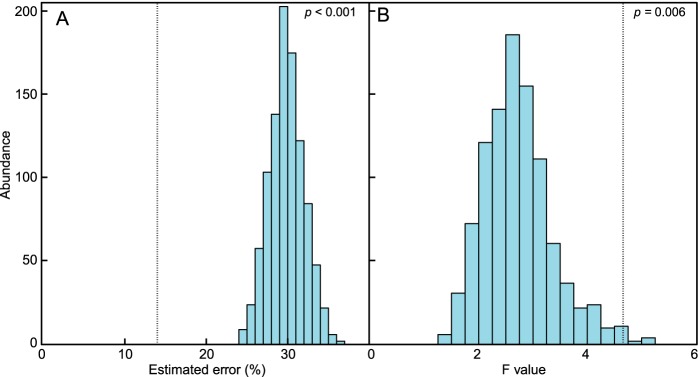
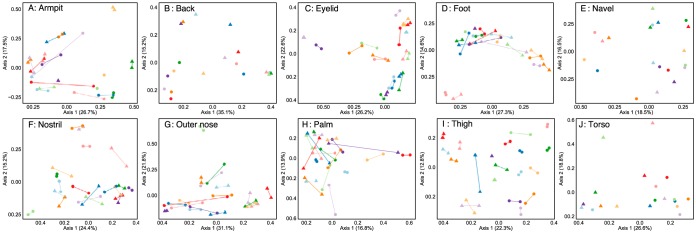
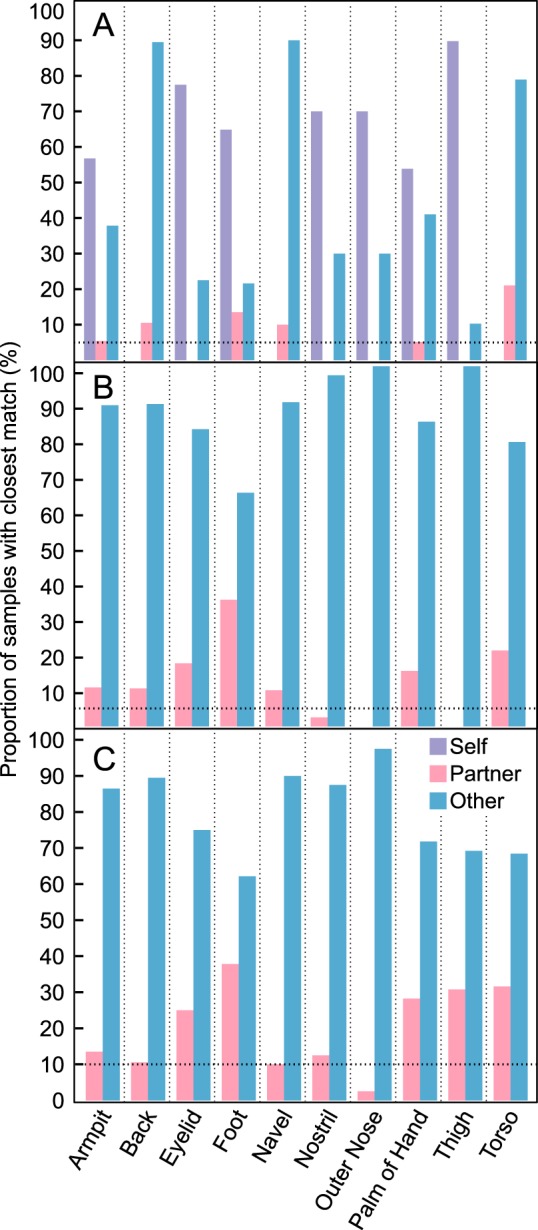
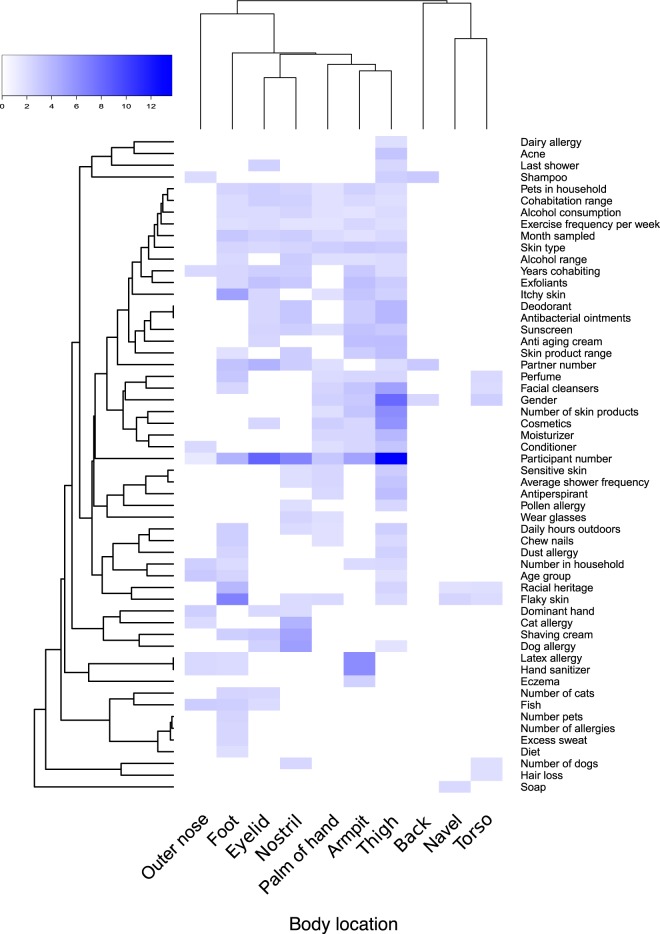
Distinct microbial communities inhabit individuals as part of the human skin microbiome and are continually shed to the surrounding environment. Microbial communities from 17 skin sites of 10 sexually active cohabiting couples (20 individuals) were sampled to test whether cohabitation impacts an individual's skin microbiome, leading to shared skin microbiota among partner pairs. Amplified 16S rRNA genes of bacteria and archaea from a total of 340 skin swabs were analyzed by high-throughput sequencing, and the results demonstrated that cohabitation was significantly associated with microbial community composition, although this association was greatly exceeded by characteristics of body location and individuality. Random forest modeling demonstrated that the partners could be predicted 86% of the time ( < 0.001) based on their skin microbiome profiles, which was always greater than combinations of incorrectly matched partners. Cohabiting couples had the most similar overall microbial skin communities on their feet, according to Bray-Curtis distances. In contrast, thigh microbial communities were strongly associated with biological sex rather than cohabiting partner. Additional factors that were associated with the skin microbiome of specific body locations included the use of skin care products, pet ownership, allergies, and alcohol consumption. These baseline data identified links between the skin microbiome and daily interactions among cohabiting individuals, adding to known factors that shape the human microbiome and, by extension, its relation to human health. Our work characterizes the influence of cohabitation as a factor influencing the composition of the skin microbiome. Although the body site and sampled individual were stronger influences than other factors collected as metadata in this study, we show that modeling of detected microbial taxa can help with correct identifications of cohabiting partners based on skin microbiome profiles using machine learning approaches. These results show that a cohabiting partner can significantly influence our microbiota. Follow-up studies will be important for investigating the implications of shared microbiota on dermatological health and the contributions of cohabiting parents to the microbiome profiles of their infants.
作为人类皮肤微生物群的一部分,不同的微生物群落栖息在个体身上,并不断脱落到周围环境中。对10对性活跃的同居伴侣(20人)的17个皮肤部位的微生物群落进行了采样,以测试同居是否会影响个体的皮肤微生物群,从而导致伴侣之间共享皮肤微生物群。通过高通量测序分析了总共340个皮肤拭子中细菌和古菌的16S rRNA基因扩增产物,结果表明同居与微生物群落组成显著相关,尽管这种关联在很大程度上被身体部位和个体特征所超越。随机森林模型显示,根据伴侣的皮肤微生物群特征,有86%的概率(<0.001)可以预测出伴侣关系,这一概率始终高于错误配对伴侣的组合。根据布雷-柯蒂斯距离,同居伴侣脚部的整体微生物皮肤群落最为相似。相比之下,大腿微生物群落与生物性别而非同居伴侣密切相关。与特定身体部位皮肤微生物群相关的其他因素包括护肤品的使用、养宠物、过敏和饮酒。这些基线数据确定了皮肤微生物群与同居个体日常互动之间的联系,补充了已知的影响人类微生物群的因素,进而补充了其与人类健康的关系。我们的工作描述了同居作为影响皮肤微生物群组成的一个因素的影响。尽管在本研究中,身体部位和采样个体比作为元数据收集的其他因素影响更大,但我们表明,利用机器学习方法,对检测到的微生物分类群进行建模有助于根据皮肤微生物群特征正确识别同居伴侣。这些结果表明,同居伴侣可以显著影响我们的微生物群。后续研究对于调查共享微生物群对皮肤病健康的影响以及同居父母对其婴儿微生物群特征的贡献至关重要。