Mapuskar Kranti A, Flippo Kyle H, Schoenfeld Joshua D, Riley Dennis P, Strack Stefan, Hejleh Taher Abu, Furqan Muhammad, Monga Varun, Domann Frederick E, Buatti John M, Goswami Prabhat C, Spitz Douglas R, Allen Bryan G
Department of Radiation Oncology, The University of Iowa, Iowa City, Iowa.
Department of Pharmacology, The University of Iowa, Iowa City, Iowa.
Cancer Res. 2017 Sep 15;77(18):5054-5067. doi: 10.1158/0008-5472.CAN-17-0106. Epub 2017 Aug 1.
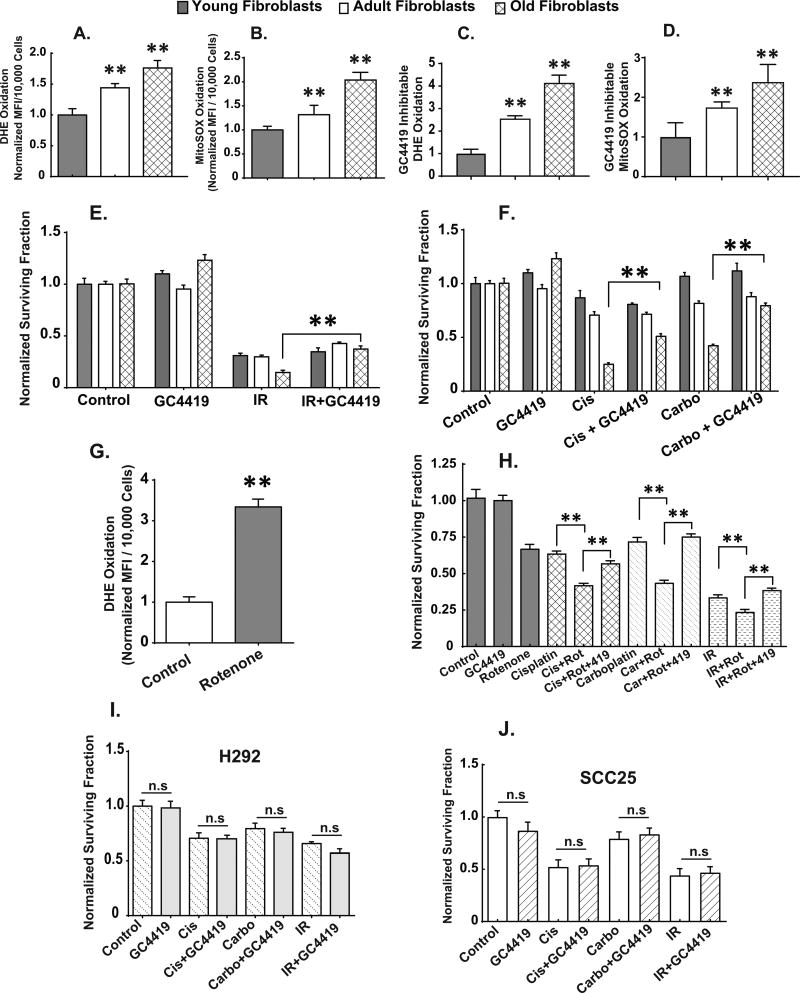
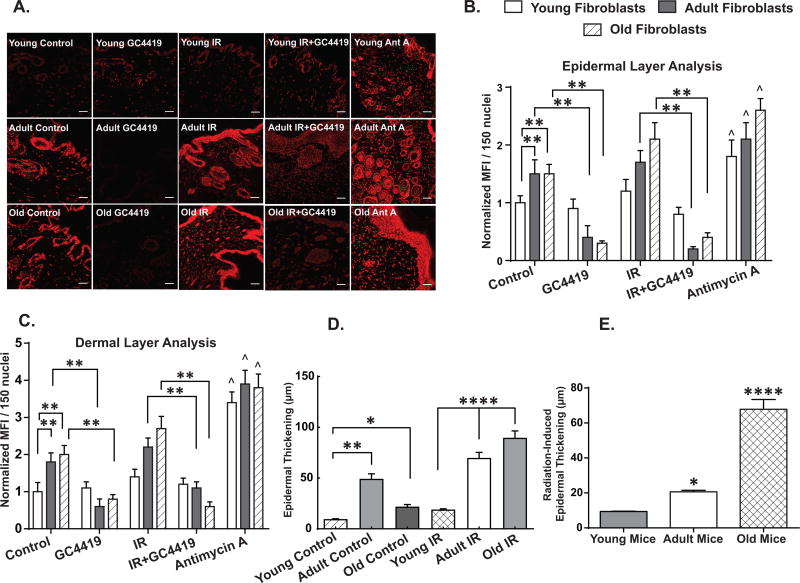
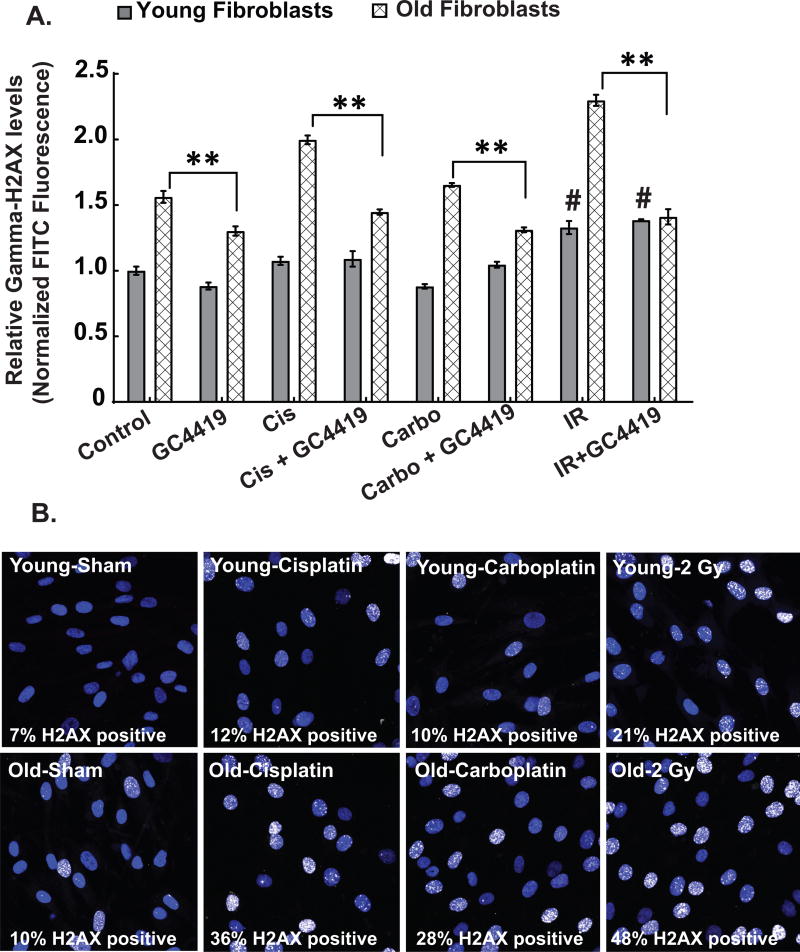
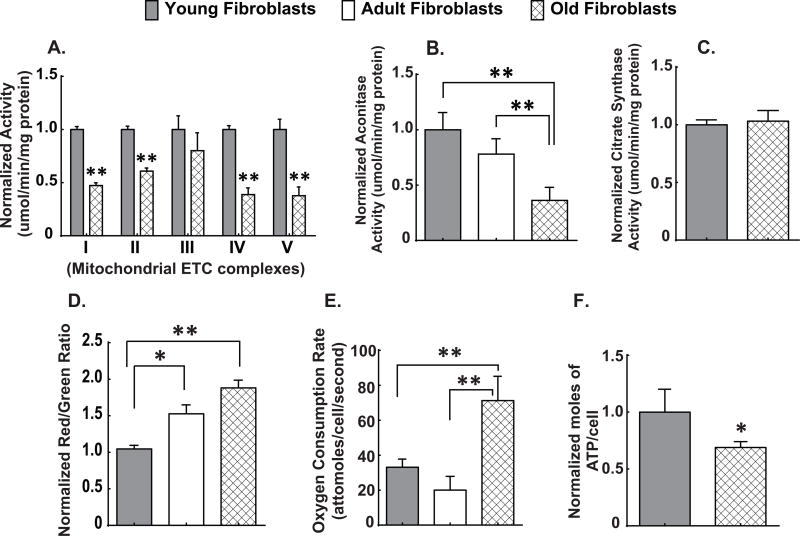
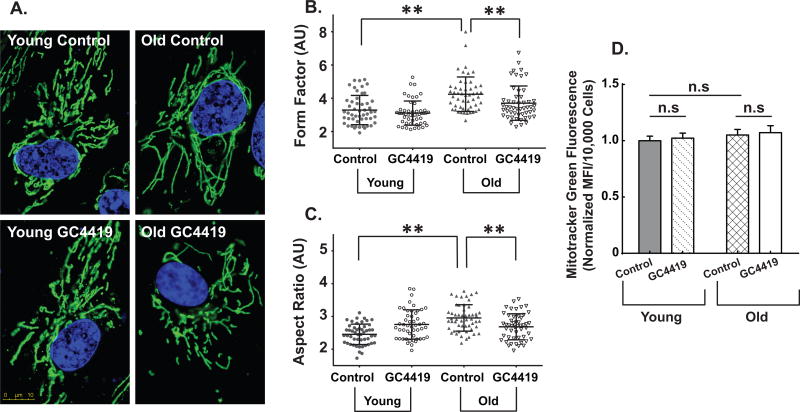
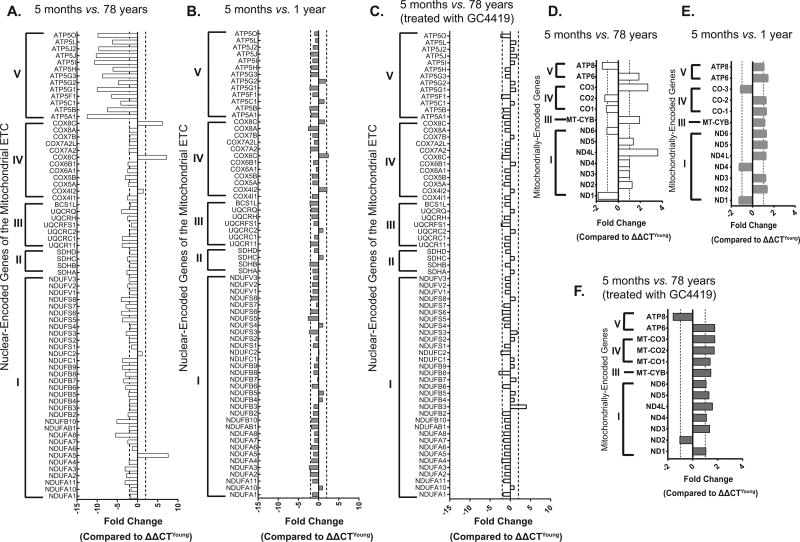
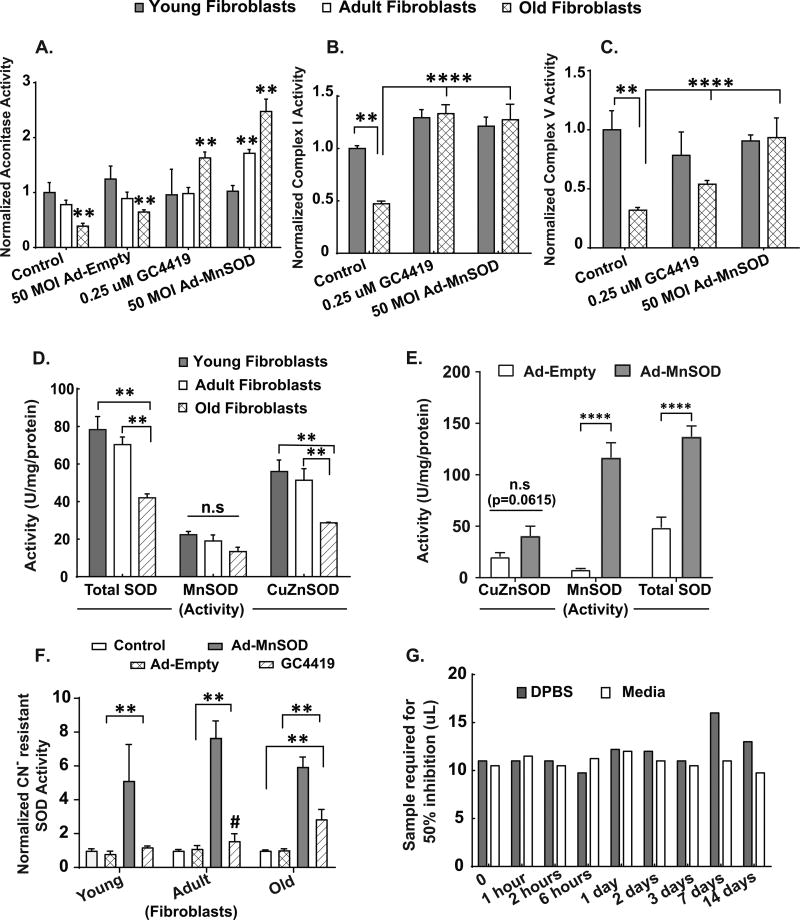
Elderly cancer patients treated with ionizing radiation (IR) or chemotherapy experience more frequent and greater normal tissue toxicity relative to younger patients. The current study demonstrates that exponentially growing fibroblasts from elderly (old) male donor subjects (70, 72, and 78 years) are significantly more sensitive to clonogenic killing mediated by platinum-based chemotherapy and IR (∼70%-80% killing) relative to young fibroblasts (5 months and 1 year; ∼10%-20% killing) and adult fibroblasts (20 years old; ∼10%-30% killing). Old fibroblasts also displayed significantly increased (2-4-fold) steady-state levels of O, O consumption, and mitochondrial membrane potential as well as significantly decreased (40%-50%) electron transport chain (ETC) complex I, II, IV, V, and aconitase (70%) activities, decreased ATP levels, and significantly altered mitochondrial structure. Following adenoviral-mediated overexpression of SOD2 activity (5-7-fold), mitochondrial ETC activity and aconitase activity were restored, demonstrating a role for mitochondrial O in these effects. Old fibroblasts also demonstrated elevated levels of endogenous DNA damage that were increased following treatment with IR and chemotherapy. Most importantly, treatment with the small-molecule, superoxide dismutase mimetic (GC4419; 0.25 μmol/L) significantly mitigated the increased sensitivity of old fibroblasts to IR and chemotherapy and partially restored mitochondrial function without affecting IR or chemotherapy-induced cancer cell killing. These results support the hypothesis that age-associated increased O and resulting DNA damage mediate the increased susceptibility of old fibroblasts to IR and chemotherapy that can be mitigated by GC4419. .
与年轻患者相比,接受电离辐射(IR)或化疗的老年癌症患者出现正常组织毒性的频率更高、程度更严重。当前研究表明,来自老年(70、72和78岁)男性供体的指数生长期成纤维细胞,相对于年轻成纤维细胞(5个月和1岁;杀伤率约为10%-20%)和成年成纤维细胞(20岁;杀伤率约为10%-30%),对铂类化疗和IR介导的克隆形成杀伤更为敏感(杀伤率约为70%-80%)。老年成纤维细胞还表现出O、O消耗量和线粒体膜电位的稳态水平显著升高(2-4倍),以及电子传递链(ETC)复合体I、II、IV、V和乌头酸酶(70%)的活性显著降低(40%-50%),ATP水平降低,线粒体结构显著改变。在腺病毒介导的超氧化物歧化酶2(SOD2)活性过表达(5-7倍)后,线粒体ETC活性和乌头酸酶活性得以恢复,表明线粒体O在这些效应中发挥作用。老年成纤维细胞还表现出内源性DNA损伤水平升高,在接受IR和化疗后进一步增加。最重要的是,用小分子超氧化物歧化酶模拟物(GC44-19;0.25μmol/L)治疗可显著减轻老年成纤维细胞对IR和化疗的敏感性增加,并部分恢复线粒体功能,而不影响IR或化疗诱导的癌细胞杀伤。这些结果支持以下假设:与年龄相关的O增加及由此导致的DNA损伤介导了老年成纤维细胞对IR和化疗的易感性增加,而GC4419可减轻这种易感性。