Pikula Jiri, Amelon Sybill K, Bandouchova Hana, Bartonička Tomáš, Berkova Hana, Brichta Jiri, Hooper Sarah, Kokurewicz Tomasz, Kolarik Miroslav, Köllner Bernd, Kovacova Veronika, Linhart Petr, Piacek Vladimir, Turner Gregory G, Zukal Jan, Martínková Natália
Department of Ecology and Diseases of Game, Fish and Bees, University of Veterinary and Pharmaceutical Sciences Brno, Brno, Czech Republic.
CEITEC-Central European Institute of Technology, University of Veterinary and Pharmaceutical Sciences Brno, Brno, Czech Republic.
PLoS One. 2017 Aug 2;12(8):e0180435. doi: 10.1371/journal.pone.0180435. eCollection 2017.
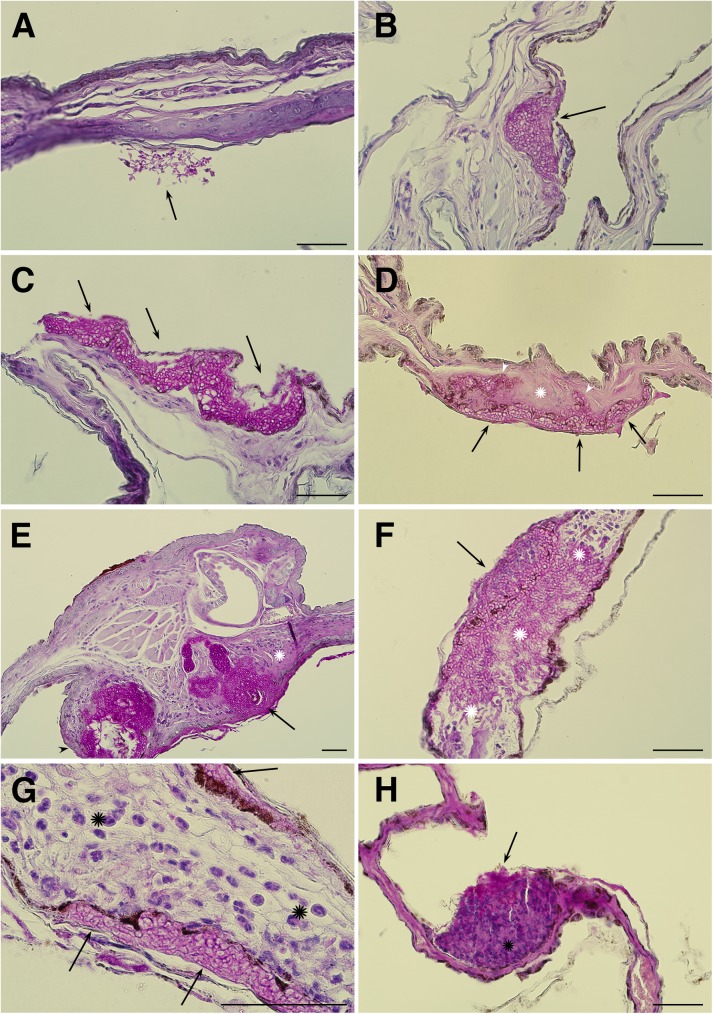
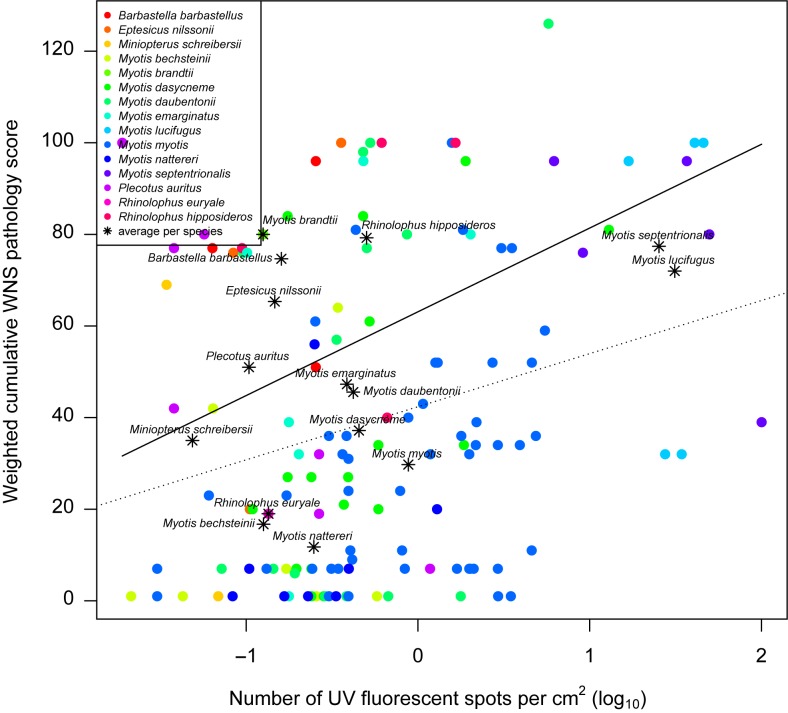
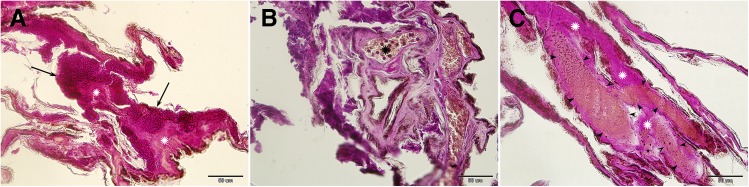
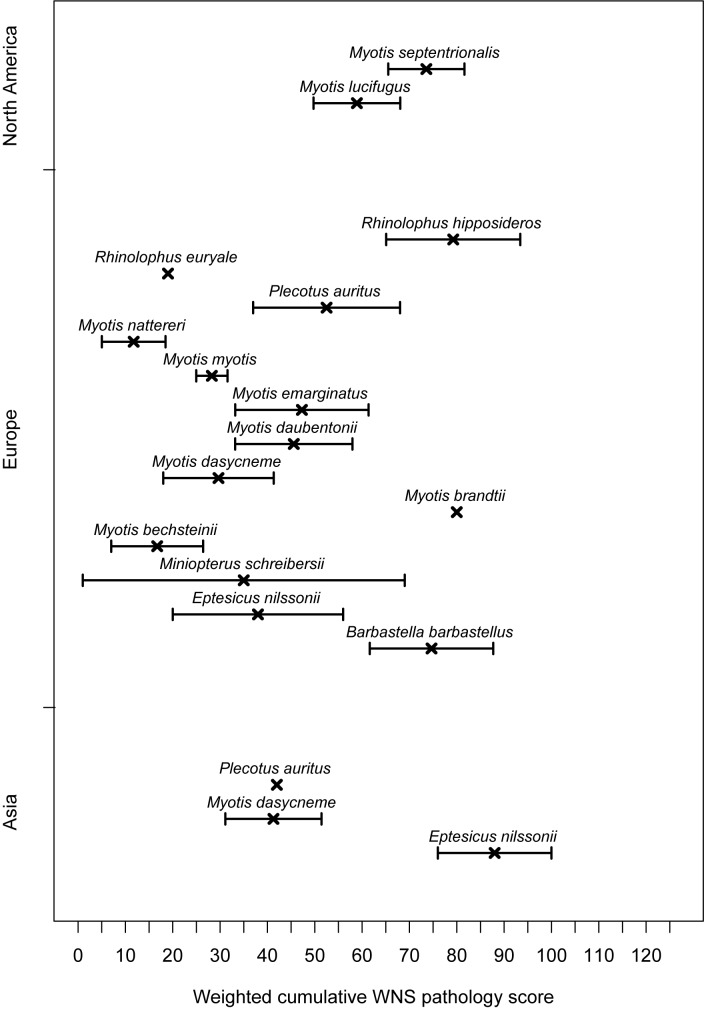
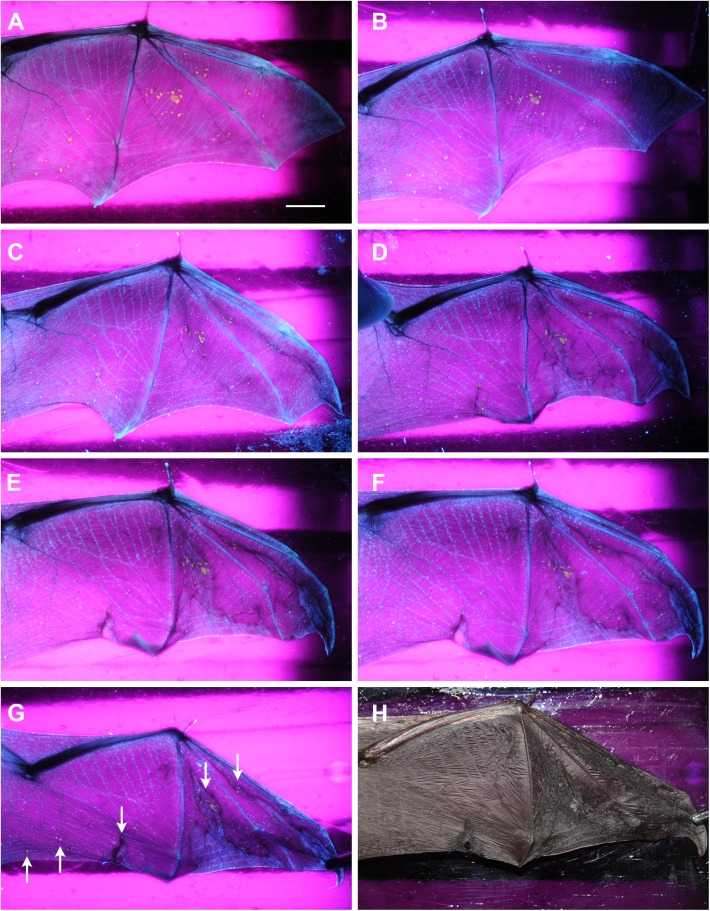
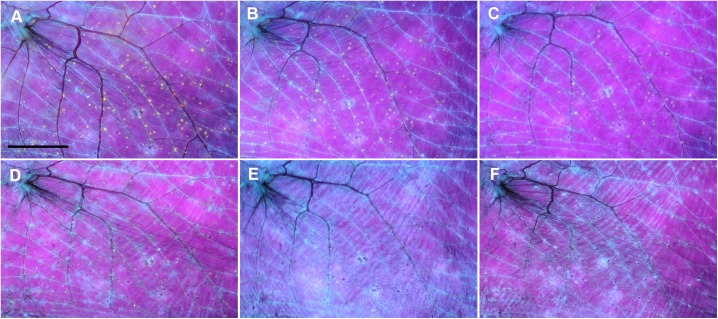
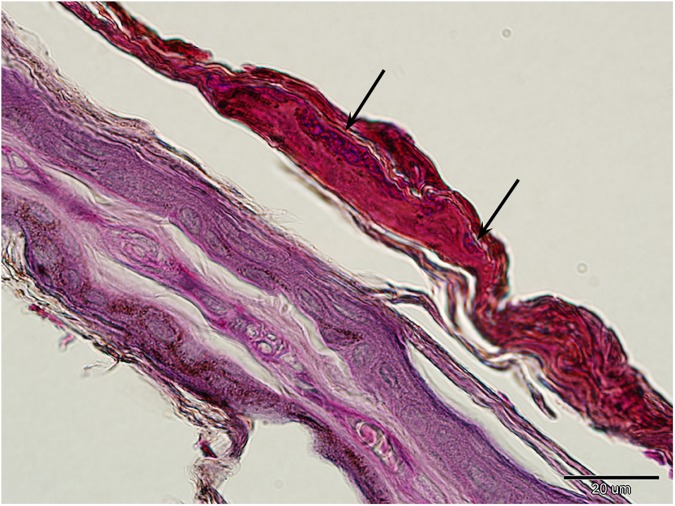
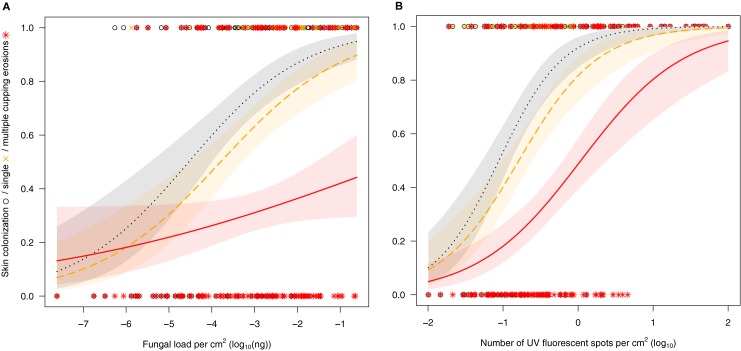
While white-nose syndrome (WNS) has decimated hibernating bat populations in the Nearctic, species from the Palearctic appear to cope better with the fungal skin infection causing WNS. This has encouraged multiple hypotheses on the mechanisms leading to differential survival of species exposed to the same pathogen. To facilitate intercontinental comparisons, we proposed a novel pathogenesis-based grading scheme consistent with WNS diagnosis histopathology criteria. UV light-guided collection was used to obtain single biopsies from Nearctic and Palearctic bat wing membranes non-lethally. The proposed scheme scores eleven grades associated with WNS on histopathology. Given weights reflective of grade severity, the sum of findings from an individual results in weighted cumulative WNS pathology score. The probability of finding fungal skin colonisation and single, multiple or confluent cupping erosions increased with increase in Pseudogymnoascus destructans load. Increasing fungal load mimicked progression of skin infection from epidermal surface colonisation to deep dermal invasion. Similarly, the number of UV-fluorescent lesions increased with increasing weighted cumulative WNS pathology score, demonstrating congruence between WNS-associated tissue damage and extent of UV fluorescence. In a case report, we demonstrated that UV-fluorescence disappears within two weeks of euthermy. Change in fluorescence was coupled with a reduction in weighted cumulative WNS pathology score, whereby both methods lost diagnostic utility. While weighted cumulative WNS pathology scores were greater in the Nearctic than Palearctic, values for Nearctic bats were within the range of those for Palearctic species. Accumulation of wing damage probably influences mortality in affected bats, as demonstrated by a fatal case of Myotis daubentonii with natural WNS infection and healing in Myotis myotis. The proposed semi-quantitative pathology score provided good agreement between experienced raters, showing it to be a powerful and widely applicable tool for defining WNS severity.
虽然白鼻综合征(WNS)已使新北界的冬眠蝙蝠种群数量锐减,但古北界的物种似乎能更好地应对导致WNS的真菌皮肤感染。这引发了多种关于导致接触同一病原体的物种有不同存活率的机制的假说。为便于进行洲际比较,我们提出了一种基于发病机制的新型分级方案,该方案与WNS诊断组织病理学标准一致。采用紫外线引导采集法,从新北界和古北界蝙蝠的翼膜上非致死性地获取单个活检样本。所提出的方案根据组织病理学对与WNS相关的11个等级进行评分。根据等级严重程度赋予权重,个体的各项检查结果之和得出加权累积WNS病理评分。随着毁灭柱孢菌负荷的增加,发现真菌皮肤定植以及单个、多个或融合性杯状糜烂的概率也增加。真菌负荷增加模拟了皮肤感染从表皮表面定植到真皮深层侵袭的进展过程。同样,紫外线荧光病变的数量随着加权累积WNS病理评分的增加而增加,表明与WNS相关的组织损伤和紫外线荧光程度之间具有一致性。在一份病例报告中,我们证明紫外线荧光在体温恢复正常后的两周内消失。荧光变化与加权累积WNS病理评分的降低相关联,两种方法均失去诊断效用。虽然新北界蝙蝠的加权累积WNS病理评分高于古北界,但新北界蝙蝠的值仍在古北界物种的范围内。翼部损伤的累积可能会影响受感染蝙蝠的死亡率,如一只自然感染WNS的达氏鼠耳蝠死亡病例以及一只鼠耳蝠康复病例所示。所提出的半定量病理评分在经验丰富的评估者之间具有良好的一致性,表明它是定义WNS严重程度的一种强大且广泛适用的工具。