Palasio Raquel Gardini Sanches, Guimarães Marisa Cristina de Almeida, Ohlweiler Fernanda Pires, Tuan Roseli
Department of Epidemiology, Faculty of Public Health, University of São Paulo, Pinheiros, SP, Brazil.
Biochemistry and Molecular Biology Laboratory, Superintendency for the Control of Endemic Diseases, Rua Paula Sousa, 166, Luz, São Paulo, SP, Brazil.
Zookeys. 2017 Apr 12(668):11-32. doi: 10.3897/zookeys.668.10562. eCollection 2017.
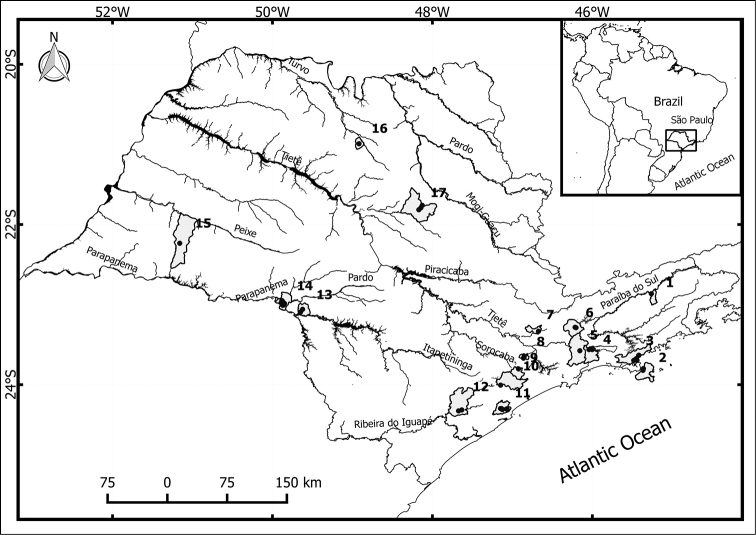
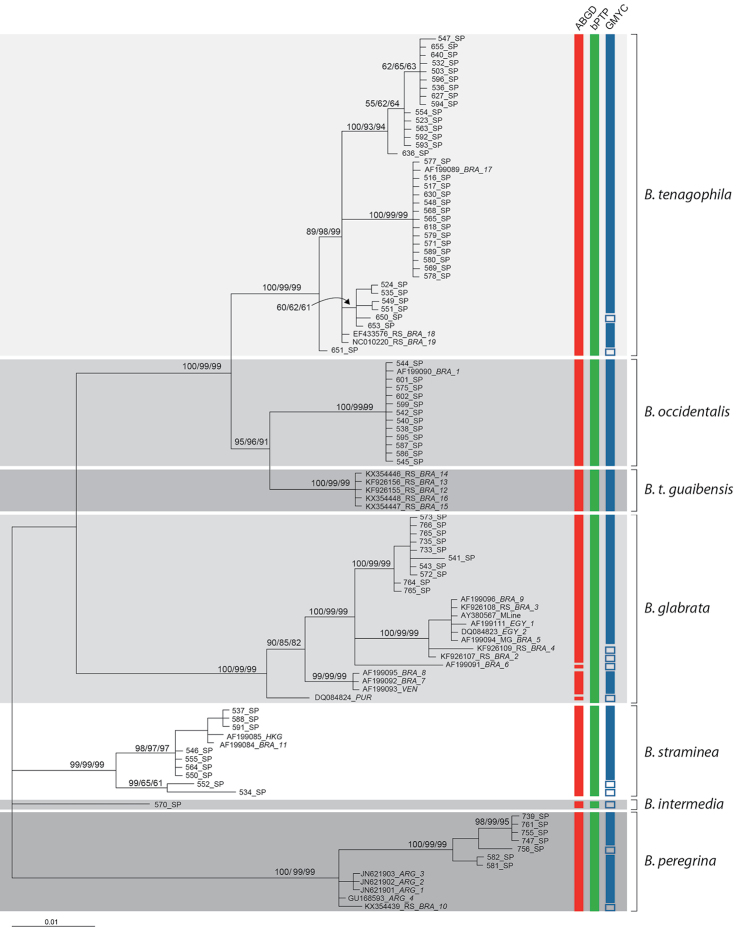
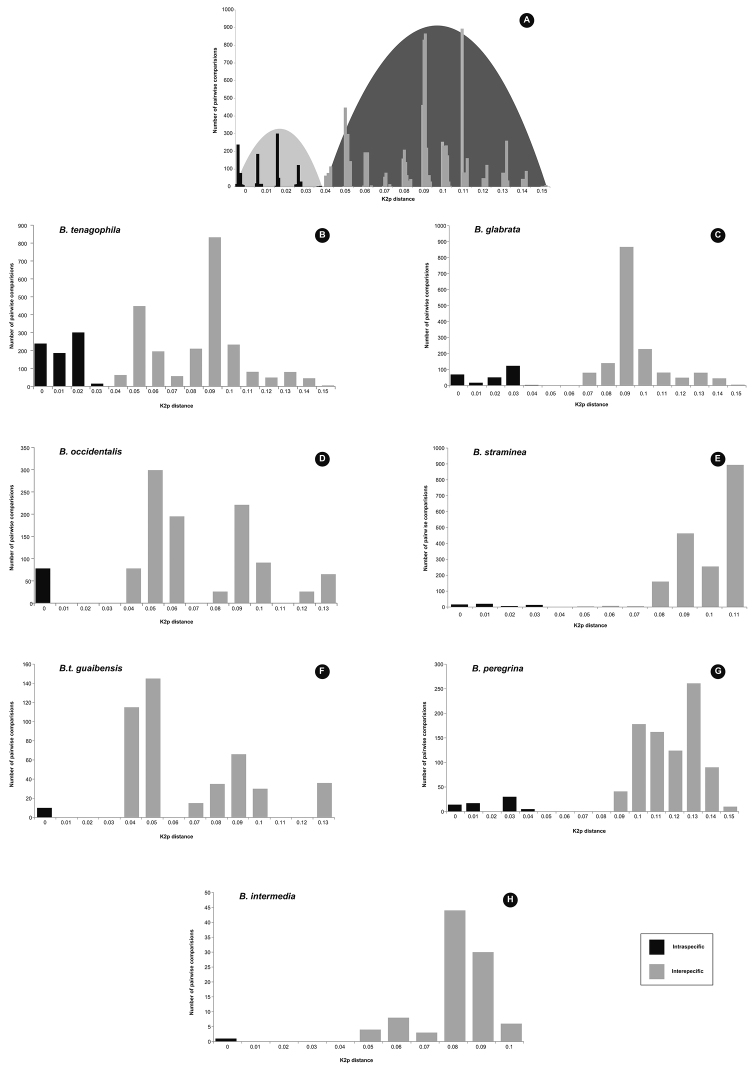
DNA barcoding and morphological characters were used to identify adult snails belonging to the genus from 17 municipalities in the state of São Paulo, Brazil. The DNA barcode analysis also included twenty-nine sequences retrieved from GenBank. The final data set of 104 sequences of the mitochondrial cytochrome oxidase I (COI) gene was analyzed for K2P intraspecific and interspecific divergences, through tree-reconstruction methods (Neighbor-Joining, Maximum Likelihood and Bayesian inference), and by applying different models (ABGD, bPTP, GMYC) to partition the sequences according to the pattern of genetic variation. Twenty-seven morphological parameters of internal organs were used to identify specimens. The molecular taxonomy of agreed with the morphological identification of specimens from the same collection locality. DNA barcoding may therefore be a useful supporting tool for identifying snails in areas at risk for schistosomiasis.
利用DNA条形码和形态特征对来自巴西圣保罗州17个市的成年蜗牛进行属级鉴定。DNA条形码分析还包括从GenBank中检索到的29个序列。通过树重建方法(邻接法、最大似然法和贝叶斯推断),并应用不同模型(ABGD、bPTP、GMYC)根据遗传变异模式对线粒体细胞色素氧化酶I(COI)基因的104个序列的最终数据集进行K2P种内和种间差异分析,以划分序列。使用27个内部器官的形态学参数来鉴定标本。该属的分子分类与来自同一采集地点的标本的形态学鉴定结果一致。因此,DNA条形码可能是在血吸虫病高危地区鉴定蜗牛的有用辅助工具。