Ryun Seokyun, Kim June S, Jeon Eunjeong, Chung Chun K
Interdisciplinary Program in Neuroscience, Seoul National University College of Natural SciencesSeoul, South Korea.
Department of Brain and Cognitive Sciences, Seoul National University College of Natural SciencesSeoul, South Korea.
Front Neurosci. 2017 Jul 14;11:408. doi: 10.3389/fnins.2017.00408. eCollection 2017.
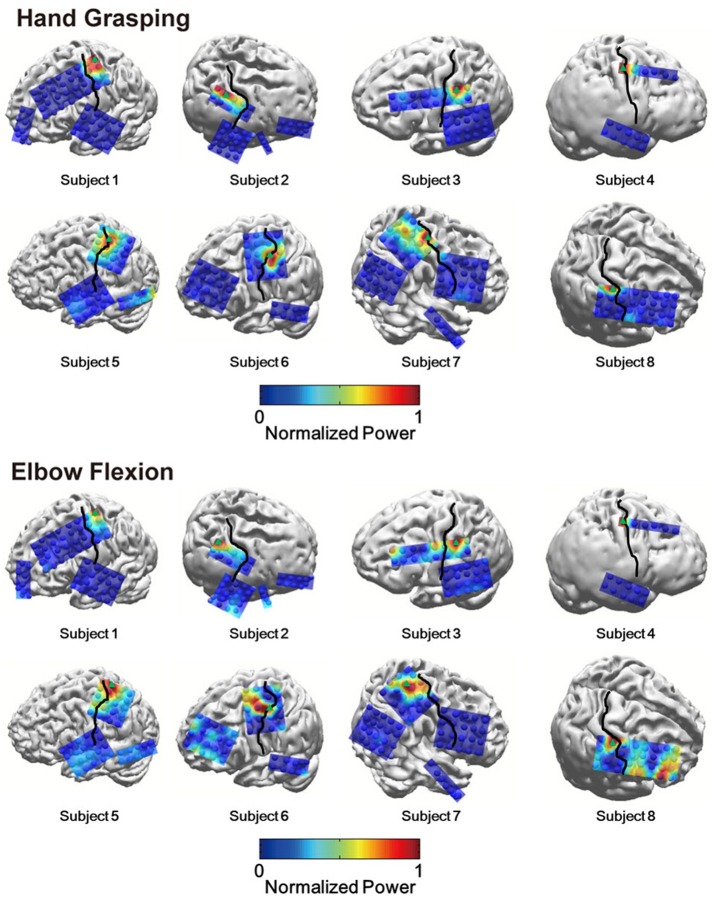
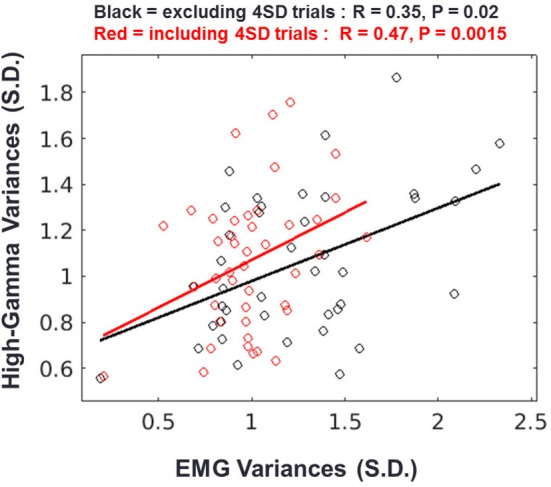
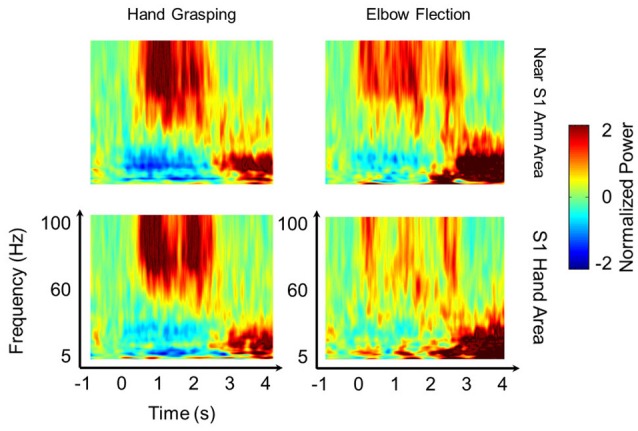
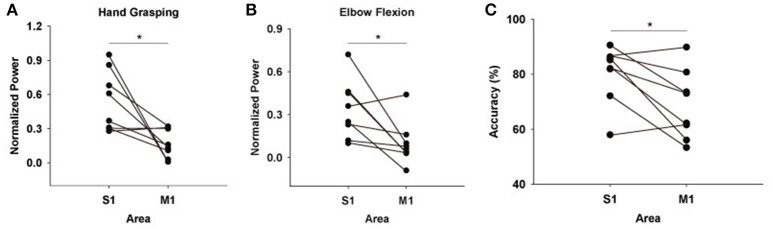
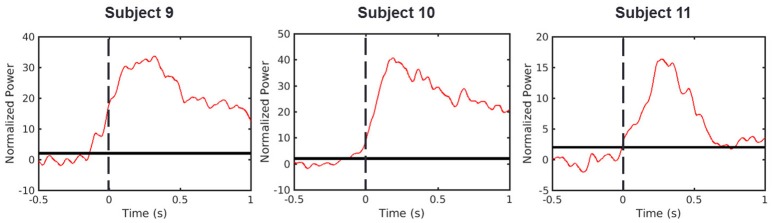
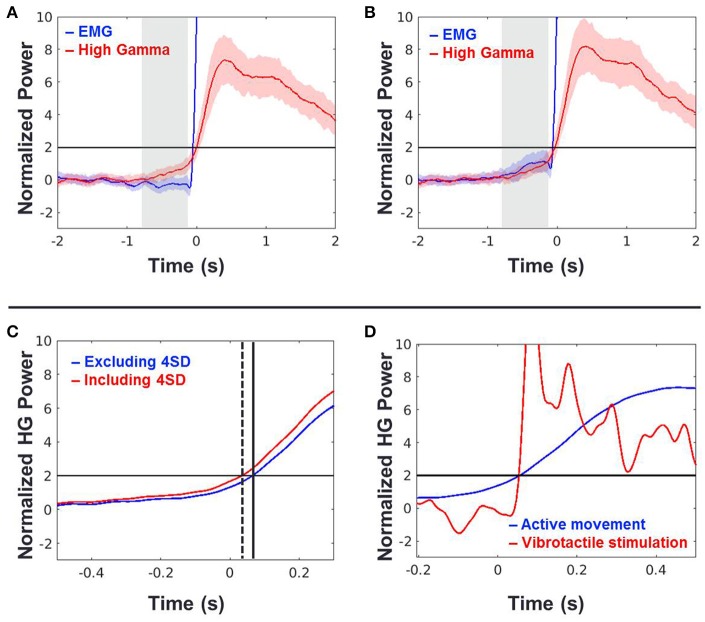
Somatosensation plays pivotal roles in the everyday motor control of humans. During active movement, there exists a prominent high-gamma (HG >50 Hz) power increase in the primary somatosensory cortex (S1), and this provides an important feature in relation to the decoding of movement in a brain-machine interface (BMI). However, one concern of BMI researchers is the inflation of the decoding performance due to the activation of somatosensory feedback, which is not elicited in patients who have lost their sensorimotor function. In fact, it is unclear as to how much the HG component activated in S1 contributes to the overall sensorimotor HG power during voluntary movement. With regard to other functional roles of HG in S1, recent findings have reported that these HG power levels increase before the onset of actual movement, which implies neural activation for top-down movement preparation or sensorimotor interaction, i.e., an efference copy. These results are promising for BMI applications but remain inconclusive. Here, we found using electrocorticography (ECoG) from eight patients that HG activation in S1 is stronger and more informative than it is in the primary motor cortex (M1) regardless of the type of movement. We also demonstrate by means of electromyography (EMG) that the onset timing of the HG power in S1 is later (49 ms) than that of the actual movement. Interestingly, we show that the HG power fluctuations in S1 are closely related to subtle muscle contractions, even during the pre-movement period. These results suggest the following: (1) movement-related HG activity in S1 strongly affects the overall sensorimotor HG power, and (2) HG activity in S1 during voluntary movement mainly represents cortical neural processing for somatosensory feedback.
躯体感觉在人类日常运动控制中起着关键作用。在主动运动过程中,初级躯体感觉皮层(S1)会出现显著的高伽马(HG>50Hz)功率增加,这为脑机接口(BMI)中运动解码提供了一个重要特征。然而,BMI研究人员担心的一个问题是,由于躯体感觉反馈的激活会导致解码性能虚高,而在失去感觉运动功能的患者中不会引发这种反馈。事实上,目前尚不清楚S1中激活的HG成分在自愿运动期间对整体感觉运动HG功率的贡献有多大。关于HG在S1中的其他功能作用,最近的研究结果表明,这些HG功率水平在实际运动开始前就会增加,这意味着神经激活用于自上而下的运动准备或感觉运动相互作用,即传出副本。这些结果对BMI应用很有前景,但仍无定论。在这里,我们通过对8名患者进行皮层脑电图(ECoG)检测发现,无论运动类型如何,S1中的HG激活都比初级运动皮层(M1)中的更强且信息更丰富。我们还通过肌电图(EMG)证明,S1中HG功率的起始时间比实际运动的起始时间晚(49毫秒)。有趣的是,我们发现即使在运动前阶段,S1中的HG功率波动也与细微的肌肉收缩密切相关。这些结果表明:(1)S1中与运动相关的HG活动强烈影响整体感觉运动HG功率,(2)自愿运动期间S1中的HG活动主要代表躯体感觉反馈的皮层神经处理。