Lin Yicen, Xu Shuai, Zeng Dong, Ni Xueqin, Zhou Mengjia, Zeng Yan, Wang Hesong, Zhou Yi, Zhu Hui, Pan Kangcheng, Li Guangyao
Animal Microecology Institute, College of Veterinary Medicine, Sichuan Agricultural University, Sichuan Province, Chengdu, China.
Key Laboratory of Animal Disease and Human Health of Sichuan Province, Sichuan Agricultural University, Sichuan Province, Chengdu, China.
PLoS One. 2017 Aug 3;12(8):e0182426. doi: 10.1371/journal.pone.0182426. eCollection 2017.
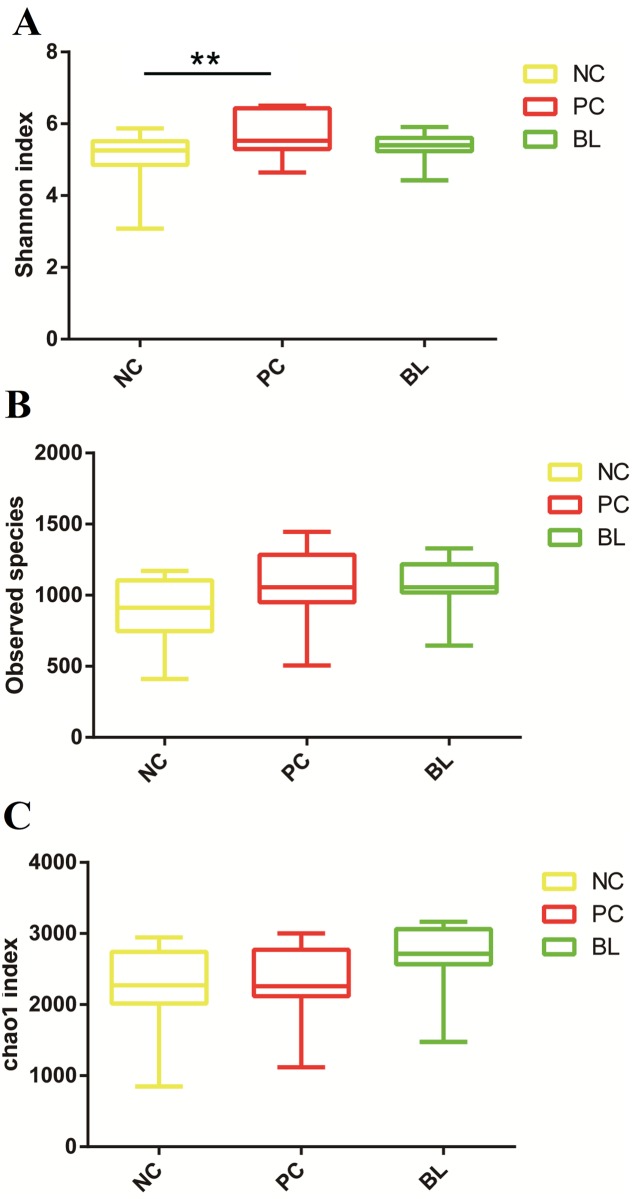
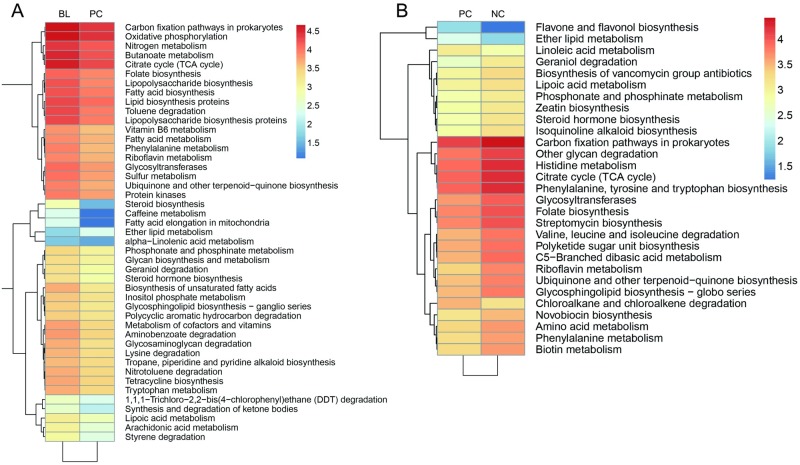
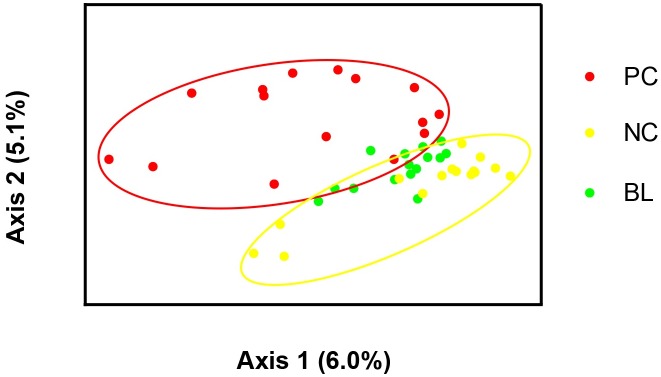
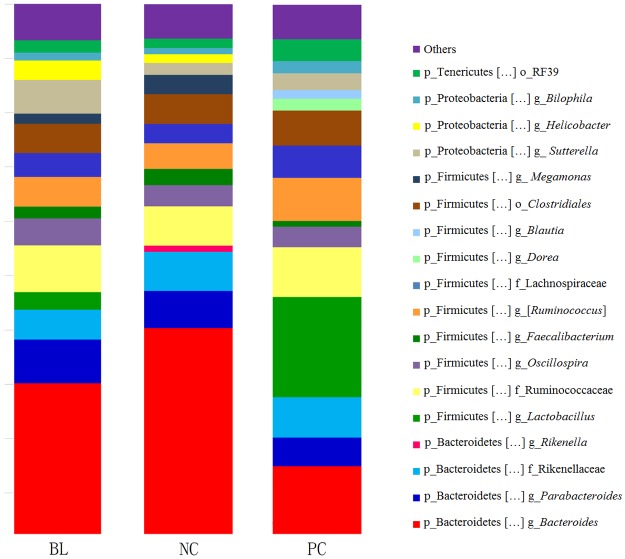
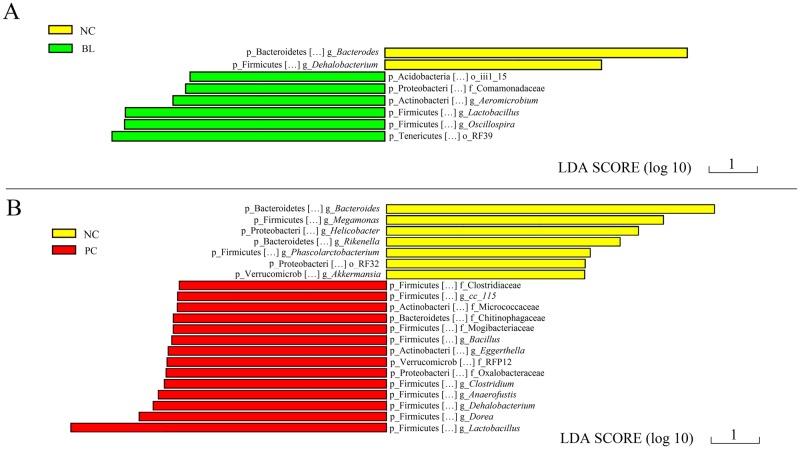
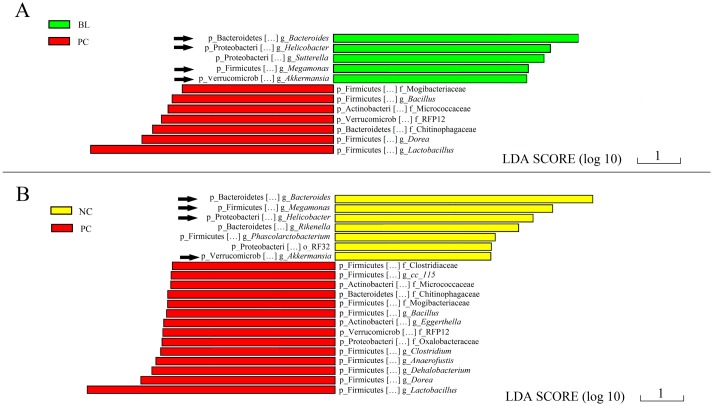
Clostridium perfringens can induce necrotic enteritis of chickens, which causes large economic losses every year. Bacillus licheniformis, a probiotic, can inhibit the growth of pathogenic bacteria such as Clostridium perfringens, thereby improving the health status of chickens. However, from a microbial ecology perspective, the mechanisms by which alterations to the gut microbiota improve health remain unknown. In this study, we used Illumina MiSeq sequencing to investigate the cecal microbiota of a negative control group (NC), a C. perfringens and Eimeria challenge group with fishmeal supplementation (PC), a group supplemented with fishmeal and infected with coccidia (FC), and group PC with B. licheniformis supplementation (BL). We found that the health status of C. perfringens-challenged chickens was compromised, and that B. licheniformis improved the growth of the chickens challenged with pathogens. Microbial diversity analysis and taxonomic profiling of groups NC, PC, and FC revealed a disturbed cecal microflora of the birds with C. perfringens. We also characterized the microbiota of the chickens in the BL group using several methods. Principal coordinate analysis demonstrated that, compared with group PC, the bacterial community structure of group BL was more similar to that of group NC. Linear discriminant analysis with effect size revealed less differentially represented bacterial taxa between groups BL and NC than between groups PC and NC. In addition, groups BL and NC appeared to have similar overrepresented microbial taxa (such as Bacteroides, Helicobacter, Megamonas, and Akkermansia) compared with group PC. Finally, a phylogenetic investigation of communities by reconstruction of unobserved states analysis indicated that large differences existed between group PC and groups NC and BL. In conclusion, pre-treatment with B. licheniformis reduced the disturbance of the cecal microbiome induced by challenge with C. perfringens and other factors in broiler chickens.
产气荚膜梭菌可诱发鸡坏死性肠炎,每年造成巨大经济损失。地衣芽孢杆菌作为一种益生菌,可抑制产气荚膜梭菌等病原菌的生长,从而改善鸡的健康状况。然而,从微生物生态学角度来看,肠道微生物群改变改善健康的机制尚不清楚。在本研究中,我们使用Illumina MiSeq测序技术调查了阴性对照组(NC)、添加鱼粉的产气荚膜梭菌和艾美耳球虫攻毒组(PC)、添加鱼粉并感染球虫的组(FC)以及添加地衣芽孢杆菌的PC组(BL)的盲肠微生物群。我们发现,产气荚膜梭菌攻毒鸡的健康状况受到损害,而地衣芽孢杆菌改善了受病原菌攻毒鸡的生长。对NC、PC和FC组的微生物多样性分析和分类学分析显示,产气荚膜梭菌感染鸡的盲肠微生物区系紊乱。我们还使用多种方法对BL组鸡的微生物群进行了表征。主坐标分析表明,与PC组相比,BL组的细菌群落结构与NC组更相似。效应大小线性判别分析显示,BL组和NC组之间差异代表性细菌分类群比PC组和NC组之间少。此外,与PC组相比,BL组和NC组似乎具有相似的优势微生物分类群(如拟杆菌属、螺杆菌属、巨单胞菌属和阿克曼氏菌属)。最后,通过未观察状态重建的群落系统发育调查分析表明,PC组与NC组和BL组之间存在很大差异。总之,地衣芽孢杆菌预处理减少了肉鸡产气荚膜梭菌攻毒及其他因素引起的盲肠微生物组紊乱。