Huang Siwei, Zhou Ling, Li Mei-Chun, Wu Qinglin, Zhou Dingguo
College of Materials Science and Engineering, Nanjing Forestry University, Long Pan Road, Nanjing 210037, China.
School of Materials Science and Engineering, South China University of Technology, Guangzhou 510640, China.
Materials (Basel). 2017 Jan 20;10(1):80. doi: 10.3390/ma10010080.
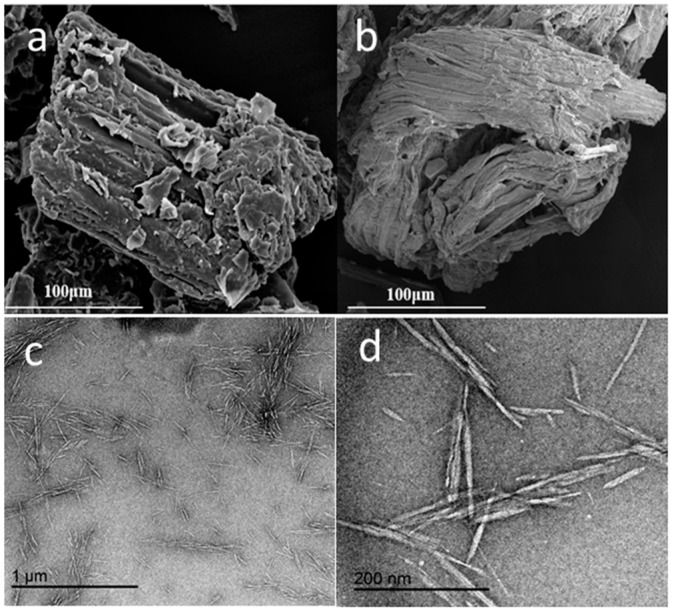
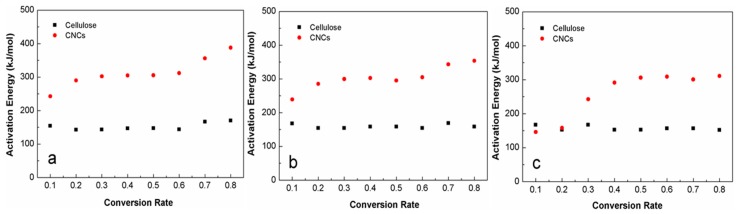
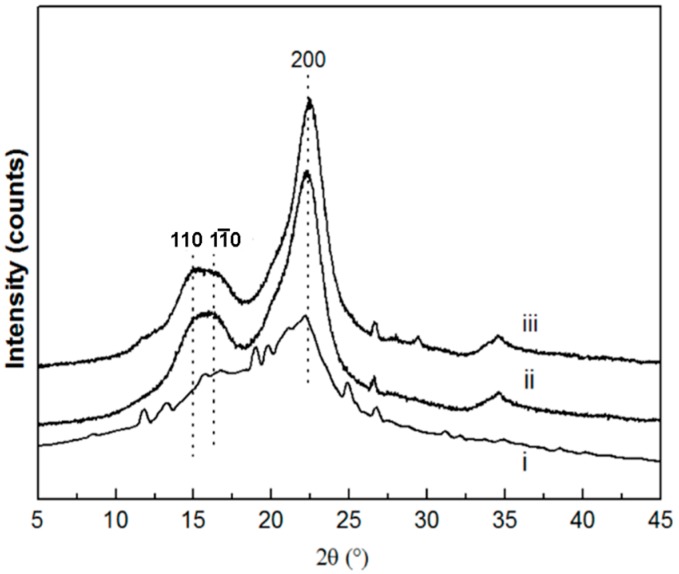
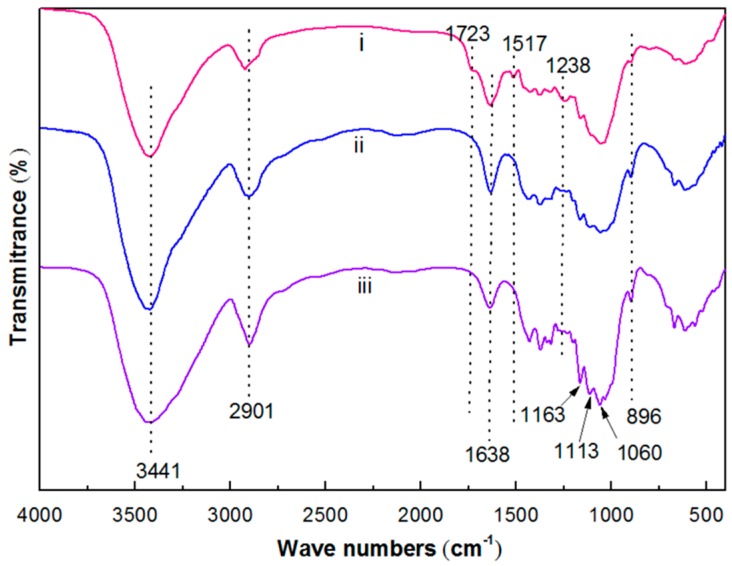
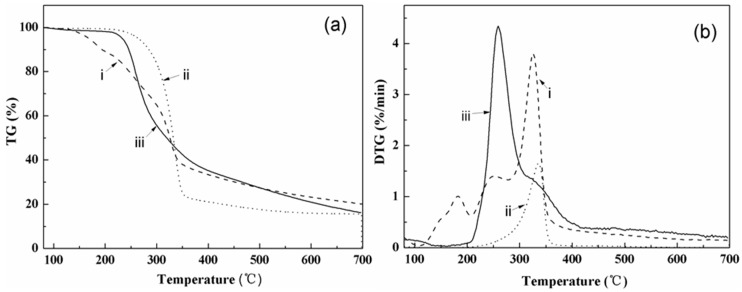
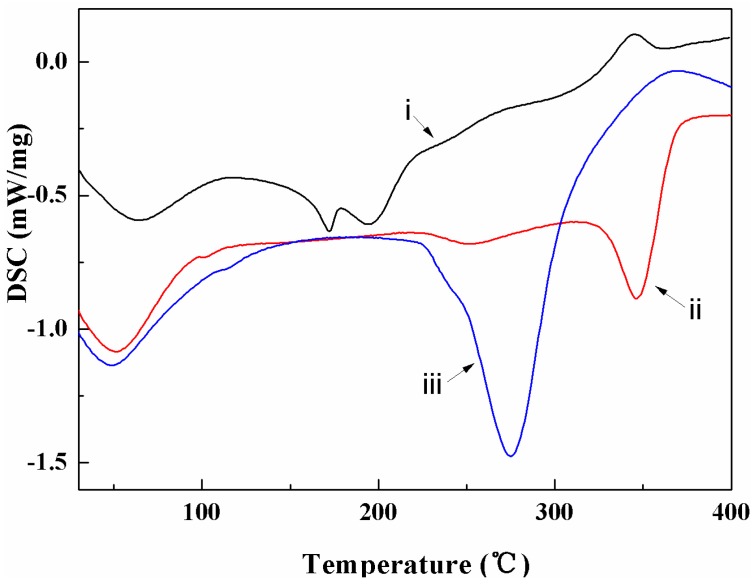
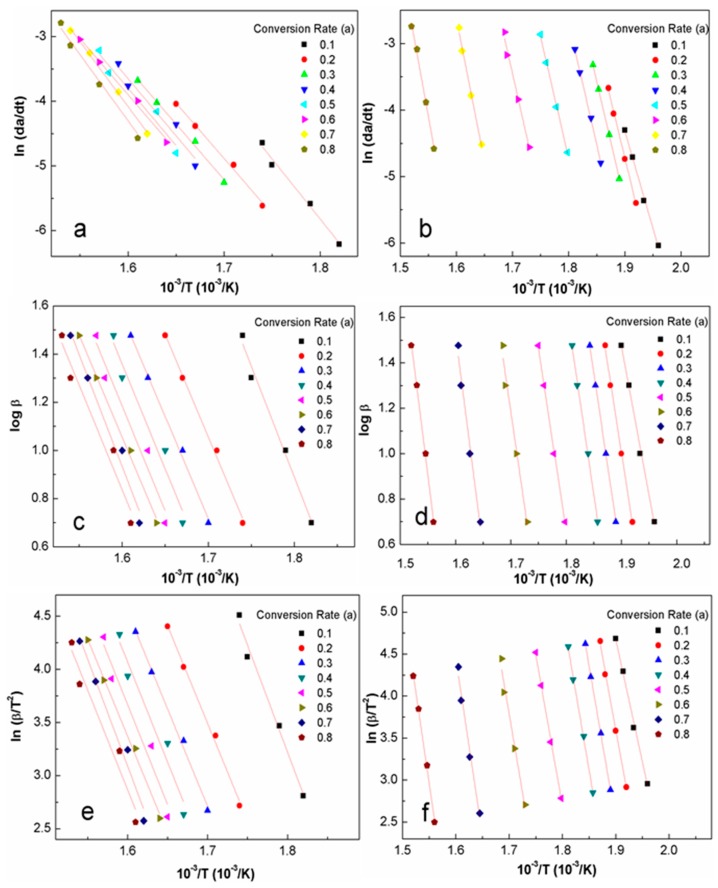
Cellulose nanocrystals (CNCs) were isolated from corn stalk using sulfuric acid hydrolysis, and their morphology, chemical structure, and thermal stability properties were characterized. The CNCs had an average length of 120.2 ± 61.3 nm and diameter of 6.4 ± 3.1 nm (L/D = 18.7). The degree of crystallinity of the CNCs increased to 69.20% from the 33.20% crystallinity of raw corn stalk fiber, while the chemical structure was well kept after sulfuric acid hydrolysis. Thermal stability analysis showed that the degradation temperature of the CNCs reached 239.5 °C, which was higher than that of the raw fiber but lower than that of the extracted cellulose. The average activation energy values for the CNCs, evaluated using the Friedman, Flynn-Wall-Ozawa (F-W-O) and Coats-Redfern methods, were 312.6, 302.8, and 309 kJ·mol in the conversion range of 0.1 to 0.8. The isolated CNCs had higher values of activation energy than did the purified cellulose, which was attributed to the stronger hydrogen bonds present in the crystalline domains of CNCs than in those of cellulose. These findings can help better understand the thermal properties of polymer/CNC composites.
采用硫酸水解法从玉米秸秆中分离出纤维素纳米晶体(CNCs),并对其形态、化学结构和热稳定性进行了表征。CNCs的平均长度为120.2±61.3nm,直径为6.4±3.1nm(长径比L/D = 18.7)。CNCs的结晶度从生玉米秸秆纤维的33.20%提高到69.20%,而硫酸水解后化学结构保持良好。热稳定性分析表明,CNCs的降解温度达到239.5℃,高于生纤维但低于提取的纤维素。在0.1至0.8的转化率范围内,采用Friedman、Flynn-Wall-Ozawa(F-W-O)和Coats-Redfern方法评估的CNCs的平均活化能值分别为312.6、302.8和309kJ·mol。分离得到的CNCs的活化能值高于纯化纤维素,这归因于CNCs结晶区中存在比纤维素更强的氢键。这些发现有助于更好地理解聚合物/CNCs复合材料的热性能。