Ye Weiwei, Guo Jiubiao, Bao Xianfeng, Chen Tian, Weng Wenchuan, Chen Sheng, Yang Mo
Institute of Ocean Research, Zhejiang University of Technology, Hangzhou 310014, China.
Department of Food Science and Technology, Zhejiang University of Technology, Hangzhou 310014, China.
Materials (Basel). 2017 May 31;10(6):603. doi: 10.3390/ma10060603.
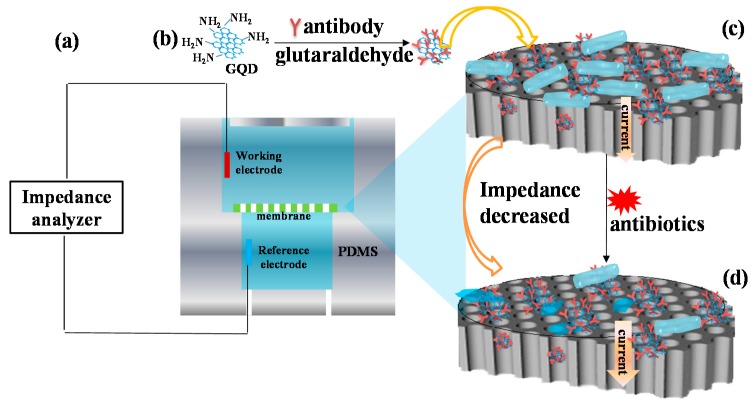
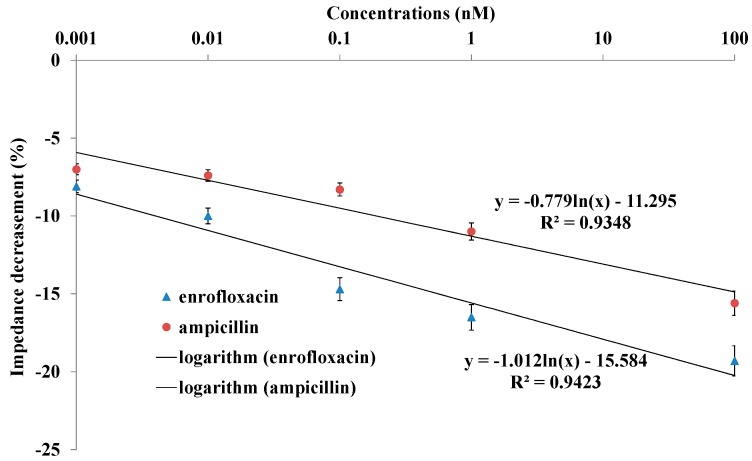
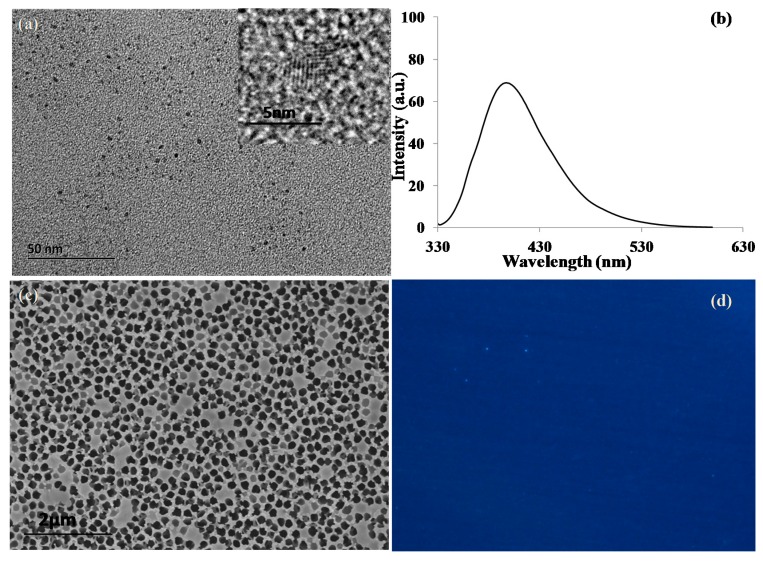
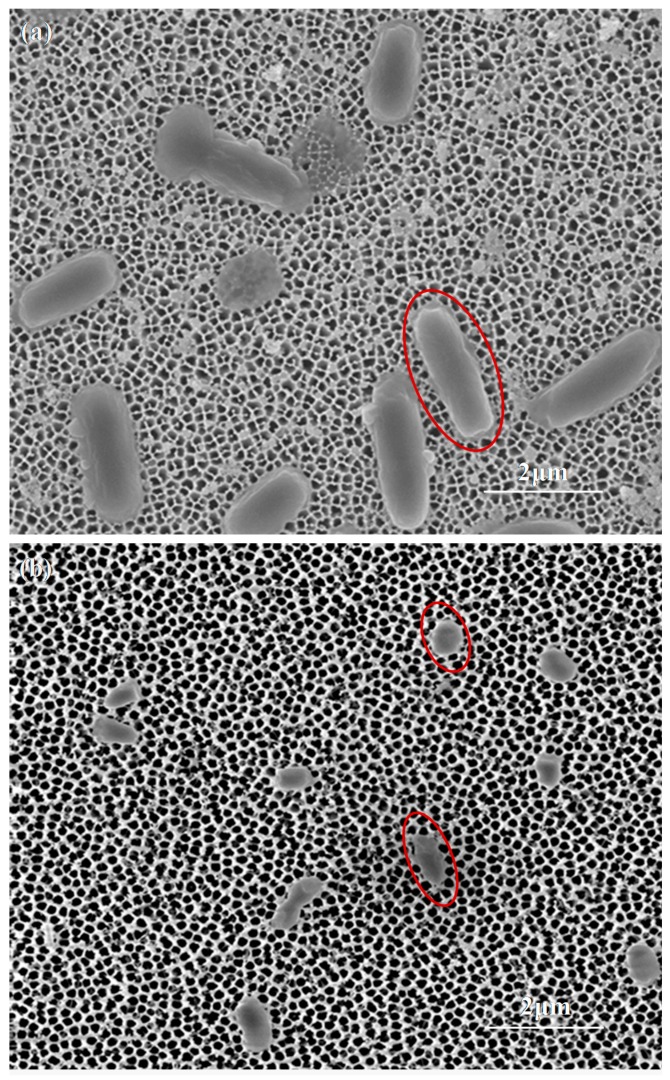
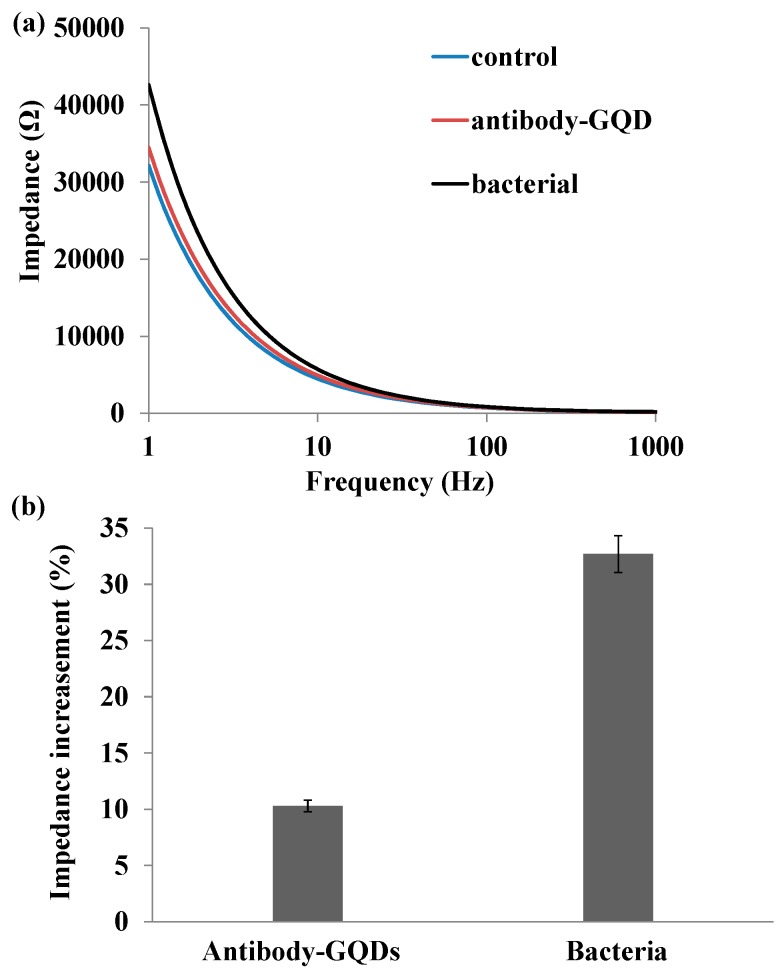
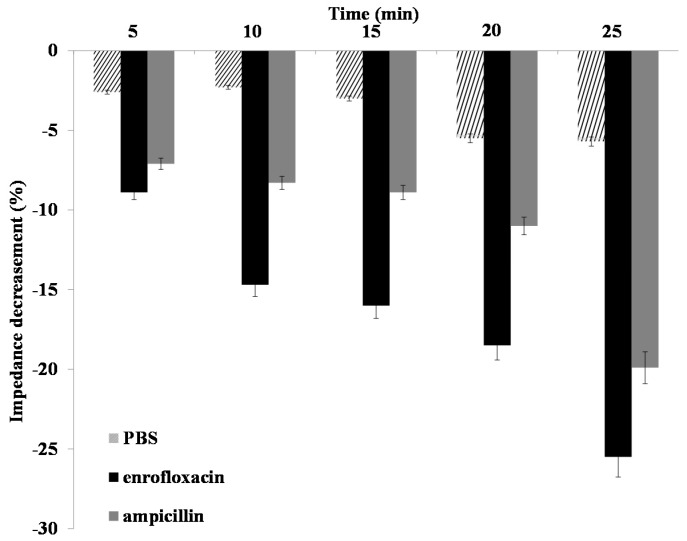
The wide abuse of antibiotics has accelerated bacterial multiresistance, which means there is a need to develop tools for rapid detection and characterization of bacterial response to antibiotics in the management of infections. In the study, an electrochemical biosensor based on nanoporous alumina membrane and graphene quantum dots (GQDs) was developed for bacterial response to antibiotics detection. Anti- antibody was conjugated with amino-modified GQDs by glutaraldehyde and immobilized on silanized nanoporous alumina membranes for bacteria capture. The impedance signals across nanoporous membranes could monitor the capture of bacteria on nanoporous membranes as well as bacterial response to antibiotics. This nanoporous membrane and GQD-based electrochemical biosensor achieved rapid detection of bacterial response to antibiotics within 30 min, and the detection limit could reach the pM level. It was capable of investigating the response of bacteria exposed to antibiotics much more rapidly and conveniently than traditional tools. The capability of studying the dynamic effects of antibiotics on bacteria has potential applications in the field of monitoring disease therapy, detecting comprehensive food safety hazards and even life in hostile environment.
抗生素的广泛滥用加速了细菌的多重耐药性,这意味着在感染管理中需要开发用于快速检测和表征细菌对抗生素反应的工具。在该研究中,开发了一种基于纳米多孔氧化铝膜和石墨烯量子点(GQDs)的电化学生物传感器,用于检测细菌对抗生素的反应。通过戊二醛将抗抗体与氨基修饰的GQDs偶联,并固定在硅烷化的纳米多孔氧化铝膜上以捕获细菌。纳米多孔膜上的阻抗信号可以监测细菌在纳米多孔膜上的捕获以及细菌对抗生素的反应。这种基于纳米多孔膜和GQD的电化学生物传感器能够在30分钟内快速检测细菌对抗生素的反应,检测限可达pM水平。与传统工具相比,它能够更快速、方便地研究暴露于抗生素的细菌的反应。研究抗生素对细菌动态影响的能力在疾病治疗监测、检测全面的食品安全危害甚至恶劣环境中的生命等领域具有潜在应用。