Lopez-Píriz Roberto, Fernández Adolfo, Goyos-Ball Lidia, Rivera Sergio, Díaz Luis A, Fernández-Domínguez Manuel, Prado Catuxa, Moya José S, Torrecillas Ramón
Nanomaterials and Nanotechnology Research Centre (CINN), CSIC-University of Oviedo (UO), Avda. de la Vega 4-6, El Entrego, San-Martín del Rey Aurelio 33940, Spain.
Nanoker Research, Pol. Ind. Olloniego, Parcela 22A, Nave 5, Oviedo 33660, Spain.
Materials (Basel). 2017 Jun 3;10(6):614. doi: 10.3390/ma10060614.
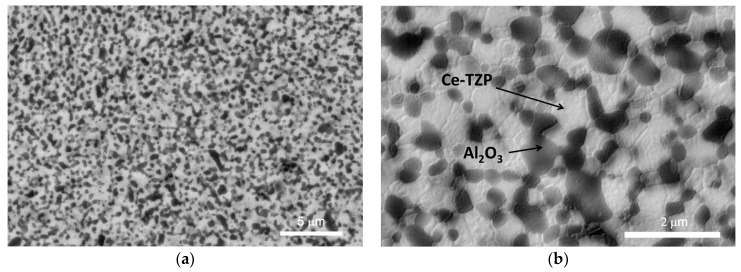
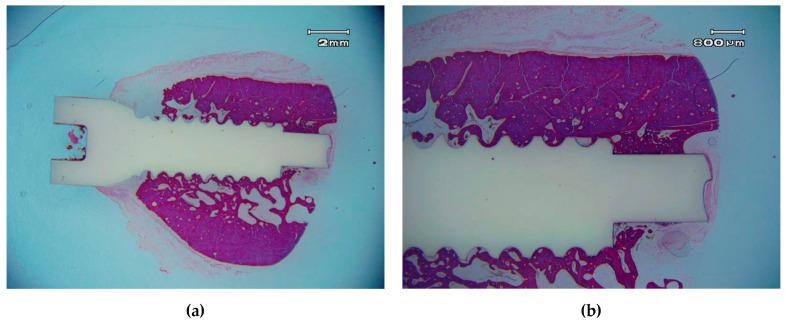
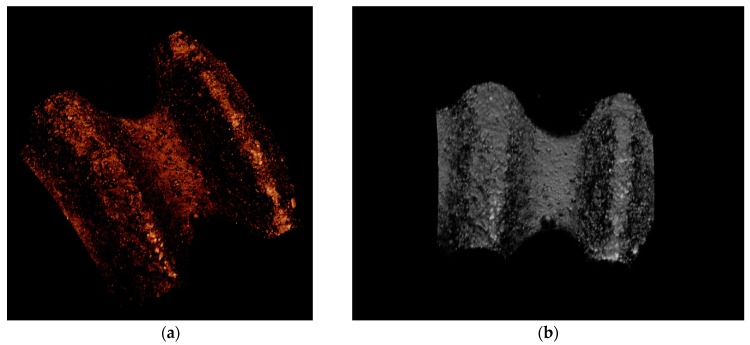
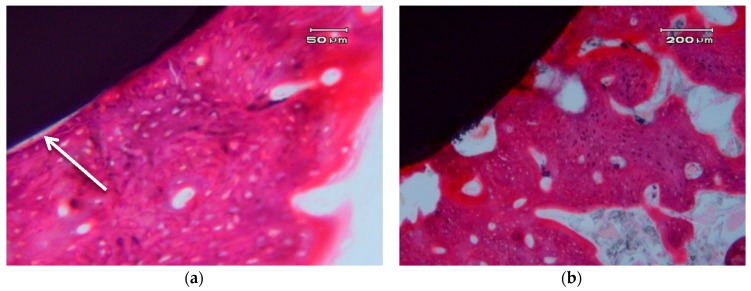
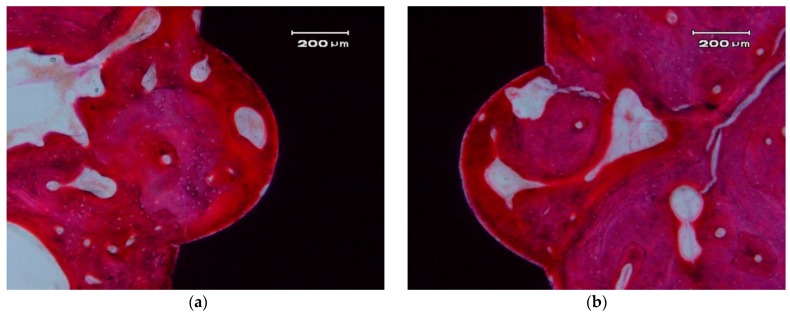
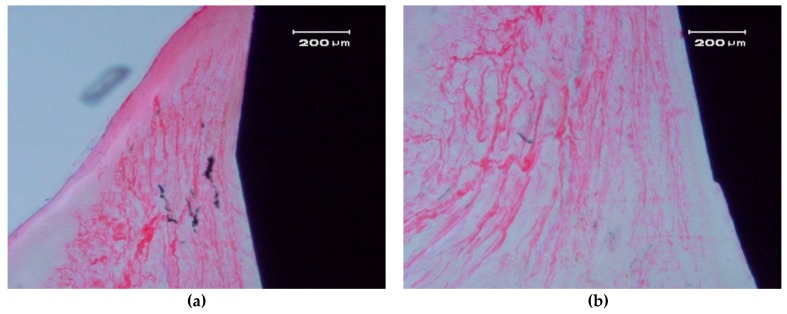
Although titanium remains as the prevalent material in dental implant manufacturing new zirconia-based materials that overcome the major drawbacks of the standard 3Y-yttria partially-stabilized zirconia (Y-TZP) are now emerging. In this study, a new ceramic nanocomposite made of alumina and ceria-stabilized TZP (ZCe-A) has been used to produce dental implants with the mechanic and topographic characteristics of a pilot implant design to evaluate bone and soft tissue integration in a dog model ( = 5). Histological cross-section analysis of the implanted ceramic fixations ( = 15) showed not only perfect biocompatibility, but also a high rate of osseous integration (defined as the percentage of bone to implant contact) and soft tissue attachment. This clinical success, in combination with the superior mechanical properties achieved by this Al₂O₃/Ce-TZP nanocomposite, may place this material as an improved alternative of traditional 3Y-TZP dental implants.
尽管钛仍然是牙科植入物制造中的主要材料,但现在正在出现一些新型的基于氧化锆的材料,这些材料克服了标准的3Y-氧化钇部分稳定氧化锆(Y-TZP)的主要缺点。在本研究中,一种由氧化铝和二氧化铈稳定的TZP(ZCe-A)制成的新型陶瓷纳米复合材料被用于制造具有初步植入物设计的机械和形貌特征的牙科植入物,以评估犬模型(n = 5)中的骨和软组织整合情况。对植入的陶瓷固定物(n = 15)进行的组织学横截面分析不仅显示出完美的生物相容性,还显示出高骨整合率(定义为骨与植入物接触的百分比)和软组织附着。这种临床成功,再加上这种Al₂O₃/Ce-TZP纳米复合材料所具有的优异机械性能,可能使这种材料成为传统3Y-TZP牙科植入物的一种改进替代品。