Lv Pengfei, Feng Quan, Wang Qingqing, Li Guohui, Li Dawei, Wei Qufu
Key Laboratory of Eco-textiles, Jiangnan University, Wuxi 214122, Jiangsu, China.
Key Laboratory of Textile Fabric, Anhui Polytechnic University, Wuhu 241000, Anhui, China.
Materials (Basel). 2016 Mar 9;9(3):183. doi: 10.3390/ma9030183.
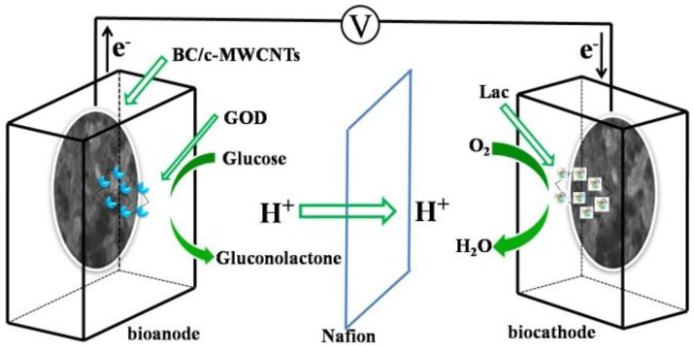
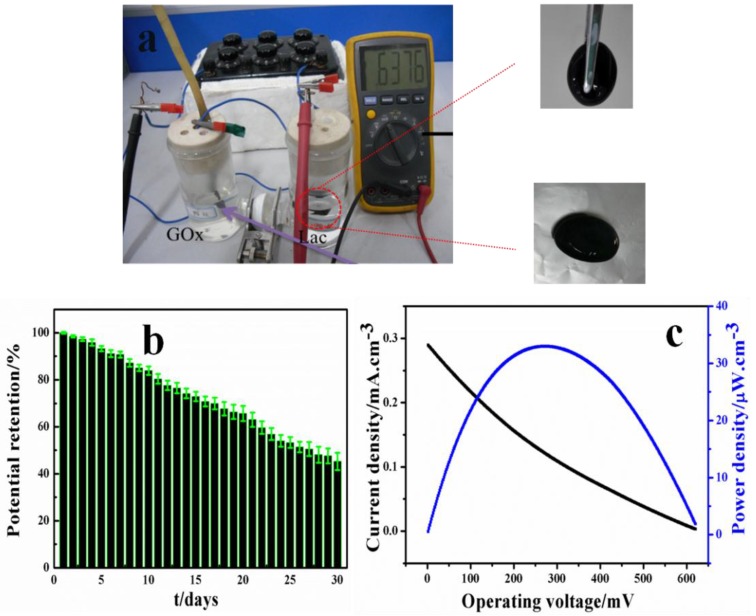
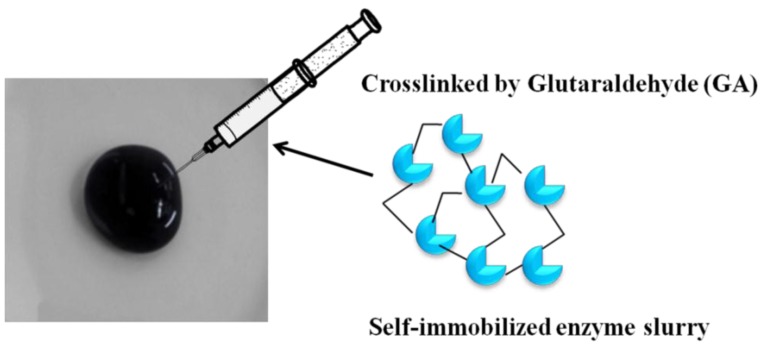
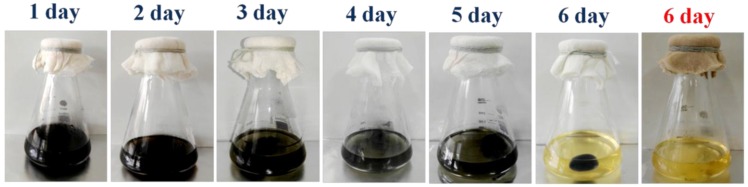
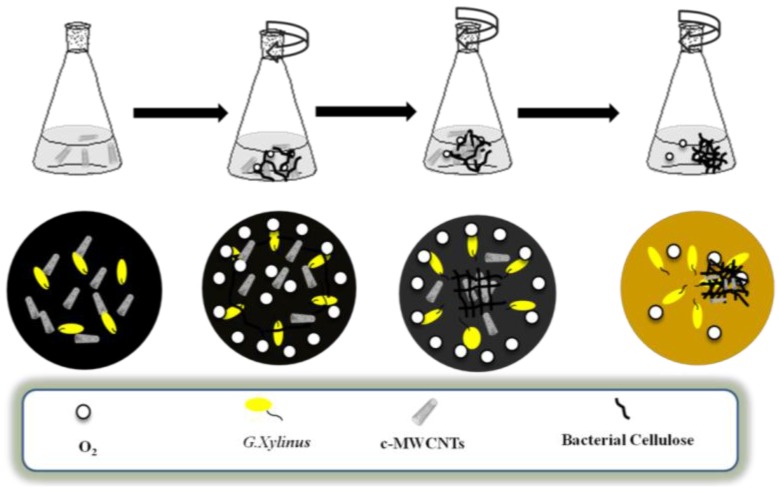
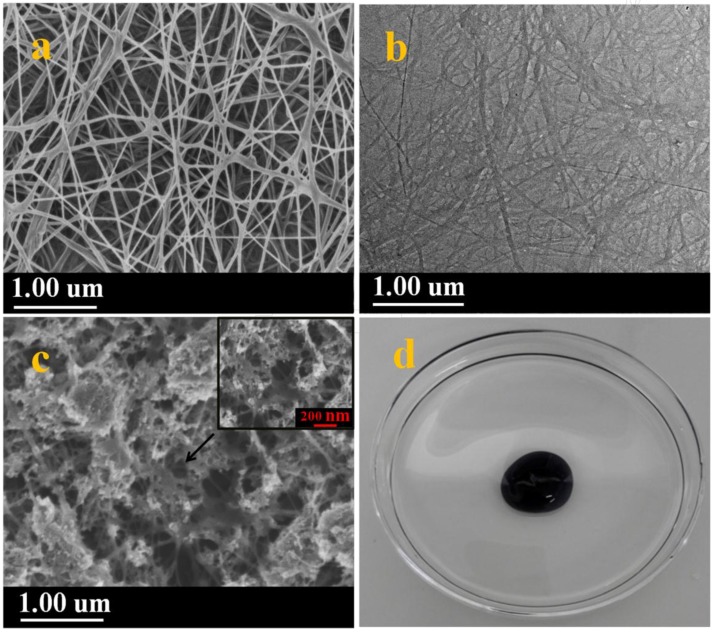
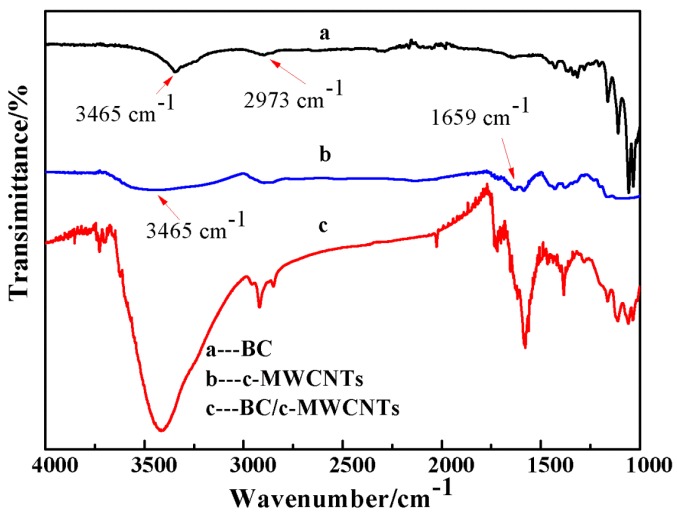
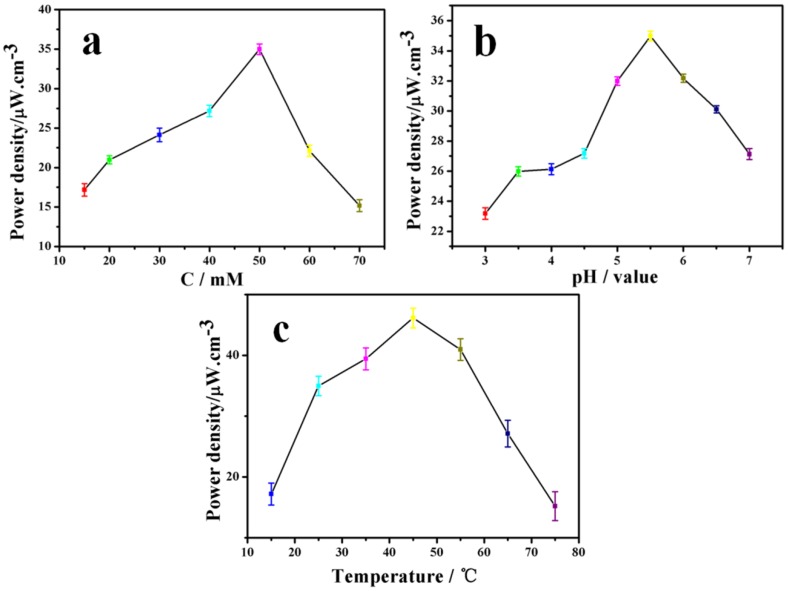
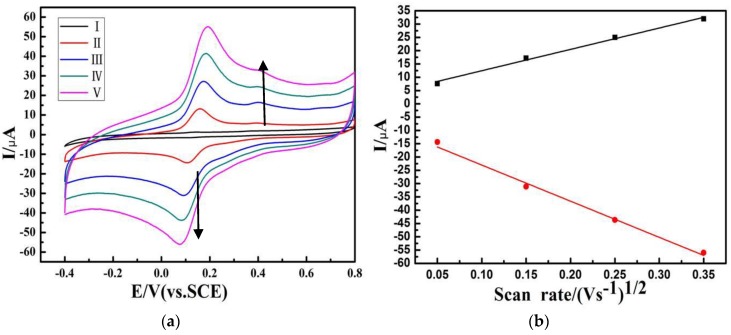
Novel nanocomposites comprised of bacterial cellulose (BC) with carboxylic multi-walled carbon nanotubes (c-MWCNTs) incorporated into the BC matrix were prepared through a simple method of biosynthesis. The biocathode and bioanode for the enzyme biological fuel cell (EBFC) were prepared using BC/c-MWCNTs composite injected by laccase (Lac) and glucose oxidase (GOD) with the aid of glutaraldehyde (GA) crosslinking. Biosynthesis of BC/c-MWCNTs composite was characterized by digital photos, scanning electron microscope (SEM), and Fourier Transform Infrared (FTIR). The experimental results indicated the successful incorporation of c-MWCNTs into the BC. The electrochemical and biofuel performance were evaluated by cyclic voltammetry (CV) and linear sweep voltammetry (LSV). The power density and current density of EBFCs were recorded at 32.98 µW/cm³ and 0.29 mA/cm³, respectively. Additionally, the EBFCs also showed acceptable stability. Preliminary tests on double cells indicated that renewable BC have great potential in the application field of EBFCs.
通过一种简单的生物合成方法制备了新型纳米复合材料,该材料由细菌纤维素(BC)和掺入BC基质中的羧基多壁碳纳米管(c-MWCNTs)组成。酶生物燃料电池(EBFC)的生物阴极和生物阳极是使用通过戊二醛(GA)交联注入漆酶(Lac)和葡萄糖氧化酶(GOD)的BC/c-MWCNTs复合材料制备的。通过数码照片、扫描电子显微镜(SEM)和傅里叶变换红外光谱(FTIR)对BC/c-MWCNTs复合材料的生物合成进行了表征。实验结果表明c-MWCNTs成功掺入了BC中。通过循环伏安法(CV)和线性扫描伏安法(LSV)评估了电化学和生物燃料性能。EBFC的功率密度和电流密度分别记录为32.98 μW/cm³和0.29 mA/cm³。此外,EBFC还表现出可接受的稳定性。对双电池的初步测试表明,可再生的BC在EBFC的应用领域具有巨大潜力。