Shaghaleh Hiba, Xu Xu, Wang Shifa
College of Chemical Engineering, Jiangsu Provincial Key Lab for the Chemistry and Utilization of Agro-forest Biomass, Nanjing Forestry University Nanjing Jiangsu 210037 People's Republic of China
Jiangsu Key Lab of Biomass-based Green Fuels and Chemicals Nanjing 210037 People's Republic of China +86 25 85428369 +86 25 85428369.
RSC Adv. 2018 Jan 3;8(2):825-842. doi: 10.1039/c7ra11157f. eCollection 2018 Jan 2.
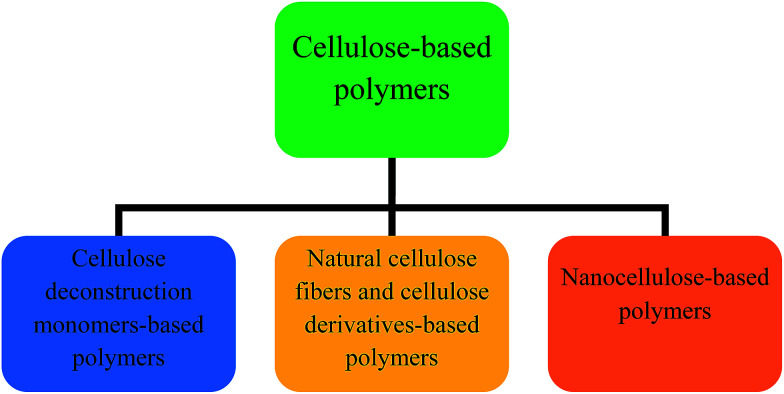
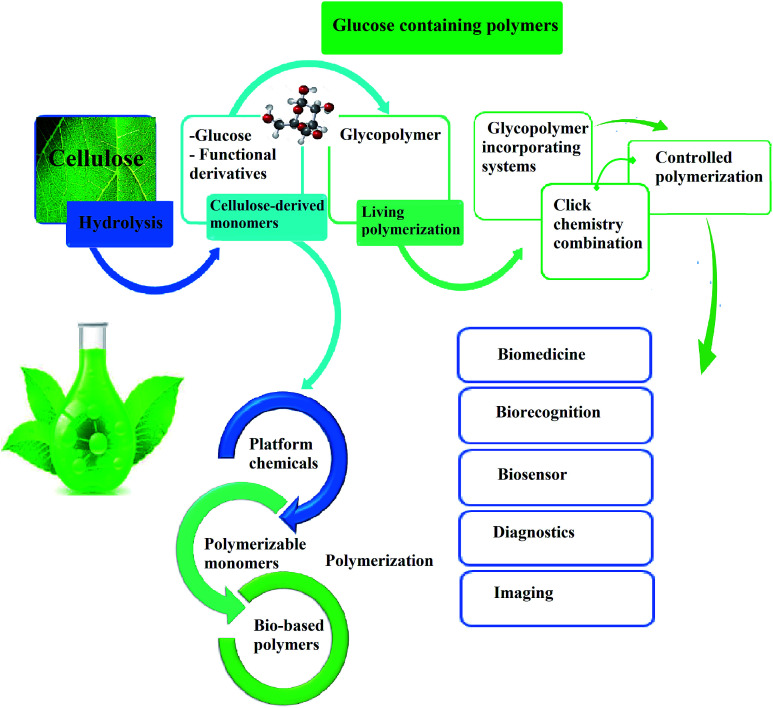
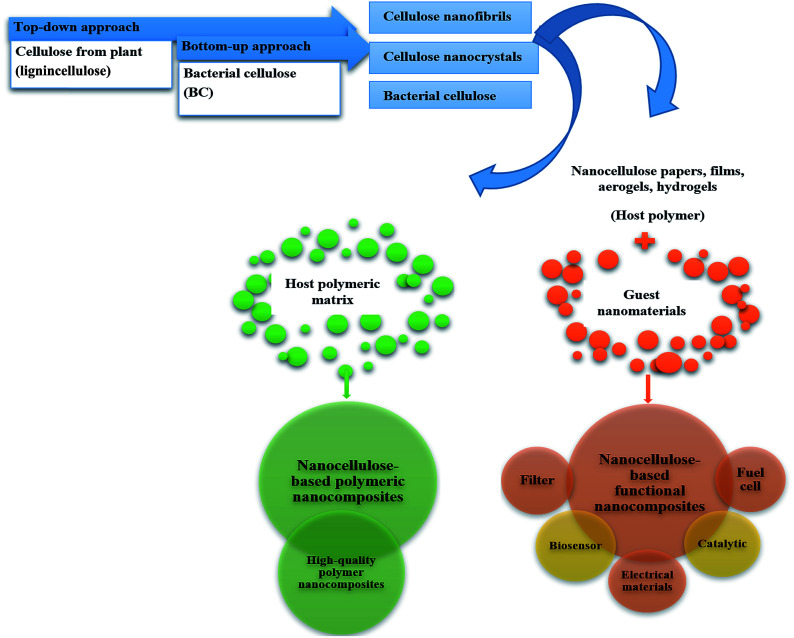
Cellulose has attracted considerable attention as the strongest potential candidate feedstock for bio-based polymeric material production. During the past decade, significant progress in the production of biopolymers based on different cellulosic forms has been achieved. This review highlights the most recent advances and developments in the three main routes for the production of cellulose-based biopolymers, and discusses their scope and applications. The use of cellulose fibers, nanocellulose, and cellulose derivatives as fillers or matrices in biocomposite materials is an efficient biosustainable alternative for the production of high-quality polymer composites and functional polymeric materials. The use of cellulose-derived monomers (glucose and other platform chemicals) in the synthesis of sustainable biopolymers and functional polymeric materials not only provides viable replacements for most petroleum-based polymers but also enables the development of novel polymers and functional polymeric materials. The present review describes the current status of biopolymers based on various forms of cellulose and the scope of their importance and applications. Challenges, promising research trends, and methods for dealing with challenges in exploitation of the promising properties of different forms of cellulose, which are vital for the future of the global polymeric industry, are discussed. Sustainable cellulosic biopolymers have potential applications not only in the replacement of existing petroleum-based polymers but also in cellulosic functional polymeric materials for a range of applications from electrochemical and energy-storage devices to biomedical applications.
纤维素作为生物基聚合物材料生产中最具潜力的候选原料,已引起了广泛关注。在过去十年中,基于不同纤维素形式的生物聚合物生产取得了显著进展。本文综述了纤维素基生物聚合物生产的三条主要途径的最新进展和发展情况,并讨论了它们的范围和应用。在生物复合材料中使用纤维素纤维、纳米纤维素和纤维素衍生物作为填料或基体,是生产高质量聚合物复合材料和功能性聚合物材料的一种高效的生物可持续替代方法。在可持续生物聚合物和功能性聚合物材料的合成中使用纤维素衍生单体(葡萄糖和其他平台化学品),不仅为大多数石油基聚合物提供了可行的替代品,还能促进新型聚合物和功能性聚合物材料的开发。本综述描述了基于各种纤维素形式的生物聚合物的现状及其重要性和应用范围。讨论了在利用不同形式纤维素的优良性能方面所面临的挑战、有前景的研究趋势以及应对挑战的方法,这些对于全球聚合物行业的未来至关重要。可持续的纤维素基生物聚合物不仅在替代现有的石油基聚合物方面具有潜在应用,而且在从电化学和能量存储设备到生物医学应用等一系列应用的纤维素功能性聚合物材料中也有潜在应用。