Pimentel Ana, Ferreira Sofia Henriques, Nunes Daniela, Calmeiro Tomas, Martins Rodrigo, Fortunato Elvira
i3N/CENIMAT, Department of Materials Science, Faculty of Science and Technology, Universidade NOVA de Lisboa, Campus de Caparica, Caparica 2829-516, Portugal.
Materials (Basel). 2016 Apr 20;9(4):299. doi: 10.3390/ma9040299.
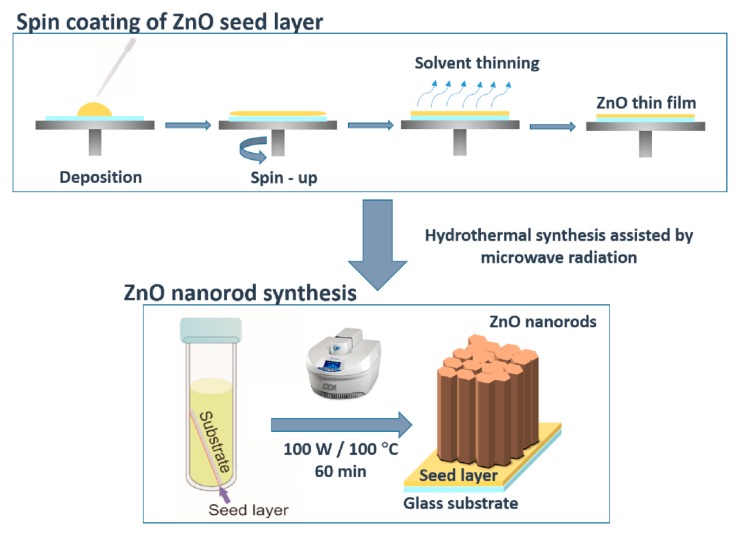
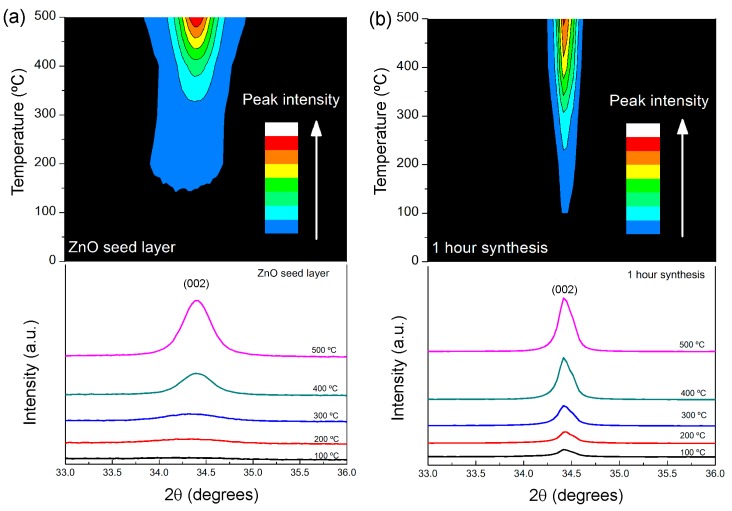
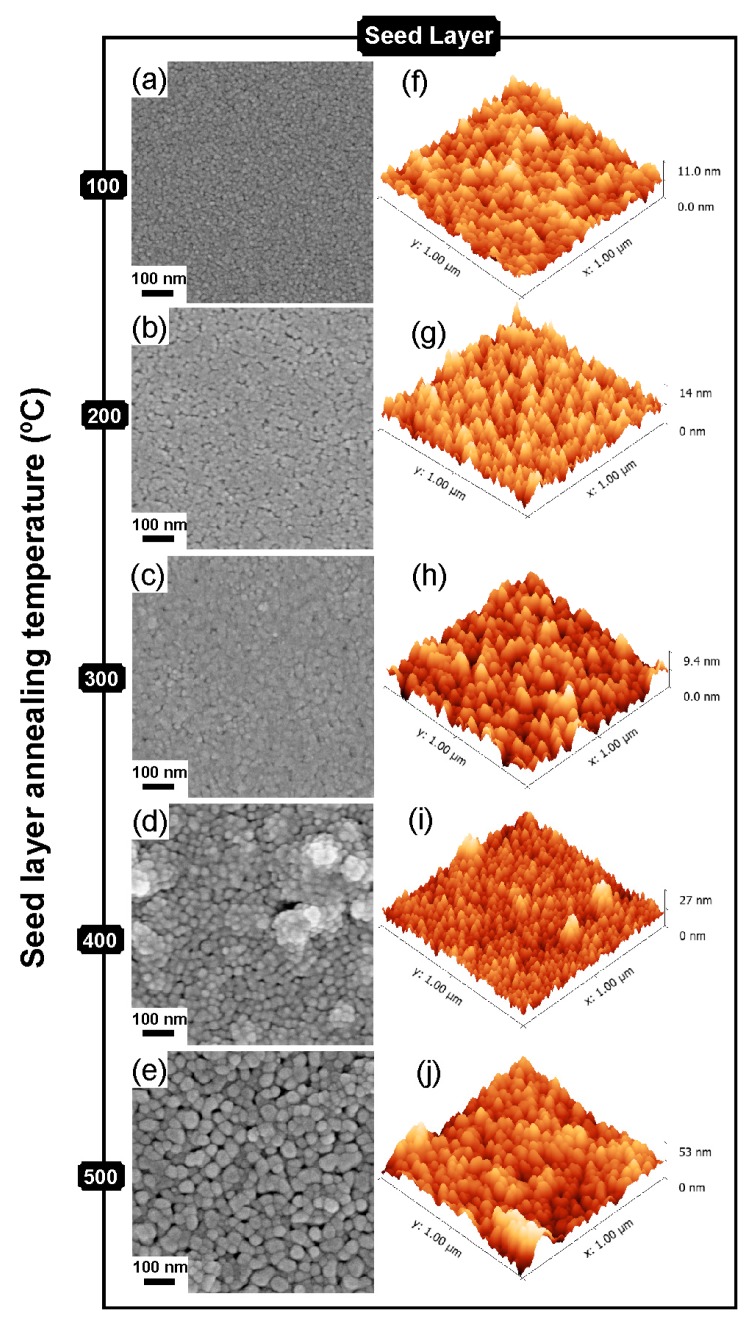
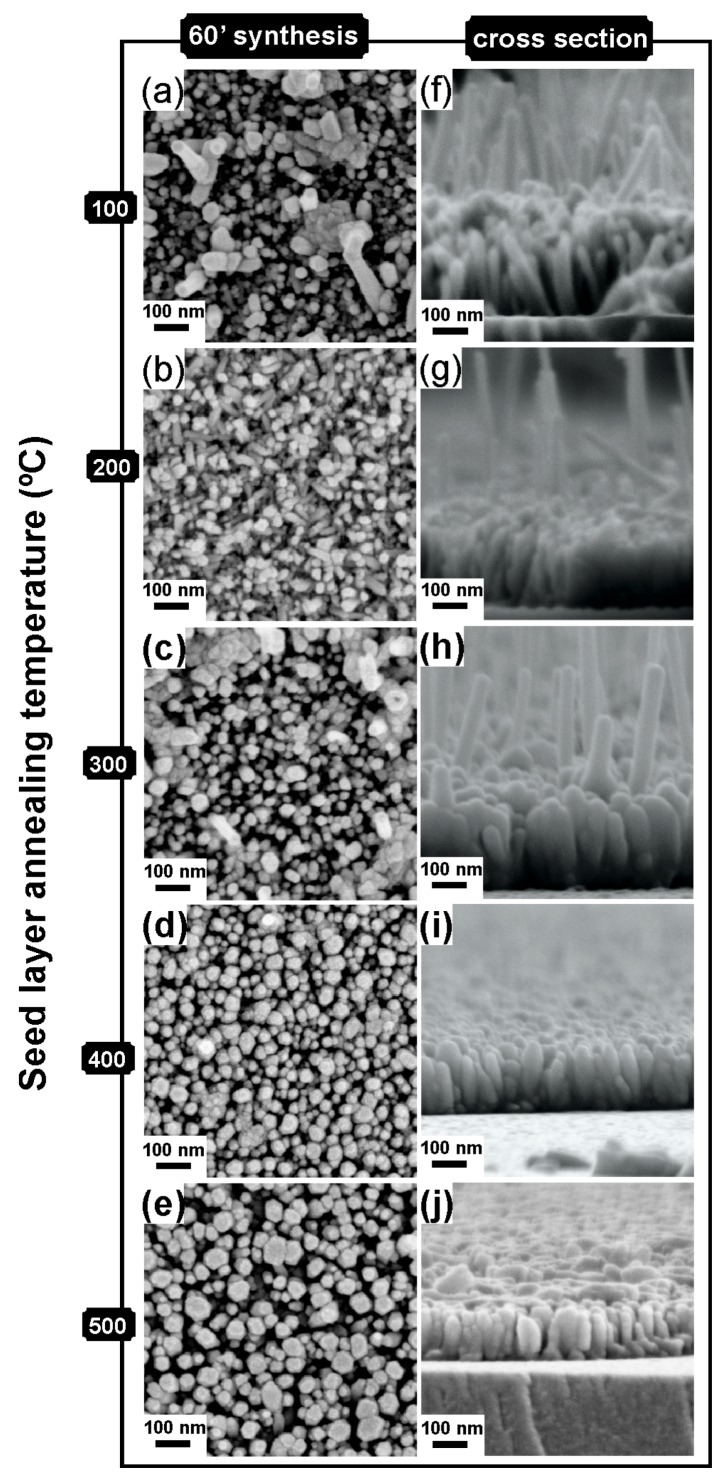
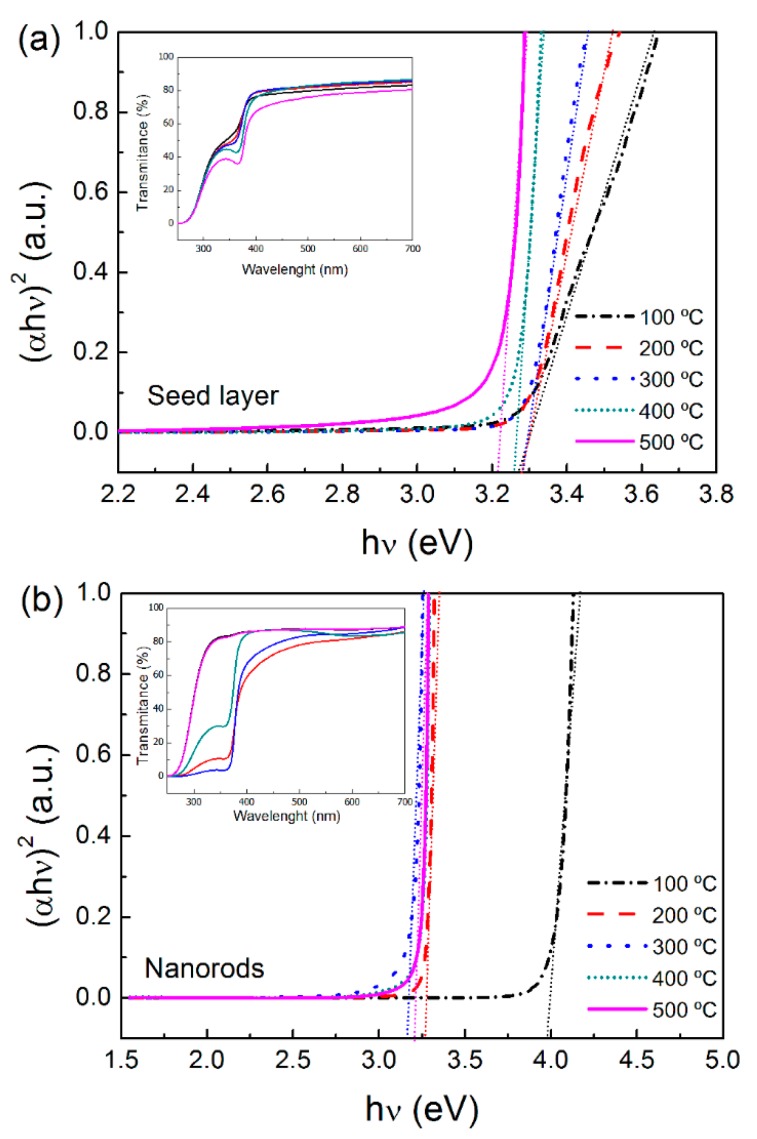
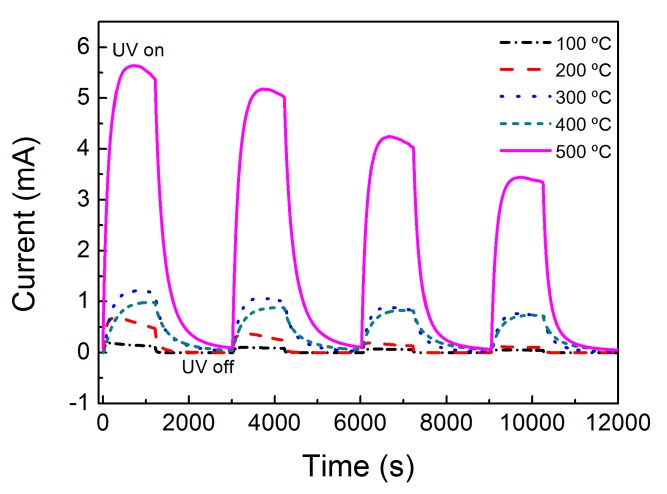
The present work reports the influence of zinc oxide (ZnO) seed layer annealing temperature on structural, optical and electrical properties of ZnO nanorod arrays, synthesized by hydrothermal method assisted by microwave radiation, to be used as UV sensors. The ZnO seed layer was produced using the spin-coating method and several annealing temperatures, ranging from 100 to 500 °C, have been tested. X-ray diffraction (XRD), scanning electron microscopy (SEM), atomic force microscopy (AFM) and spectrophotometry measurements have been used to investigate the structure, morphology, and optical properties variations of the produced ZnO nanorod arrays regarding the seed layer annealing temperatures employed. After the growth of ZnO nanorod arrays, the whole structure was tested as UV sensors, showing an increase in the sensitivity with the increase of seed layer annealing temperature. The UV sensor response of ZnO nanorod arrays produced with the seed layer annealed temperature of 500 °C was 50 times superior to the ones produced with a seed layer annealed at 100 °C.
本研究报告了氧化锌(ZnO)籽晶层退火温度对通过微波辐射辅助水热法合成的ZnO纳米棒阵列的结构、光学和电学性能的影响,该ZnO纳米棒阵列用作紫外传感器。采用旋涂法制备ZnO籽晶层,并测试了100至500°C范围内的几种退火温度。利用X射线衍射(XRD)、扫描电子显微镜(SEM)、原子力显微镜(AFM)和分光光度法测量,研究了所制备的ZnO纳米棒阵列在不同籽晶层退火温度下的结构、形貌和光学性能变化。在生长ZnO纳米棒阵列后,将整个结构作为紫外传感器进行测试,结果表明随着籽晶层退火温度的升高,灵敏度增加。籽晶层退火温度为500°C时制备的ZnO纳米棒阵列的紫外传感器响应比籽晶层退火温度为100°C时制备的阵列高50倍。