Yamin Alicia Ely, Maleche Allan
Law and Global Health, Harvard TH Chan School of Public Health, Boston, USA.
UN Secretary General's Independent Accountability Panel for the Global Strategy (EWEC), New York, USA.
BMC Int Health Hum Rights. 2017 Aug 3;17(1):21. doi: 10.1186/s12914-017-0128-0.
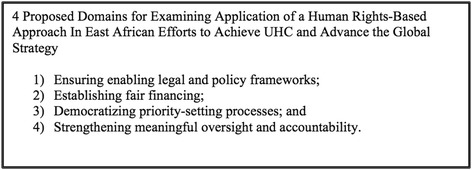
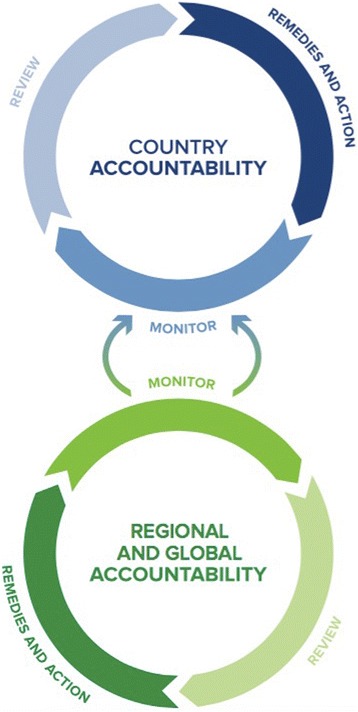
Applying a robust human rights framework would change thinking and decision-making in efforts to achieve Universal Health Coverage (UHC), and advance efforts to promote women's, children's, and adolescents' health in East Africa, which is a priority under the Sustainable Development Agenda. Nevertheless, there is a gap between global rhetoric of human rights and ongoing health reform efforts. This debate article seeks to fill part of that gap by setting out principles of human rights-based approaches (HRBAs), and then applying those principles to questions that countries undertaking efforts toward UHC and promoting women's, children's and adolescents' health, will need to face, focusing in particular on ensuring enabling legal and policy frameworks, establishing fair financing; priority-setting processes, and meaningful oversight and accountability mechanisms. In a region where democratic institutions are notoriously weak, we argue that the explicit application of a meaningful human rights framework could enhance equity, participation and accountability, and in turn the democratic legitimacy of health reform initiatives being undertaken in the region.
应用一个强有力的人权框架将改变为实现全民健康覆盖(UHC)所做努力中的思维和决策方式,并推进在东非促进妇女、儿童和青少年健康的工作,这是可持续发展议程中的一项优先事项。然而,全球人权言论与正在进行的卫生改革努力之间存在差距。这篇辩论文章旨在通过阐述基于人权的方法(HRBAs)的原则来填补部分差距,然后将这些原则应用于那些致力于实现全民健康覆盖并促进妇女、儿童和青少年健康的国家需要面对的问题,特别关注确保有利的法律和政策框架、建立公平融资、确定优先事项的过程以及有意义的监督和问责机制。在一个民主机构明显薄弱的地区,我们认为明确应用一个有意义的人权框架可以增强公平性、参与度和问责制,进而增强该地区正在开展的卫生改革举措的民主合法性。