Ahmed Madiha, Fatima Humaira, Qasim Muhammad, Gul Bilquees
Department of Pharmacy, Faculty of Biological Sciences, Quaid-i-Azam University, Islamabad, 45320, Pakistan.
Institute of Sustainable Halophyte Utilization, University of Karachi, Karachi, 75270, Pakistan.
BMC Complement Altern Med. 2017 Aug 3;17(1):386. doi: 10.1186/s12906-017-1894-x.
Plants have served either as a natural templates for the development of new chemicals or a phytomedicine since antiquity. Therefore, the present study was aimed to appraise the polarity directed antioxidant, cytotoxic, protein kinase inhibitory, antileishmanial and glucose modulatory attributes of a Himalayan medicinal plant- Quercus dilatata.
Total phenolic and flavonoid contents were determined colorimetrically and various polyphenols were identified by RP-HPLC analysis. Brine shrimp lethality, SRB and MTT assays were employed to test cytotoxicity against Artemia salina and human cancer cell lines respectively. Antileishmanial activity was determined using standard MTT protocol. Glucose modulation was assessed by α-amylase inhibition assay while disc diffusion assay was used to establish protein kinase inhibitory and antifungal spectrum.
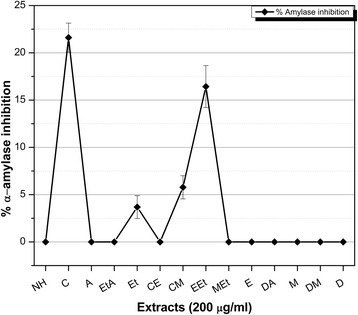
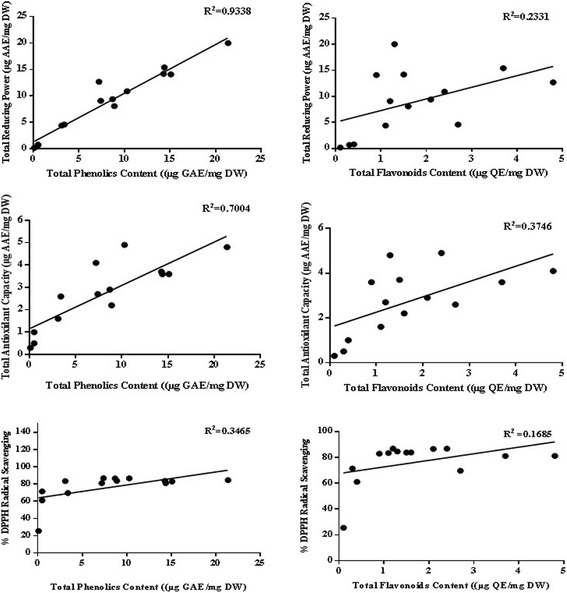
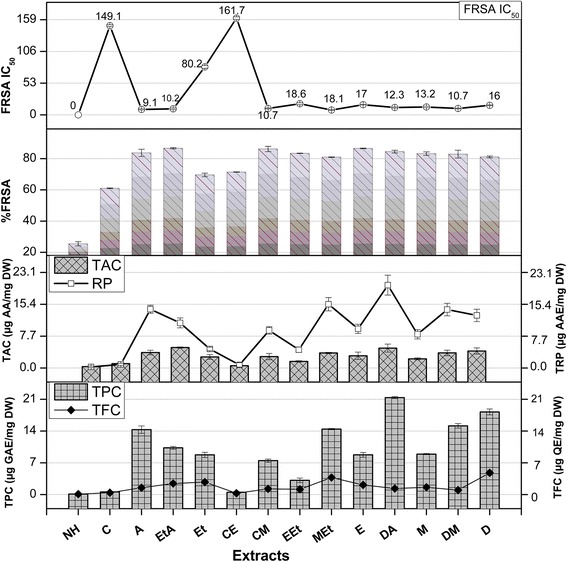
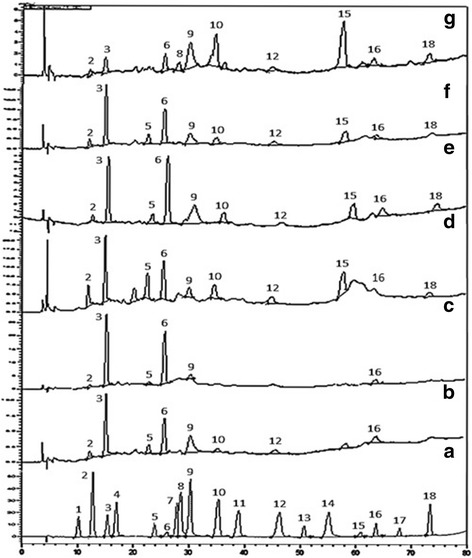
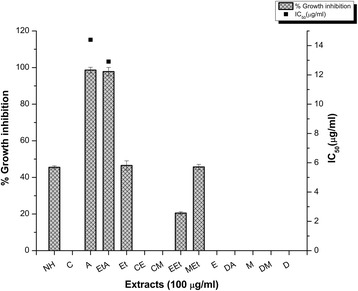
Among 14 extracts of aerial parts, distilled water-acetone extract demonstrated maximum extract recovery (10.52% w/w), phenolic content (21.37 ± 0.21 μg GAE/mg dry weight (DW)), total antioxidant capacity (4.81 ± 0.98 μg AAE/mg DW) and reducing power potential (20.03 ± 2.4 μg/mg DW). On the other hand, Distilled water extract proficiently extracted flavonoid content (4.78 ± 0.51 μg QE/mg DW). RP-HPLC analysis revealed the presence of significant amounts of phenolic metabolites (0.049 to 15.336 μg/mg extract) including, pyrocatechol, gallic acid, catechin, chlorogenic acid, p-coumaric acid, ferulic acid and quercetin. Highest free radical scavenging capacity was found in Methanol-Ethyl acetate extract (IC 8.1 ± 0.5 μg/ml). In the brine shrimp toxicity assay, most of the tested extracts (57%) showed high cytotoxicity. Among these, Chloroform-Methanol extract had highest cytotoxicity against THP-1 cell line (IC 3.88 ± 0.53 μg/ml). About 50% of the extracts were found to be moderately antiproliferative against Hep G2 cell line. Methanol extract exhibited considerable protein kinase inhibitory activity against Streptomyces 85E strain (28 ± 0.35 mm bald phenotype at 100 μg/disc; MIC = 12.5 μg/ disc) while, Chloroform extract displayed maximum antidiabetic activity (α-amylase inhibition of 21.61 ± 1.53% at 200 μg/ml concentration). The highest antileishmanial potential was found in Ethyl acetate-Acetone extract (12.91 ± 0.02% at 100 μg/ml concentration), while, Q. dilatata extracts also showed a moderate antifungal activity.
This study proposes that multiple-solvent system is a crucial variable to elucidate pharmacological potential of Q. dilatata and the results of the present findings prospects its potential as a resource for the discovery of novel anticancer, antidiabetic, antileishmanial and antioxidant agents.
自古以来,植物要么作为开发新化学物质的天然模板,要么作为植物药。因此,本研究旨在评估喜马拉雅药用植物——阔叶栎的极性导向抗氧化、细胞毒性、蛋白激酶抑制、抗利什曼原虫和葡萄糖调节特性。
采用比色法测定总酚和黄酮含量,并通过反相高效液相色谱(RP-HPLC)分析鉴定各种多酚。分别采用卤虫致死率、磺酰罗丹明B(SRB)和MTT法检测对卤虫和人癌细胞系的细胞毒性。使用标准MTT方案测定抗利什曼原虫活性。通过α-淀粉酶抑制试验评估葡萄糖调节作用,同时采用纸片扩散法确定蛋白激酶抑制和抗真菌谱。
在地上部分的14种提取物中,蒸馏水-丙酮提取物的提取物回收率最高(10.52% w/w)、酚含量最高(21.37 ± 0.21 μg没食子酸当量/mg干重(DW))、总抗氧化能力最强(4.81 ± 0.98 μg抗坏血酸当量/mg DW)以及还原能力最强(20.03 ± 2.4 μg/mg DW)。另一方面,蒸馏水提取物能高效提取黄酮含量(4.78 ± 0.51 μg槲皮素当量/mg DW)。RP-HPLC分析显示存在大量酚类代谢物(0.049至15.336 μg/mg提取物),包括邻苯二酚、没食子酸、儿茶素、绿原酸、对香豆酸、阿魏酸和槲皮素。甲醇-乙酸乙酯提取物的自由基清除能力最强(IC 8.1 ± 0.5 μg/ml)。在卤虫毒性试验中,大多数受试提取物(57%)表现出高细胞毒性。其中,氯仿-甲醇提取物对THP-1细胞系的细胞毒性最高(IC3.88 ± 0.53 μg/ml)。约50%的提取物对Hep G2细胞系具有中等抗增殖作用。甲醇提取物对链霉菌85E菌株表现出显著的蛋白激酶抑制活性(在100 μg/纸片时为28 ± 0.35 mm光秃表型;最低抑菌浓度(MIC) = 12.5 μg/纸片),而氯仿提取物表现出最大的抗糖尿病活性(在200 μg/ml浓度下α-淀粉酶抑制率为21.61 ± 1.53%)。乙酸乙酯-丙酮提取物的抗利什曼原虫潜力最高(在100 μg/ml浓度下为12.91 ± 0.02%),同时,阔叶栎提取物也表现出中等抗真菌活性。
本研究表明多溶剂系统是阐明阔叶栎药理潜力的关键变量,本研究结果预示其作为发现新型抗癌、抗糖尿病、抗利什曼原虫和抗氧化剂资源的潜力。