Ransom-Jones Emma, McCarthy Alan J, Haldenby Sam, Doonan James, McDonald James E
School of Biological Sciences, Bangor University, Bangor, Gwynedd, United Kingdom.
Microbiology Research Group, Institute of Integrative Biology, University of Liverpool, Liverpool, United Kingdom.
mSphere. 2017 Aug 2;2(4). doi: 10.1128/mSphere.00300-17. eCollection 2017 Jul-Aug.
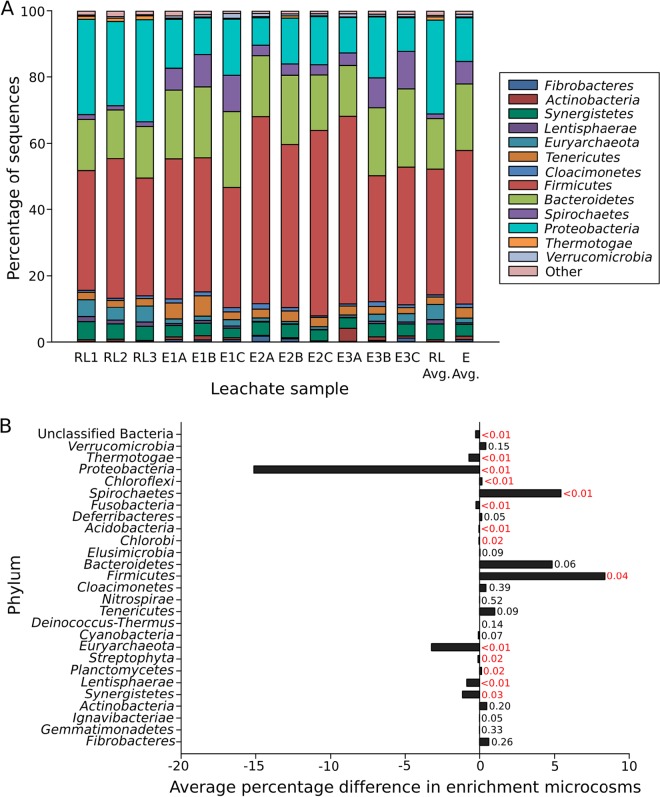
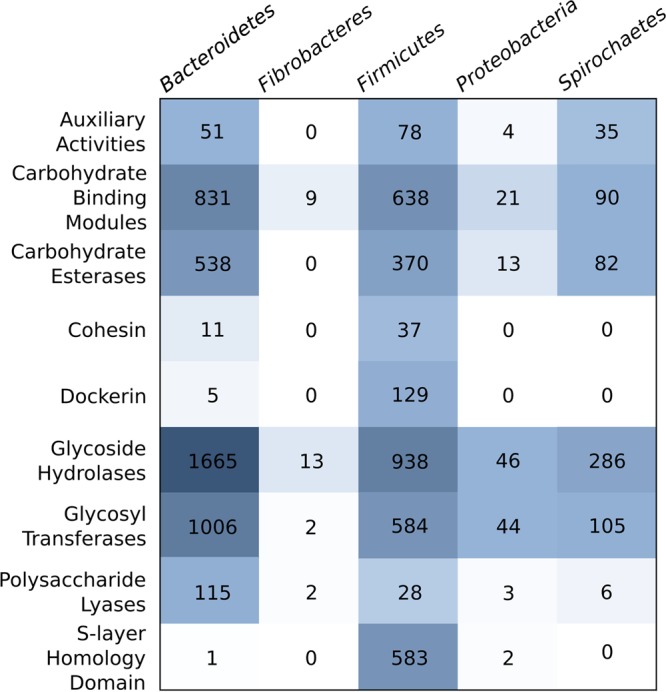
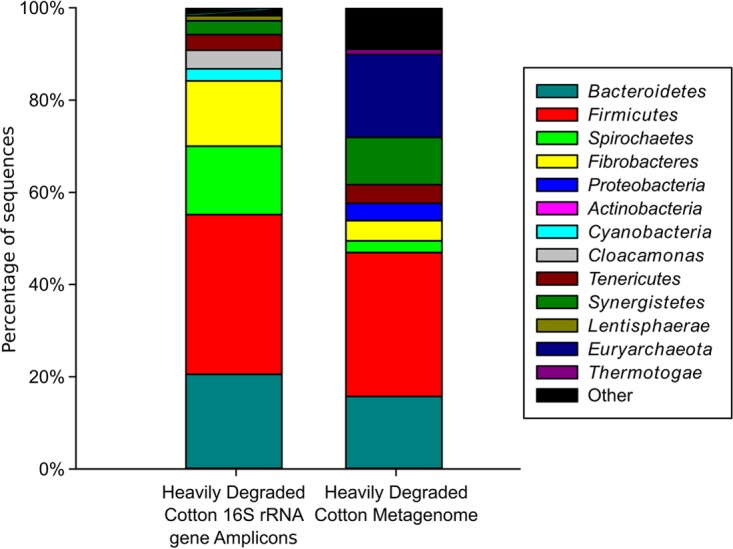
The microbial conversion of lignocellulosic biomass for biofuel production represents a renewable alternative to fossil fuels. However, the discovery of new microbial enzymes with high activity is critical for improving biomass conversion processes. While attempts to identify superior lignocellulose-degrading enzymes have focused predominantly on the animal gut, biomass-degrading communities in landfill sites represent an unexplored resource of hydrolytic enzymes for biomass conversion. Here, to address the paucity of information on biomass-degrading microbial diversity beyond the gastrointestinal tract, cellulose (cotton) "baits" were incubated in landfill leachate microcosms to enrich the landfill cellulolytic microbial community for taxonomic and functional characterization. Metagenome and 16S rRNA gene amplicon sequencing demonstrated the dominance of , , , and in the landfill cellulolytic community. Functional metagenome analysis revealed 8,371 carbohydrate active enzymes (CAZymes) belonging to 244 CAZyme families. In addition to observing biomass-degrading enzymes of anaerobic bacterial "cellulosome" systems of members of the , we report the first detection of the cellulase system and the polysaccharide utilization locus (PUL) in landfill sites. These data provide evidence for the presence of multiple mechanisms of biomass degradation in the landfill microbiome and highlight the extraordinary functional diversity of landfill microorganisms as a rich source of biomass-degrading enzymes of potential biotechnological significance. The microbial conversion of lignocellulosic biomass for biofuel production represents a renewable alternative to fossil fuels. However, the discovery of new microbial enzymes with high activity is critical for improving biomass conversion processes. While attempts to identify superior lignocellulose-degrading enzymes have focused predominantly on the animal gut, biomass-degrading communities in landfill sites represent an unexplored resource of hydrolytic enzymes for biomass conversion. Here, we identified , , and as key phyla in the landfill cellulolytic community, detecting 8,371 carbohydrate active enzymes (CAZymes) that represent at least three of the recognized strategies for cellulose decomposition. These data highlight substantial hydrolytic enzyme diversity in landfill sites as a source of new enzymes for biomass conversion.
将木质纤维素生物质进行微生物转化以生产生物燃料,是化石燃料的一种可再生替代方案。然而,发现具有高活性的新型微生物酶对于改进生物质转化过程至关重要。虽然此前识别优质木质纤维素降解酶的尝试主要集中在动物肠道,但垃圾填埋场中的生物质降解群落是用于生物质转化的水解酶的未开发资源。在此,为了解决胃肠道以外生物质降解微生物多样性信息匮乏的问题,将纤维素(棉花)“诱饵”置于垃圾渗滤液微观环境中,以富集用于分类和功能表征的垃圾填埋场纤维素分解微生物群落。宏基因组和16S rRNA基因扩增子测序表明,在垃圾填埋场纤维素分解群落中, 、 、 和 占主导地位。功能宏基因组分析揭示了属于244个碳水化合物活性酶(CAZyme)家族的8371种碳水化合物活性酶。除了观察到 成员的厌氧细菌“纤维小体”系统的生物质降解酶外,我们还首次在垃圾填埋场检测到 纤维素酶系统和 多糖利用位点(PUL)。这些数据为垃圾填埋场微生物群落中存在多种生物质降解机制提供了证据,并突出了垃圾填埋场微生物作为具有潜在生物技术意义的丰富生物质降解酶来源的非凡功能多样性。将木质纤维素生物质进行微生物转化以生产生物燃料,是化石燃料的一种可再生替代方案。然而,发现具有高活性的新型微生物酶对于改进生物质转化过程至关重要。虽然此前识别优质木质纤维素降解酶的尝试主要集中在动物肠道,但垃圾填埋场中的生物质降解群落是用于生物质转化的水解酶的未开发资源。在此,我们确定 、 和 为垃圾填埋场纤维素分解群落中的关键门,检测到8371种碳水化合物活性酶(CAZyme),这些酶代表了至少三种公认的纤维素分解策略。这些数据突出了垃圾填埋场中丰富的水解酶多样性,可作为生物质转化新酶的来源。