Environmental Research and Innovation Department, Luxembourg Institute of Science and Technology, Belvaux, Luxembourg.
Laboratory of Bioengineering, Earth and Life Institute, Applied Microbiology, Université Catholique de Louvain, Louvain-la-Neuve, Belgium.
Appl Environ Microbiol. 2019 Jul 18;85(15). doi: 10.1128/AEM.00895-19. Print 2019 Aug 1.
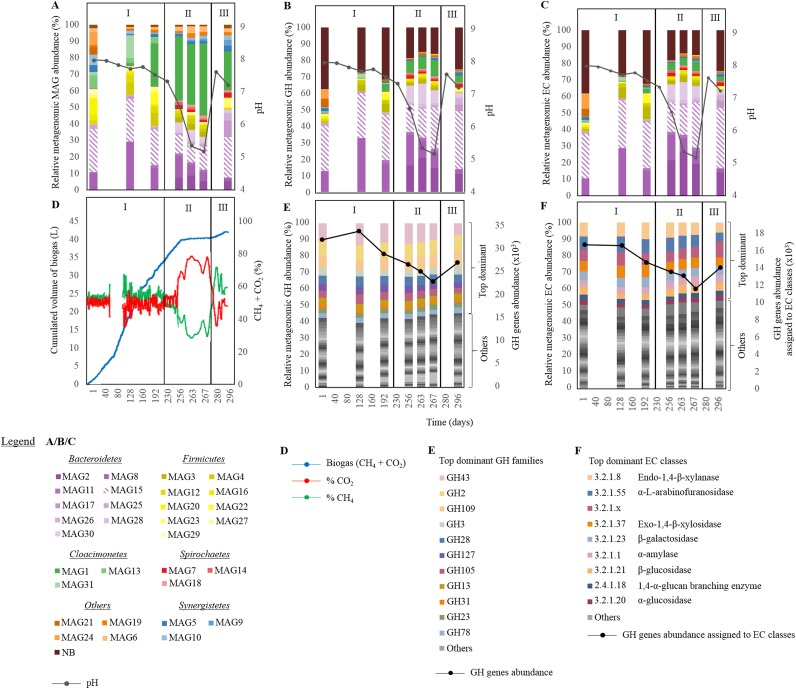
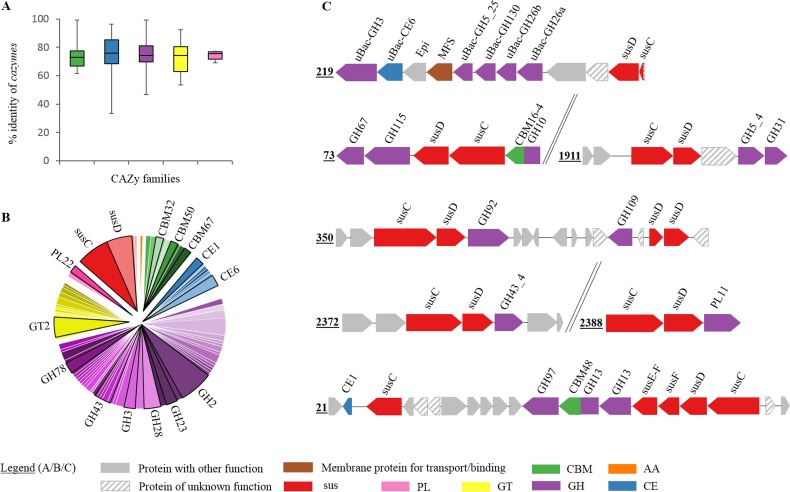
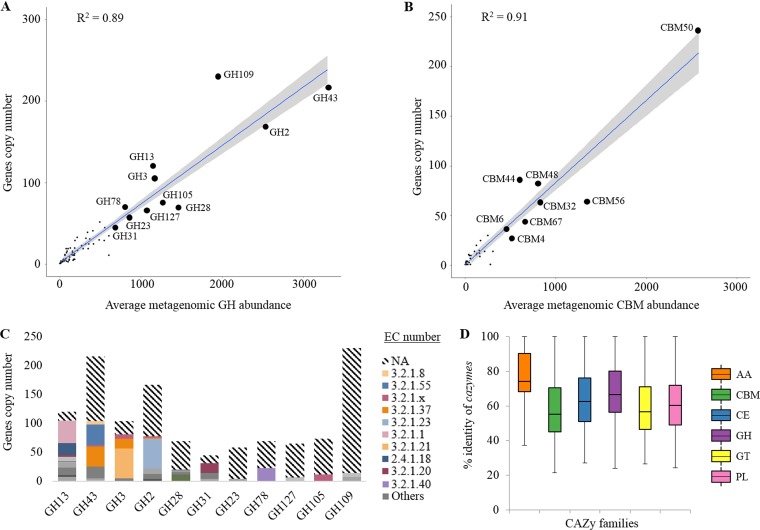
Increased hydrolysis of easily digestible biomass may lead to acidosis of anaerobic reactors and decreased methane production. Previously, it was shown that the structure of microbial communities changed during acidosis; however, once the conditions are back to optimal, biogas (initially CO) production quickly restarts. This suggests the retention of the community functional redundancy during the process failure. In this study, with the use of metagenomics and downstream bioinformatics analyses, we characterize the carbohydrate hydrolytic potential of the microbial community, with a special focus on acidosis. To that purpose, carbohydrate-active enzymes were identified, and to further link the community hydrolytic potential with key microbes, bacterial genomes were reconstructed. In addition, we characterized biochemically the specificity and activity of selected enzymes, thus verifying the accuracy of the predictions. The results confirm the retention of the community hydrolytic potential during acidosis and indicate to be largely involved in biomass degradation. showed higher diversity and genomic content of carbohydrate hydrolytic enzymes that might favor the dominance of this phylum over other bacteria in some anaerobic reactors. The combination of bioinformatic analyses and activity tests enabled us to propose a model of acetylated glucomannan degradation by The enzymatic hydrolysis of lignocellulosic biomass is mainly driven by the action of carbohydrate-active enzymes. By characterizing the gene profiles at the different stages of the anaerobic digestion experiment, we showed that the microbiome retains its hydrolytic functional redundancy even during severe acidosis, despite significant changes in taxonomic composition. By analyzing reconstructed bacterial genomes, we demonstrate that hydrolytic gene diversity likely favors the abundance of this phylum in some anaerobic digestion systems. Further, we observe genetic redundancy within the group, which accounts for the preserved hydrolytic potential during acidosis. This work also uncovers new polysaccharide utilization loci involved in the deconstruction of various biomasses and proposes the model of acetylated glucomannan degradation by Acetylated glucomannan-enriched biomass is a common substrate for many industries, including pulp and paper production. Using naturally evolved cocktails of enzymes for biomass pretreatment could be an interesting alternative to the commonly used chemical pretreatments.
易降解生物质水解增加可能导致厌氧反应器酸中毒和甲烷生成减少。此前研究表明,微生物群落结构在酸中毒期间发生变化;然而,一旦条件恢复到最佳状态,沼气(最初为 CO)生产会迅速重新开始。这表明在过程失败期间保留了群落功能冗余。在这项研究中,我们使用宏基因组学和下游生物信息学分析来描述微生物群落的碳水化合物水解潜力,特别关注酸中毒。为此,鉴定了碳水化合物活性酶,并进一步将群落水解潜力与关键微生物联系起来,重建了细菌基因组。此外,我们还对选定酶的特异性和活性进行了生化表征,从而验证了预测的准确性。结果证实了群落水解潜力在酸中毒期间的保留,并表明其在生物质降解中起主要作用。 表现出更高的多样性和碳水化合物水解酶的基因组含量,这可能有利于该门在某些厌氧反应器中对其他细菌的优势。生物信息学分析和活性测试的结合使我们能够提出 通过乙酰化葡甘露聚糖降解的模型。木质纤维素生物质的酶水解主要由碳水化合物活性酶的作用驱动。通过在厌氧消化实验的不同阶段表征基因谱,我们表明,尽管分类组成发生了重大变化,但微生物组在严重酸中毒期间仍保留其水解功能冗余。通过分析重建的细菌基因组,我们证明了 水解基因多样性可能有利于该门在某些厌氧消化系统中的丰度。此外,我们观察到 组内的遗传冗余,这解释了酸中毒期间保留的水解潜力。这项工作还揭示了涉及各种生物质解构的新多糖利用基因座,并提出了 通过乙酰化葡甘露聚糖降解的模型。富含乙酰化葡甘露聚糖的生物质是许多行业(包括纸浆和造纸生产)的常见底物。使用天然进化的酶混合物进行生物质预处理可能是替代常用化学预处理的有趣选择。