Department of Psychiatry, University of Pittsburgh Medical Center, Pittsburgh, Pennsylvania.
Department of Neurology, Nagoya University Graduate School of Medicine, Nagoya, Japan.
Biol Psychiatry. 2018 Dec 1;84(11):817-826. doi: 10.1016/j.biopsych.2017.06.022. Epub 2017 Jun 27.
Disruptions in circadian rhythms are associated with an increased risk for bipolar disorder. Moreover, studies show that the circadian protein CLOCK (circadian locomotor output cycles kaput) is involved in regulating monoaminergic systems and mood-related behavior. However, the molecular and synaptic mechanisms underlying this relationship remain poorly understood.
Using ex vivo whole-cell patch-clamp electrophysiology in ClockΔ19 mutant and wild-type mice we characterized alterations in excitatory synaptic transmission, strength, and intrinsic excitability of nucleus accumbens (NAc) neurons. We performed protein crosslinking and Western blot analysis to examine surface and intracellular levels and rhythm of the glutamate receptor subunit, GluA1, in the NAc. Viral-mediated overexpression of Gria1 in the NAc and behavioral assays were also used.
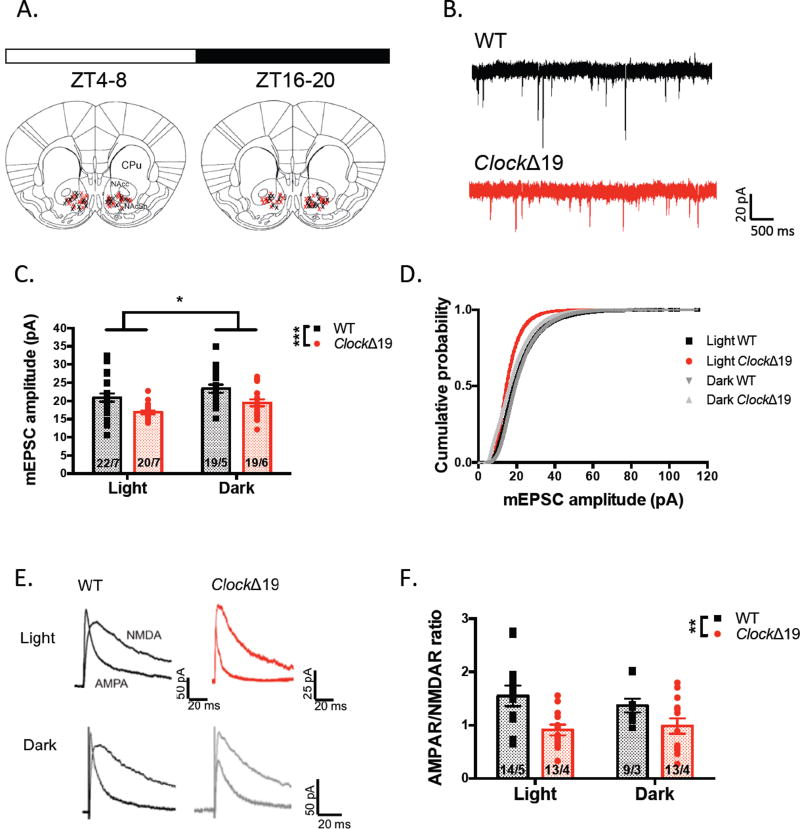
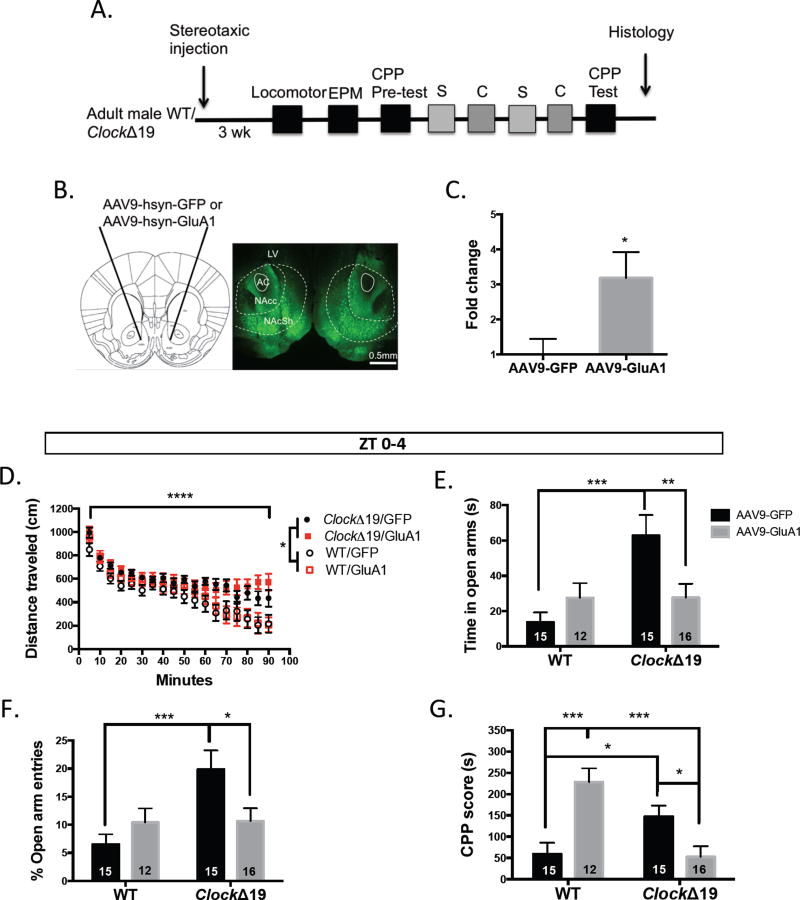
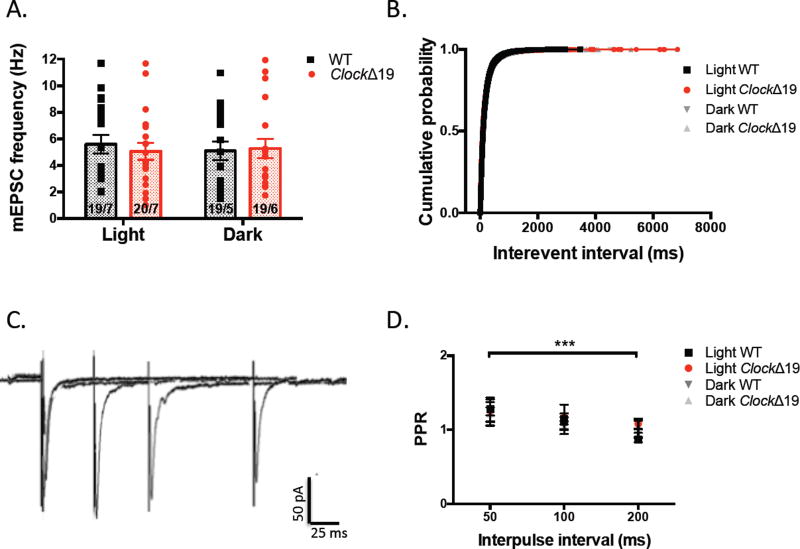
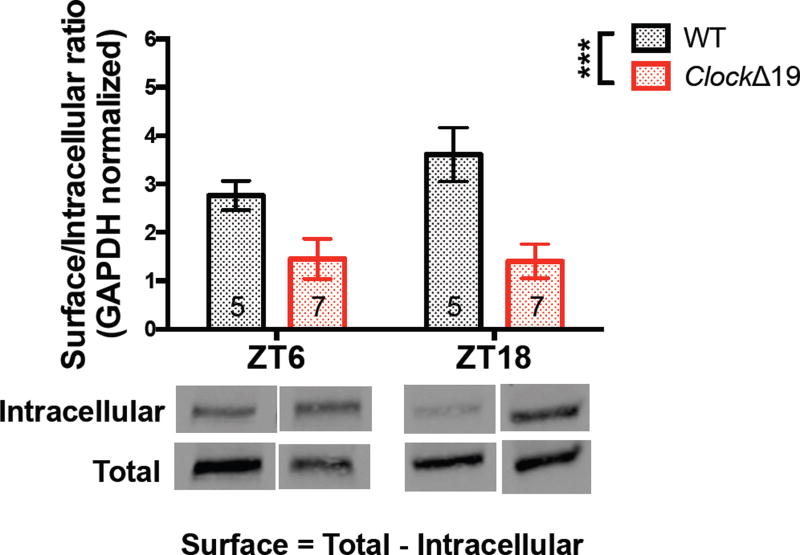
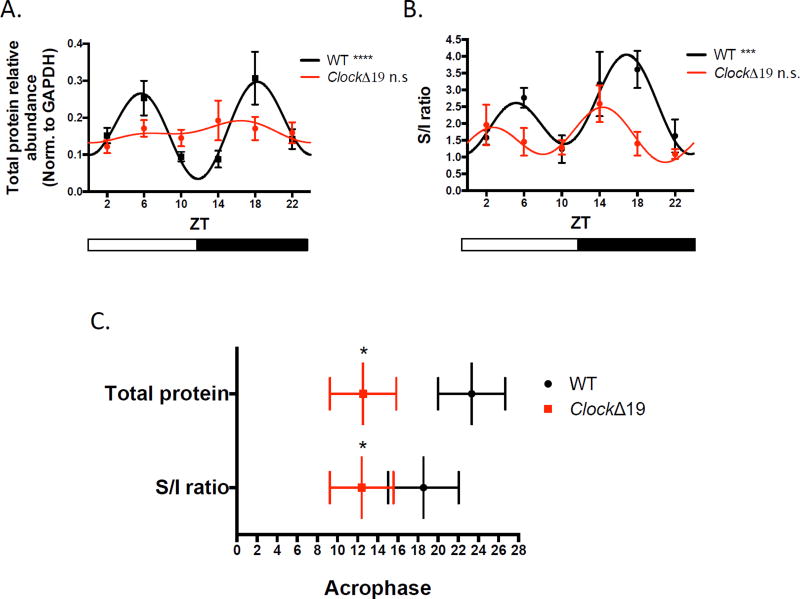
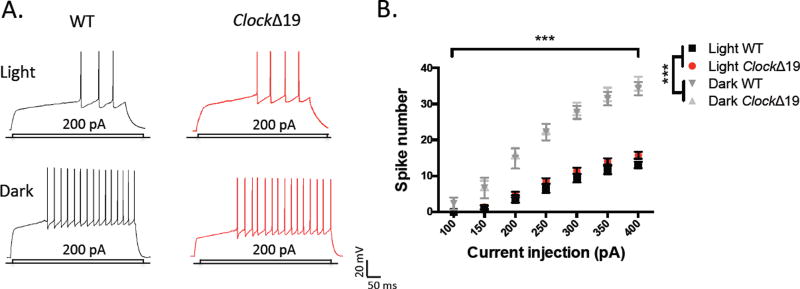
Compared with wild-type mice, ClockΔ19 mice display reduced alpha-amino-3-hydroxy-5-methyl-4-isoxazole propionic acid receptor-mediated excitatory synaptic responses at NAc medium spiny neurons. These alterations are likely postsynaptic, as presynaptic release of glutamate onto medium spiny neurons is unaltered in mutant mice. Additionally, NAc surface protein levels and the rhythm of GRIA1 are decreased in ClockΔ19 mice diurnally, consistent with reduced functional synaptic response. Furthermore, we observed a significantly hyperpolarized resting membrane potential of ClockΔ19 medium spiny neurons, suggesting lowered intrinsic excitability. Last, overexpression of functional Gria1 in the NAc of mutant mice was able to normalize increased exploratory drive and reward sensitivity behavior when mice are in a manic-like state.
Together, our findings demonstrate that NAc excitatory signaling via Gria1 expression is integral to the effects of Clock gene disruption on manic-like behaviors.
昼夜节律紊乱与双相情感障碍的风险增加有关。此外,研究表明,昼夜节律蛋白 CLOCK(生物钟输出周期破坏)参与调节单胺能系统和与情绪相关的行为。然而,这种关系的分子和突触机制仍知之甚少。
我们使用 ClockΔ19 突变体和野生型小鼠的离体全细胞膜片钳电生理学技术,对伏隔核(NAc)神经元的兴奋性突触传递、强度和固有兴奋性的变化进行了特征描述。我们进行了蛋白交联和 Western blot 分析,以检查 NAc 中谷氨酸受体亚基 GluA1 的表面和细胞内水平和节律。我们还使用病毒介导的 NAc 中 Gria1 的过表达和行为检测。
与野生型小鼠相比,ClockΔ19 小鼠在 NAc 中的α-氨基-3-羟基-5-甲基-4-异恶唑丙酸受体介导的兴奋性突触反应减少。这些变化可能是突触后的,因为在突变小鼠中谷氨酸对中间神经元的突触前释放没有改变。此外,ClockΔ19 小鼠的 NAc 表面蛋白水平和 GRIA1 的节律呈昼夜节律性下降,与功能性突触反应减少一致。此外,我们观察到 ClockΔ19 中间神经元的静息膜电位明显超极化,表明内在兴奋性降低。最后,在突变小鼠的 NAc 中过表达功能性 Gria1 能够使在躁狂样状态下的小鼠的探索驱动和奖赏敏感性行为增加正常化。
总之,我们的研究结果表明,NAc 中的兴奋性信号通过 Gria1 表达是 Clock 基因缺失对躁狂样行为影响的关键因素。