Mayer Manfred, Unterseer Sandra, Bauer Eva, de Leon Natalia, Ordas Bernardo, Schön Chris-Carolin
Plant Breeding, TUM School of Life Sciences Weihenstephan, Technical University of Munich, 85354, Freising, Germany.
Department of Agronomy, University of Wisconsin-Madison, Madison, WI, USA, 53706.
Theor Appl Genet. 2017 Nov;130(11):2283-2295. doi: 10.1007/s00122-017-2959-4. Epub 2017 Aug 5.
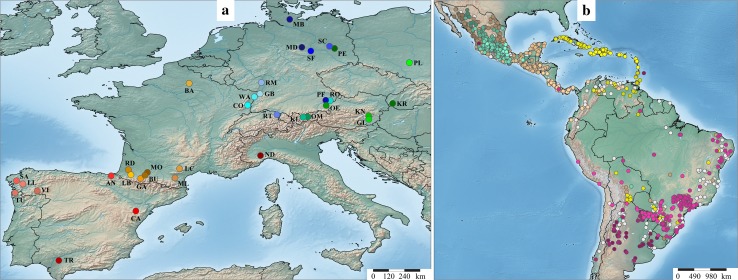
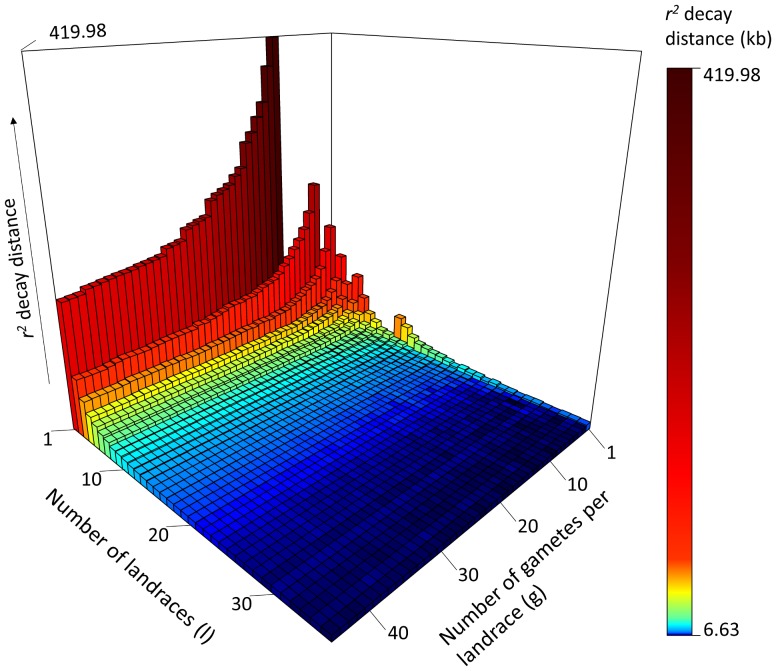
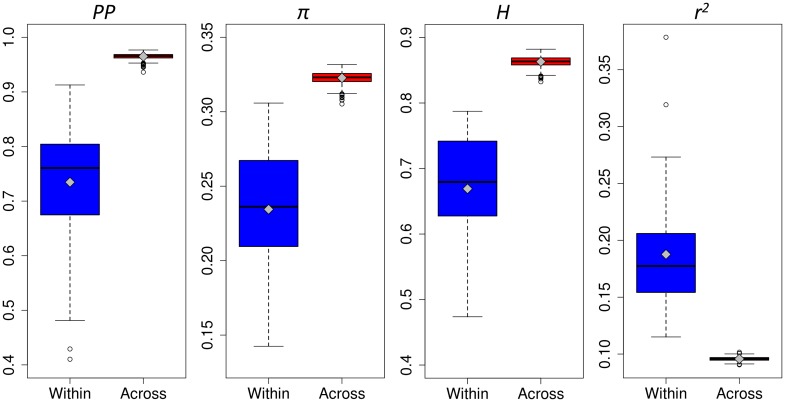
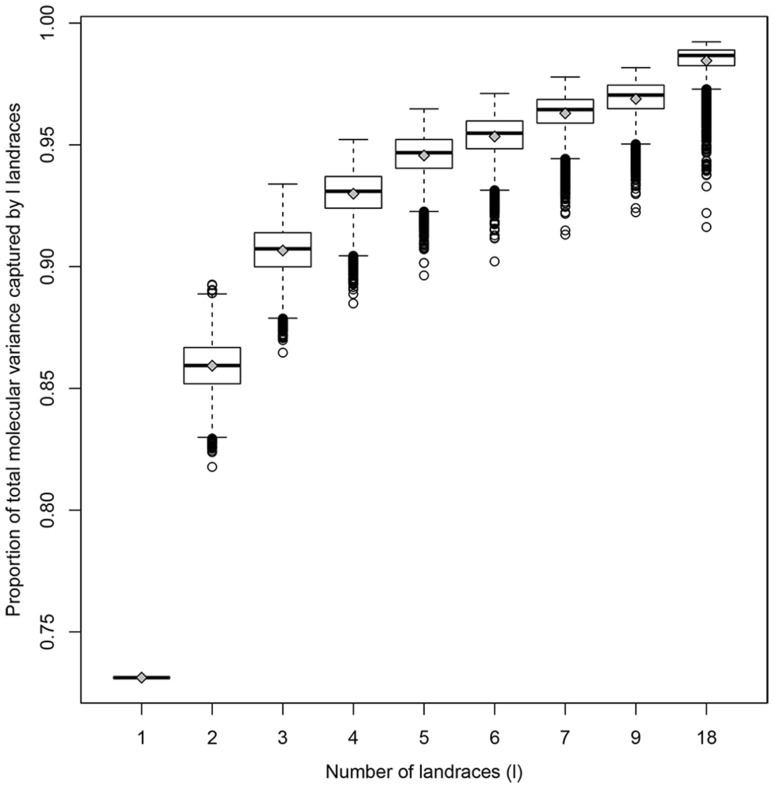
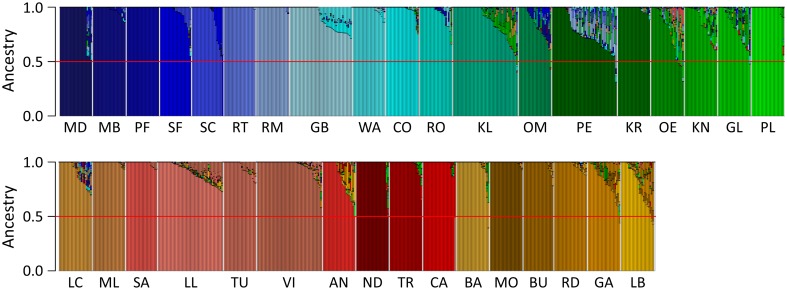
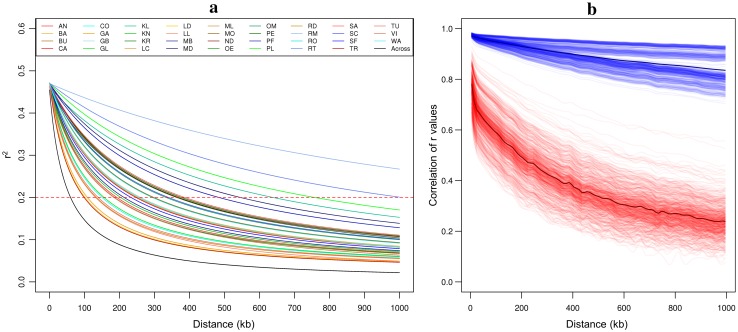
Capitalizing upon the genomic characteristics of long-term random mating populations, sampling from pre-selected landraces is a promising approach for broadening the genetic base of elite germplasm for quantitative traits. Genome-enabled strategies for harnessing untapped allelic variation of landraces are currently evolving. The success of such approaches depends on the choice of source material. Thus, the analysis of different strategies for sampling allelic variation from landraces and their impact on population diversity and linkage disequilibrium (LD) is required to ensure the efficient utilization of diversity. We investigated the impact of different sampling strategies on diversity parameters and LD based on high-density genotypic data of 35 European maize landraces each represented by more than 20 individuals. On average, five landraces already captured ~95% of the molecular diversity of the entire dataset. Within landraces, absence of pronounced population structure, consistency of linkage phases and moderate to low LD levels were found. When combining data of up to 10 landraces, LD decay distances decreased to a few kilobases. Genotyping 24 individuals per landrace with 5k SNPs was sufficient for obtaining representative estimates of diversity and LD levels to allow an informed pre-selection of landraces. Integrating results from European with Central and South American landraces revealed that European landraces represent a unique and diverse spectrum of allelic variation. Sampling strategies for harnessing allelic variation from landraces depend on the study objectives. If the focus lies on the improvement of elite germplasm for quantitative traits, we recommend sampling from pre-selected landraces, as it yields a wide range of diversity, allows optimal marker imputation, control for population structure and avoids the confounding effects of strong adaptive alleles.
利用长期随机交配群体的基因组特征,从预先选择的地方品种中取样是拓宽优良种质数量性状遗传基础的一种有前景的方法。利用地方品种未开发等位基因变异的基因组策略目前正在不断发展。这些方法的成功取决于源材料的选择。因此,需要分析从地方品种中取样等位基因变异的不同策略及其对群体多样性和连锁不平衡(LD)的影响,以确保多样性的有效利用。我们基于35个欧洲玉米地方品种(每个品种有20多个个体)的高密度基因型数据,研究了不同取样策略对多样性参数和LD的影响。平均而言,5个地方品种已经捕获了整个数据集约95%的分子多样性。在地方品种内部,未发现明显的群体结构、连锁相的一致性以及中等到低水平的LD。当合并多达10个地方品种的数据时,LD衰减距离降至几千碱基。每个地方品种用5k个单核苷酸多态性(SNP)对24个个体进行基因分型,足以获得多样性和LD水平的代表性估计,以便对地方品种进行明智的预选。将欧洲与中美洲和南美洲地方品种的结果相结合表明,欧洲地方品种代表了独特且多样的等位基因变异谱。利用地方品种等位基因变异的取样策略取决于研究目标。如果重点在于改良优良种质的数量性状,我们建议从预先选择的地方品种中取样,因为它能产生广泛的多样性,允许进行最佳的标记填充,控制群体结构,并避免强适应性等位基因的混杂效应。