Zhou Jun, Wang Chao
School of Communication and Information Engineering, University of Electronic Science and Technology of China, Chengdu 611731, China.
Department of Engineering Product Development, Singapore University of Technology and Design, Singapore 487372, Singapore.
Sensors (Basel). 2017 Aug 6;17(8):1809. doi: 10.3390/s17081809.
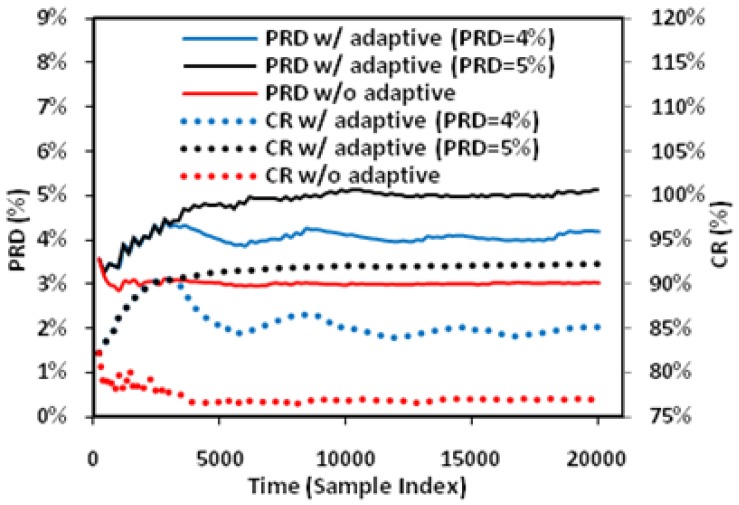
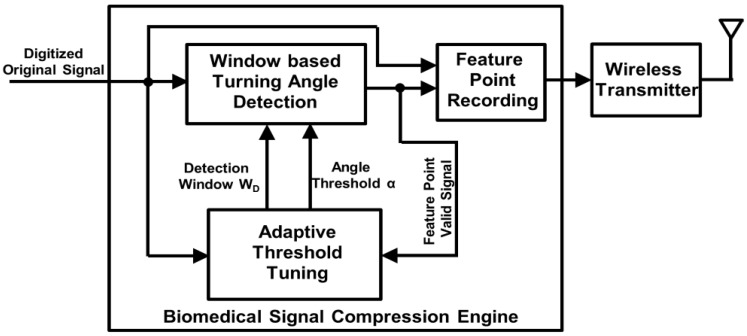
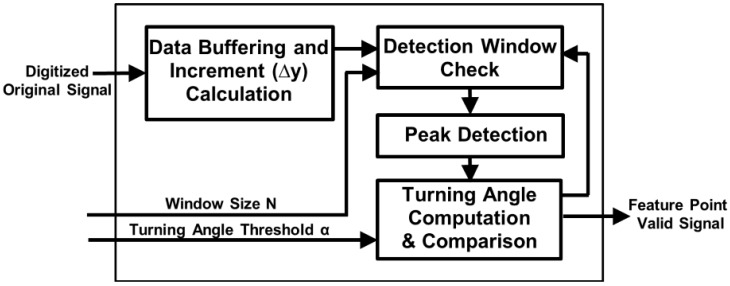
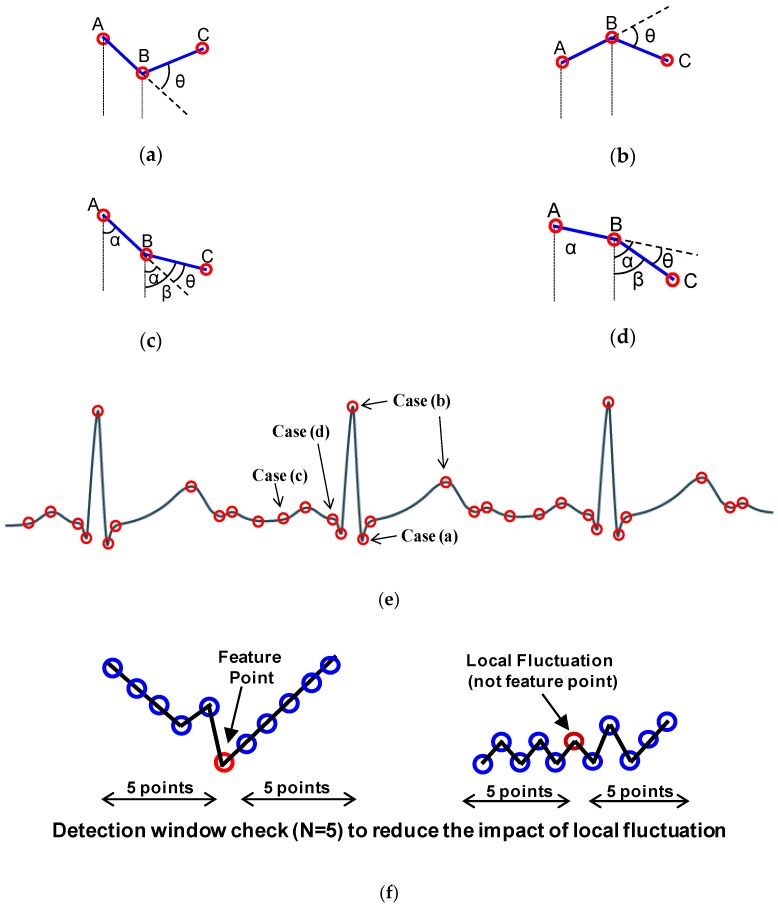
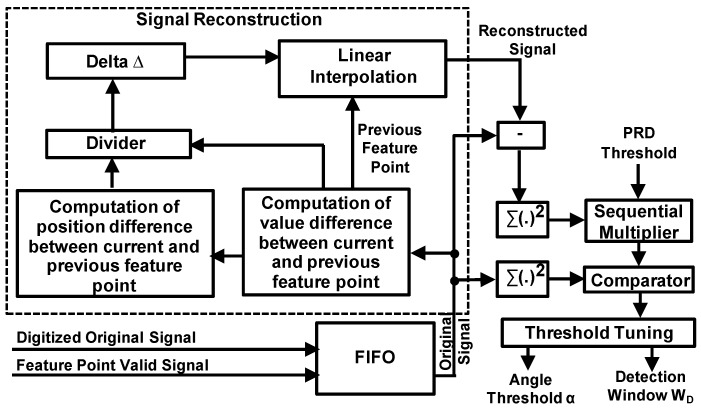
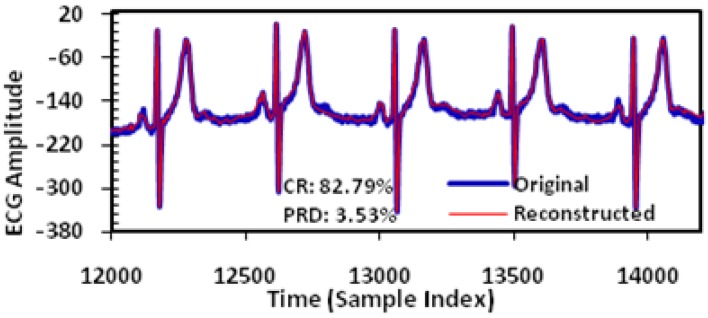
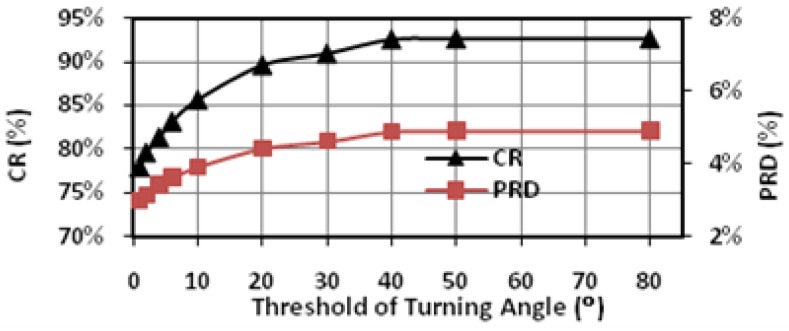
Intelligent sensing is drastically changing our everyday life including healthcare by biomedical signal monitoring, collection, and analytics. However, long-term healthcare monitoring generates tremendous data volume and demands significant wireless transmission power, which imposes a big challenge for wearable healthcare sensors usually powered by batteries. Efficient compression engine design to reduce wireless transmission data rate with ultra-low power consumption is essential for wearable miniaturized healthcare sensor systems. This paper presents an ultra-low power biomedical signal compression engine for healthcare data sensing and analytics in the era of big data and sensor intelligence. It extracts the feature points of the biomedical signal by window-based turning angle detection. The proposed approach has low complexity and thus low power consumption while achieving a large compression ratio (CR) and good quality of reconstructed signal. Near-threshold design technique is adopted to further reduce the power consumption on the circuit level. Besides, the angle threshold for compression can be adaptively tuned according to the error between the original signal and reconstructed signal to address the variation of signal characteristics from person to person or from channel to channel to meet the required signal quality with optimal CR. For demonstration, the proposed biomedical compression engine has been used and evaluated for ECG compression. It achieves an average (CR) of 71.08% and percentage root-mean-square difference (PRD) of 5.87% while consuming only 39 nW. Compared to several state-of-the-art ECG compression engines, the proposed design has significantly lower power consumption while achieving similar CRD and PRD, making it suitable for long-term wearable miniaturized sensor systems to sense and collect healthcare data for remote data analytics.
智能传感正在通过生物医学信号监测、采集和分析极大地改变我们的日常生活,包括医疗保健领域。然而,长期的医疗保健监测会产生海量数据,并且需要大量的无线传输功率,这对通常由电池供电的可穿戴医疗保健传感器构成了巨大挑战。设计高效的压缩引擎以超低功耗降低无线传输数据速率,对于可穿戴小型化医疗保健传感器系统至关重要。本文提出了一种用于大数据和传感器智能时代医疗数据传感与分析的超低功耗生物医学信号压缩引擎。它通过基于窗口的转角检测提取生物医学信号的特征点。所提出的方法具有低复杂度,因而功耗低,同时能实现大压缩比(CR)和良好的重构信号质量。采用近阈值设计技术在电路层面进一步降低功耗。此外,压缩的角度阈值可根据原始信号与重构信号之间的误差进行自适应调整,以解决人与人之间或通道与通道之间信号特征的变化,从而以最优的CR满足所需的信号质量。为进行演示,所提出的生物医学压缩引擎已用于心电图(ECG)压缩并进行评估。它实现了平均71.08%的压缩比(CR)和5.87%的均方根误差百分比(PRD),而功耗仅为39纳瓦。与几种最先进的ECG压缩引擎相比,所提出的设计在实现相似的CRD和PRD的同时,功耗显著更低,使其适用于长期可穿戴小型化传感器系统,以传感和收集医疗数据用于远程数据分析。