Molecular Science and Biomedicine Laboratory (MBL), State Key Laboratory of Chemo/Bio-Sensing and Chemometrics, College of Chemistry and Chemical Engineering, Hunan University, Aptamer Engineering Center of Hunan Province, Changsha 410082, China.
College of Life Sciences, Molecular Science and Biomedicine Laboratory (MBL), State Key Laboratory of Chemo/Bio-Sensing and Chemometrics, Hunan University, Aptamer Engineering Center of Hunan Province, Changsha 410082, China.
Sensors (Basel). 2017 Jul 28;17(8):1736. doi: 10.3390/s17081736.
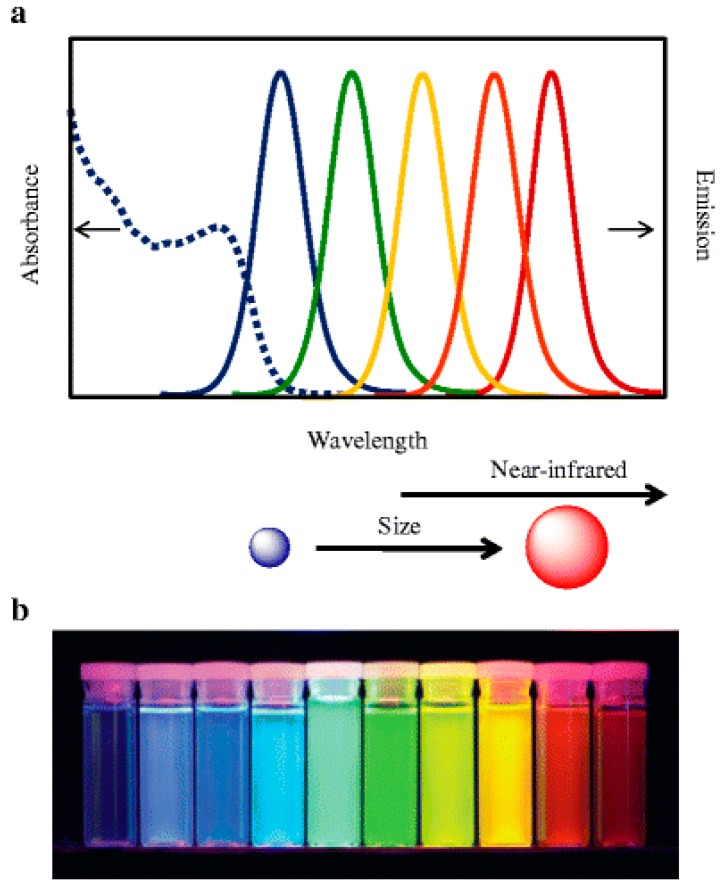
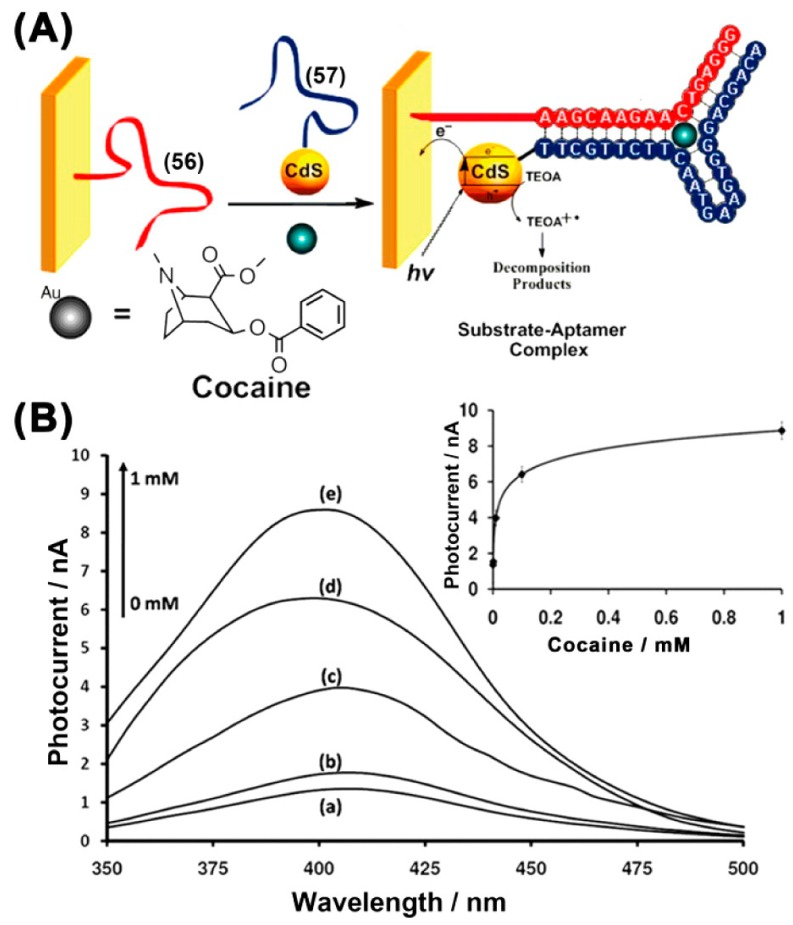
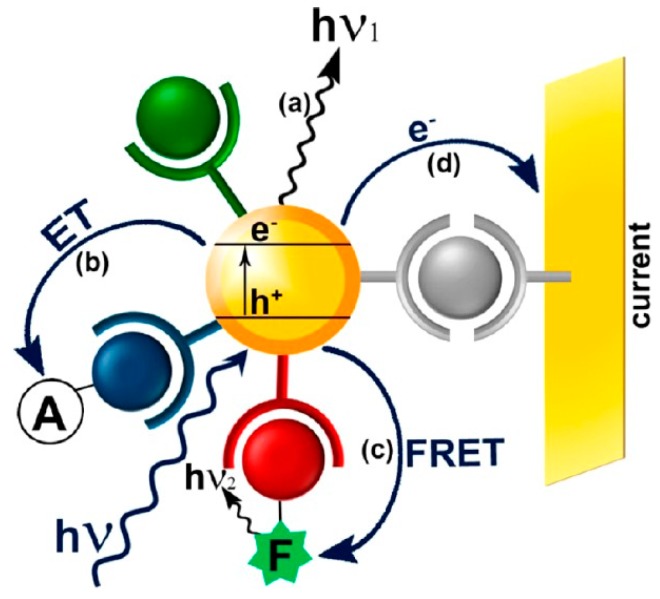
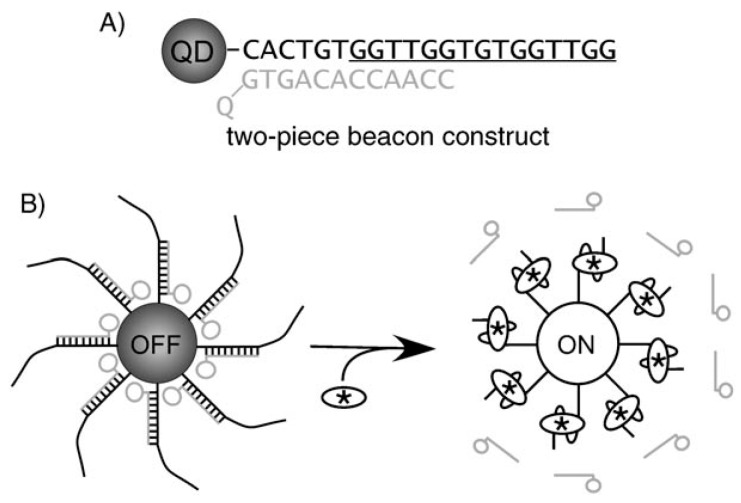
Semiconductor quantum dots have attracted extensive interest in the biosensing area because of their properties, such as narrow and symmetric emission with tunable colors, high quantum yield, high stability and controllable morphology. The introduction of various reactive functional groups on the surface of semiconductor quantum dots allows one to conjugate a spectrum of ligands, antibodies, peptides, or nucleic acids for broader and smarter applications. Among these ligands, aptamers exhibit many advantages including small size, high chemical stability, simple synthesis with high batch-to-batch consistency and convenient modification. More importantly, it is easy to introduce nucleic acid amplification strategies and/or nanomaterials to improve the sensitivity of aptamer-based sensing systems. Therefore, the combination of semiconductor quantum dots and aptamers brings more opportunities in bioanalysis. Here we summarize recent advances on aptamer-functionalized semiconductor quantum dots in biosensing applications. Firstly, we discuss the properties and structure of semiconductor quantum dots and aptamers. Then, the applications of biosensors based on aptamer-modified semiconductor quantum dots by different signal transducing mechanisms, including optical, electrochemical and electrogenerated chemiluminescence approaches, is discussed. Finally, our perspectives on the challenges and opportunities in this promising field are provided.
半导体量子点因其性质而在生物传感领域引起了广泛的关注,这些性质包括可调颜色的窄而对称的发射、高量子产率、高稳定性和可控形态。在半导体量子点表面引入各种反应性功能基团,允许人们将一系列配体、抗体、肽或核酸结合起来,以实现更广泛和更智能的应用。在这些配体中,适体具有许多优点,包括体积小、化学稳定性高、合成简单、批次间一致性高且易于修饰。更重要的是,很容易引入核酸扩增策略和/或纳米材料来提高基于适体的传感系统的灵敏度。因此,半导体量子点和适体的结合为生物分析带来了更多的机会。在这里,我们总结了近年来在生物传感应用中基于适体功能化半导体量子点的进展。首先,我们讨论了半导体量子点和适体的性质和结构。然后,我们讨论了基于不同信号转导机制的适体修饰半导体量子点的生物传感器的应用,包括光学、电化学和电致化学发光方法。最后,我们提供了对这个有前途的领域的挑战和机遇的看法。