Australian National University, Research School of Biology, Canberra, Australia.
Division of Material Science (Physics), Graduate school of Science, Nagoya University, Furo-cho, Chikusa, Nagoya, 464-8602, Japan.
Sci Rep. 2017 Aug 8;7(1):7604. doi: 10.1038/s41598-017-07671-1.
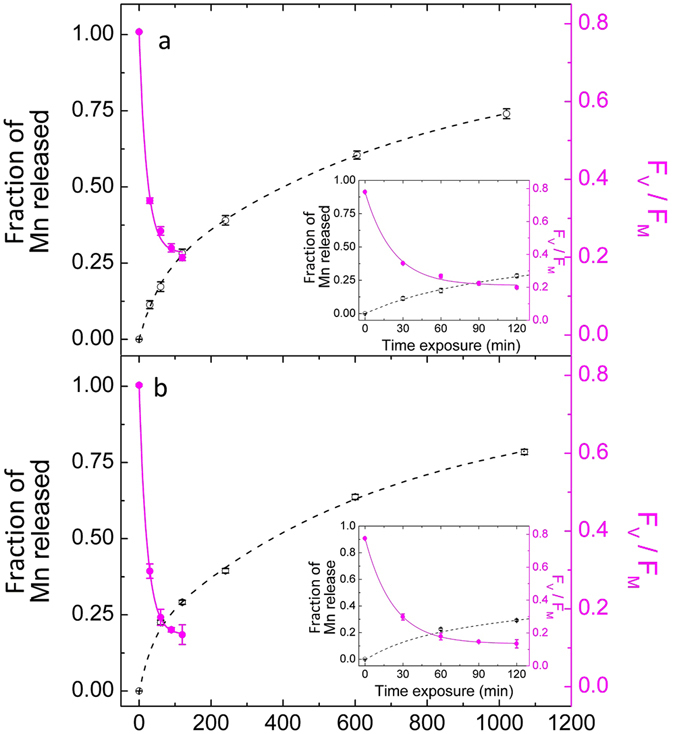
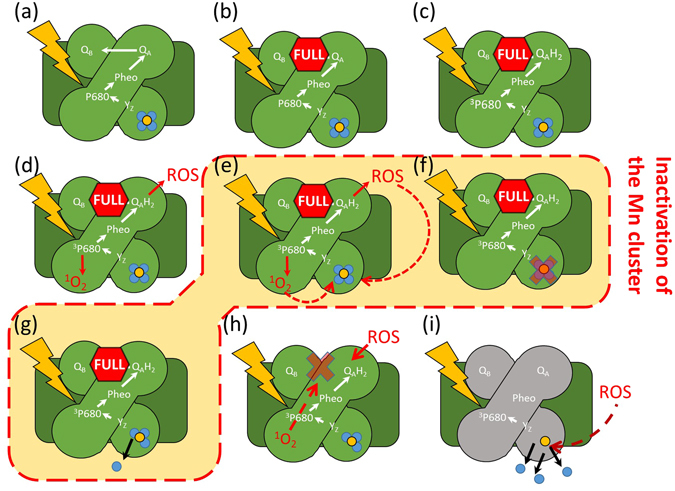
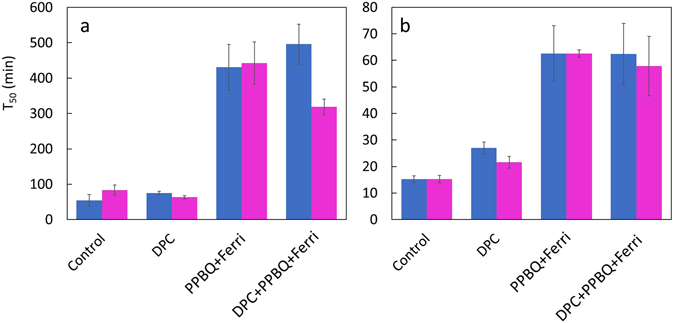
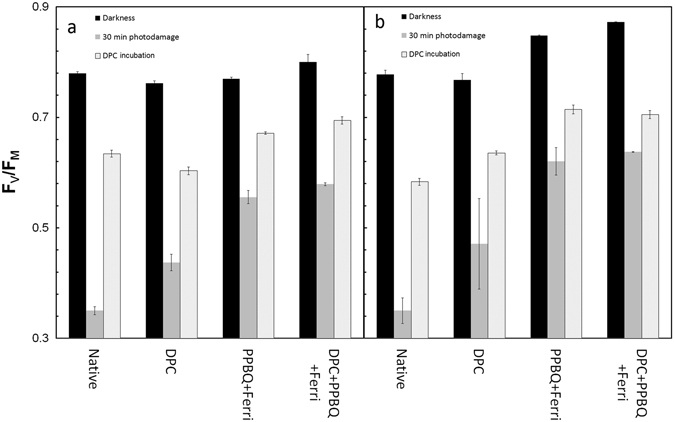
Photodamage to Photosystem II (PSII) has been attributed either to excessive excitation of photosynthetic pigments or by direct of light absorption by MnCaO cluster. Here we investigated the time course of PSII photodamage and release of Mn in PSII-enriched membranes under high light illumination at 460 nm and 660 nm. We found that the loss of PSII activity, assayed by chlorophyll fluorescence, is faster than release of Mn from the MnCaO cluster, assayed by EPR. Loss of PSII activity and Mn release was slower during illumination in the presence of exogenous electron acceptors. Recovery of PSII activity was observed, after 30 min of addition of electron donor post illumination. The same behavior was observed under 460 and 660 nm illumination, suggesting stronger correlation between excessive excitation and photodamage compared to direct light absorption by the cluster. A unified model of PSII photodamage that takes into account present and previous literature reports is presented.
光系统 II(PSII)的光损伤归因于光合色素的过度激发或 MnCaO 簇的直接光吸收。在这里,我们研究了在 460nm 和 660nm 光照下,富含 PSII 的膜中 PSII 光损伤和 Mn 释放的时间过程。我们发现,叶绿素荧光测定的 PSII 活性丧失比 EPR 测定的 MnCaO 簇中 Mn 的释放更快。在外源电子受体存在下进行光照时,PSII 活性的丧失和 Mn 的释放更慢。在光照后添加电子供体 30 分钟后,观察到 PSII 活性的恢复。在 460nm 和 660nm 光照下观察到相同的行为,这表明与簇的直接光吸收相比,过度激发与光损伤之间存在更强的相关性。提出了一个综合的 PSII 光损伤模型,该模型考虑了当前和以前的文献报告。