Mosadegh Haana, Trivellini Alice, Lucchesini Mariella, Ferrante Antonio, Maggini Rita, Vernieri Paolo, Sodi Anna Mensuali
Institute of Life Sciences, Scuola Superiore Sant'Anna, Pz. Martiri della Libertà 33, 56127 Pisa, Italy.
Department of Agriculture, Food and Environment, Via del Borghetto 80, 56124 Pisa, Italy.
Plants (Basel). 2019 Oct 4;8(10):396. doi: 10.3390/plants8100396.
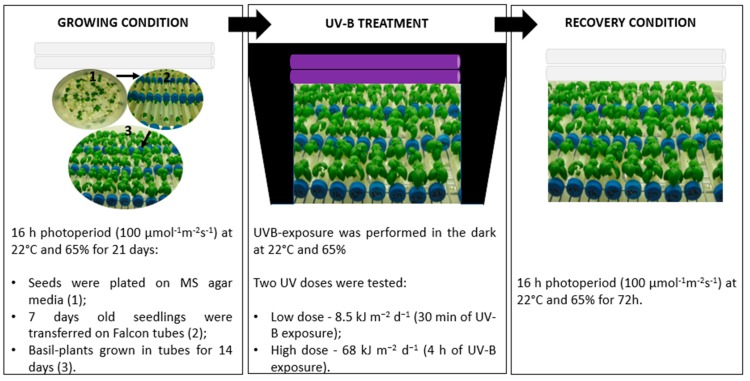
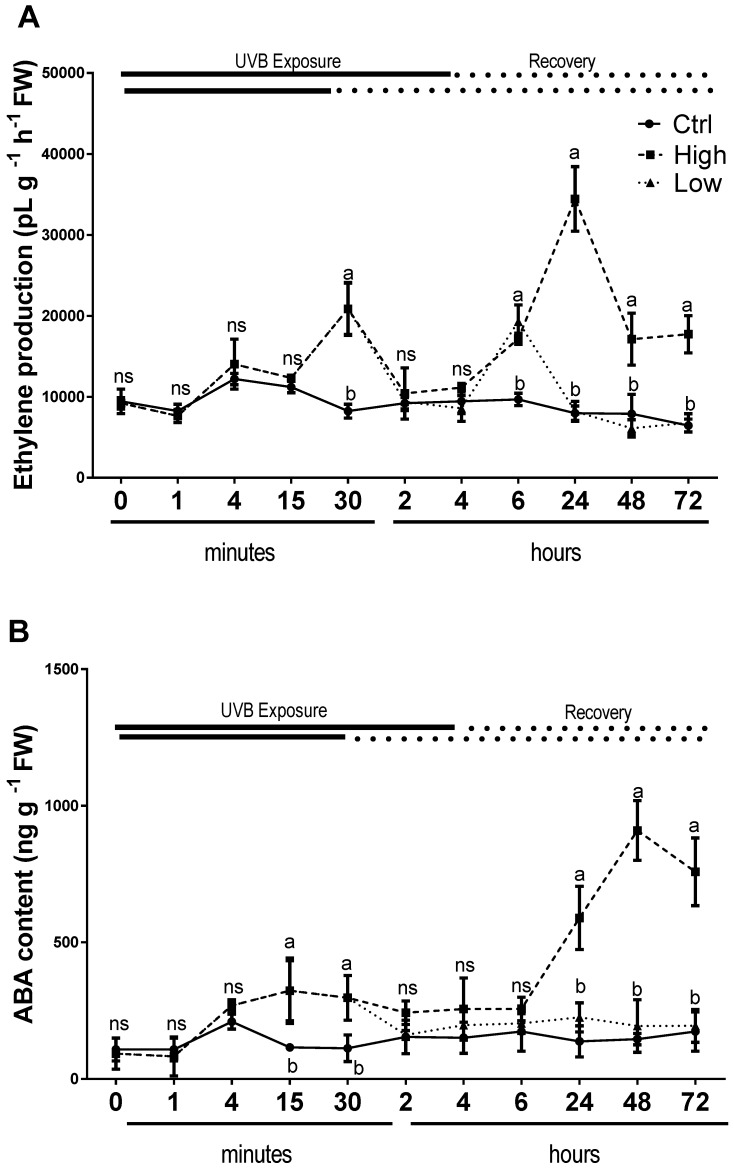
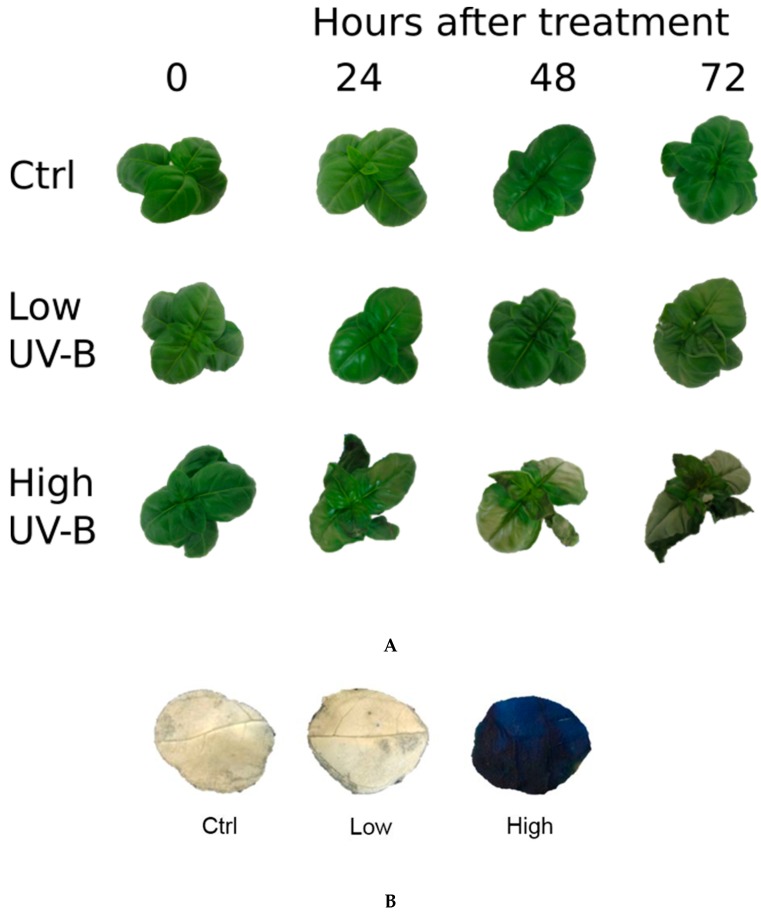
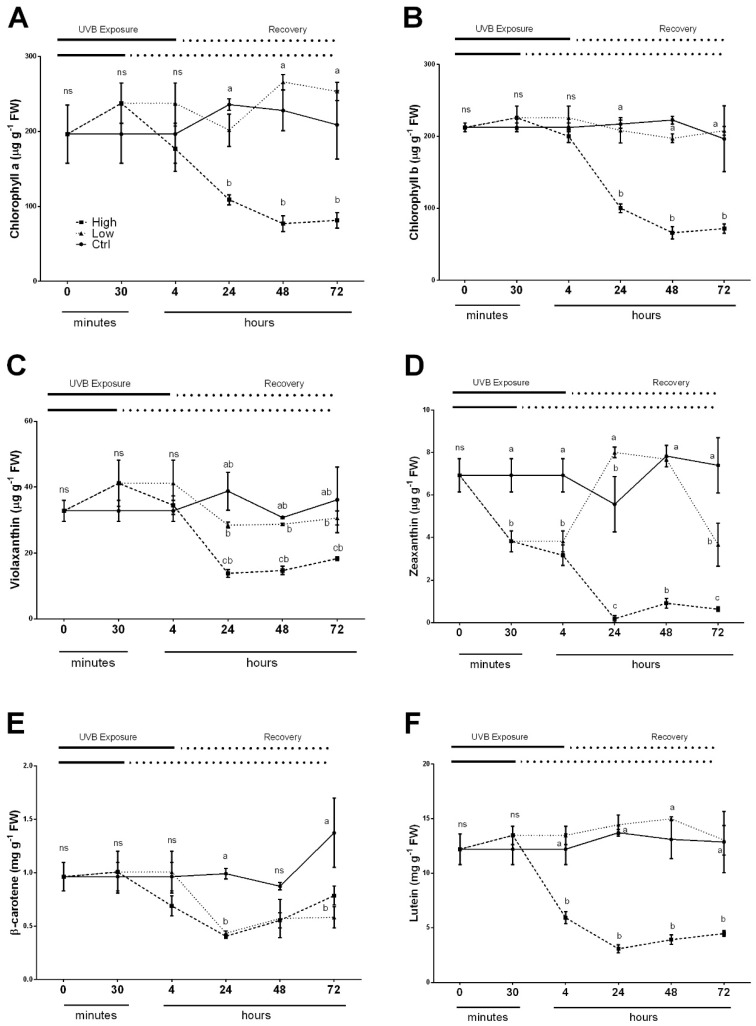
UV-B radiation has been previously reported to induce protective or deleterious effects on plants depending on the UV-B irradiation doses. To elucidate how these contrasting events are physiologically coordinated, we exposed sweet basil plants to two UV-B doses: low (8.5 kJ m day, 30 min exposure) and high (68 kJ m day, 4 h exposure), with the plants given both doses once continuously in a single day. Physiological tests during and after both UV-B exposures were performed by comparing the stress-induced damage and adverse effects on photosynthetic activity, the concentration and composition of photosynthetic and non-photosynthetic pigments, and stress-related hormones biosynthesis in basil plants. Our results showed that upon receiving a high UV-B dose, a severe inactivation of oxygen evolving complex (OEC) activity at the PSII donor side and irreversible PSII photodamage caused primarily by limitation of the acceptor side occurred, which overloaded protective mechanisms and finally led to the death of the plants. In contrast, low UV-B levels did not induce any signs of UV-B stress injuries. The OEC partial limitation and the inactivation of the electron transport chain allowed the activation of photoprotective mechanisms, avoiding irreversible damage to PSII. Overall results indicate the importance of a specific response mechanisms regulating photoprotection vs irreversible photoinhibition in basil that were modulated depending on the UV-B doses.
先前有报道称,根据紫外线B辐射剂量,其对植物可产生保护或有害作用。为阐明这些相反的情况在生理上是如何协调的,我们让甜罗勒植株接受两种紫外线B剂量:低剂量(8.5千焦/平方米·天,照射30分钟)和高剂量(68千焦/平方米·天,照射4小时),两种剂量均在一天内连续给予一次。通过比较紫外线B照射期间及之后罗勒植株中应激诱导的损伤以及对光合活性、光合和非光合色素的浓度及组成、与应激相关的激素生物合成的不利影响,进行了生理测试。我们的结果表明,接受高剂量紫外线B时,在光系统II供体侧氧释放复合体(OEC)活性严重失活,且主要由于受体侧受限导致光系统II发生不可逆光损伤,这使保护机制不堪重负,最终导致植株死亡。相比之下,低水平紫外线B未诱导任何紫外线B应激损伤迹象。OEC部分受限以及电子传递链失活激活了光保护机制,避免了对光系统II的不可逆损伤。总体结果表明,在罗勒中存在特定的响应机制来调节光保护与不可逆光抑制,且这些机制会根据紫外线B剂量进行调节,这一点很重要。