Biodiversity Research Center, Academia Sinica, Taipei, Taiwan.
Institute of Biomedical Sciences, Academia Sinica, Taipei, Taiwan.
Sci Rep. 2017 Aug 8;7(1):7560. doi: 10.1038/s41598-017-07981-4.
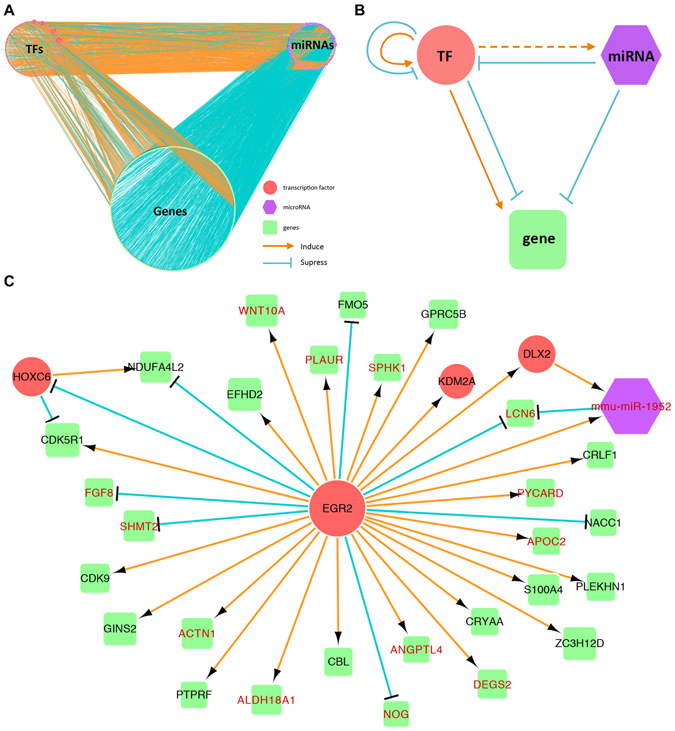
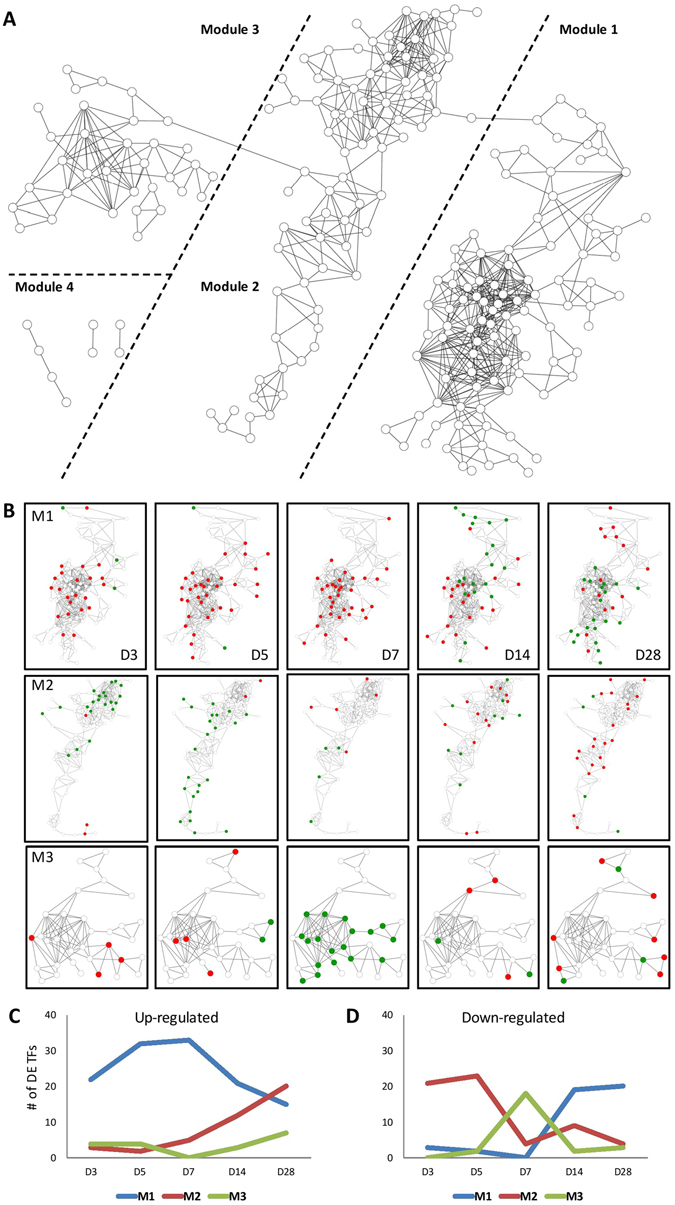
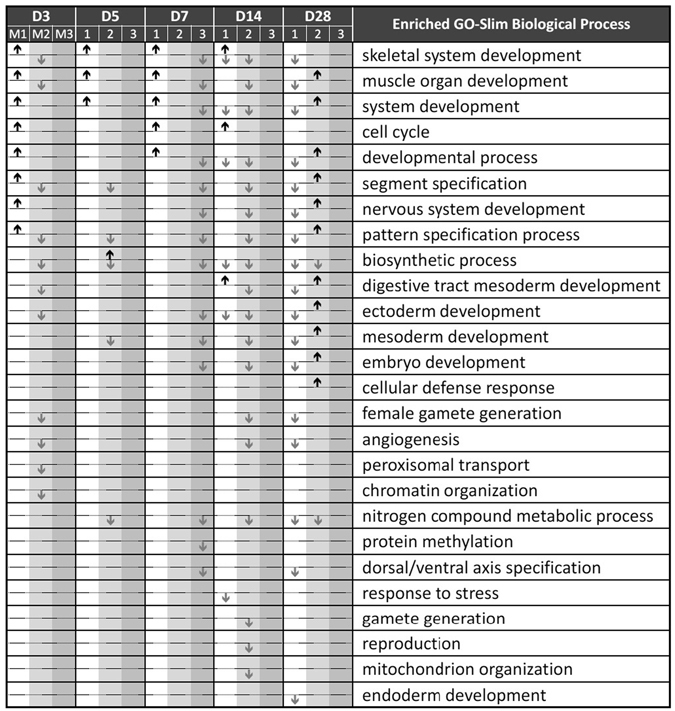
Pathological cardiac hypertrophy, a dynamic remodeling process, is a major risk factor for heart failure. Although a number of key regulators and related genes have been identified, how the transcription factors (TFs) dynamically regulate the associated genes and control the morphological and electrophysiological changes during the hypertrophic process are still largely unknown. In this study, we obtained the time-course transcriptomes at five time points in four weeks from male murine hearts subjected to transverse aorta banding surgery. From a series of computational analyses, we identified three major co-expression modules of TF genes that may regulate the gene expression changes during the development of cardiac hypertrophy in mice. After pressure overload, the TF genes in Module 1 were up-regulated before the occurrence of significant morphological changes and one week later were down-regulated gradually, while those in Modules 2 and 3 took over the regulation as the heart size increased. Our analyses revealed that the TF genes up-regulated at the early stages likely initiated the cascading regulation and most of the well-known cardiac miRNAs were up-regulated at later stages for suppression. In addition, the constructed time-dependent regulatory network reveals some TFs including Egr2 as new candidate key regulators of cardiovascular-associated (CV) genes.
病理性心肌肥厚是一种动态重塑过程,是心力衰竭的主要危险因素。尽管已经确定了许多关键调节因子和相关基因,但转录因子(TFs)如何动态调节相关基因,并在肥厚过程中控制形态和电生理变化,在很大程度上仍然未知。在这项研究中,我们从接受横主动脉结扎手术的雄性小鼠心脏中获得了四个星期内五个时间点的时间过程转录组。通过一系列计算分析,我们鉴定出三个主要的 TF 基因共表达模块,这些模块可能调节小鼠心肌肥厚发育过程中的基因表达变化。在压力超负荷后,模块 1 中的 TF 基因在发生显著形态变化之前上调,并在一周后逐渐下调,而模块 2 和 3 中的 TF 基因则在心脏增大时接管调节。我们的分析表明,早期上调的 TF 基因可能启动了级联调节,而大多数已知的心脏 miRNA 在后期被上调以进行抑制。此外,构建的时变调控网络揭示了一些 TFs,包括 Egr2,作为心血管相关(CV)基因的新候选关键调控因子。