Ku Shih-Pi, Nakamura Nozomu H, Maingret Nicolas, Mahnke Liv, Yoshida Motoharu, Sauvage Magdalena M
Department of Functional Architecture of Memory, Leibniz-Institute for NeurobiologyMagdeburg, Germany.
Department of Physiology, Hyogo College of MedicineNishinomiya, Japan.
Front Syst Neurosci. 2017 Jul 25;11:51. doi: 10.3389/fnsys.2017.00051. eCollection 2017.
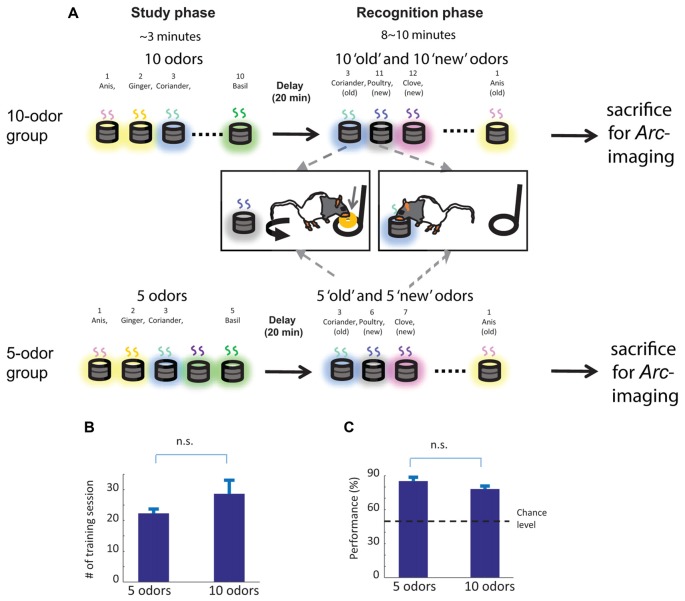
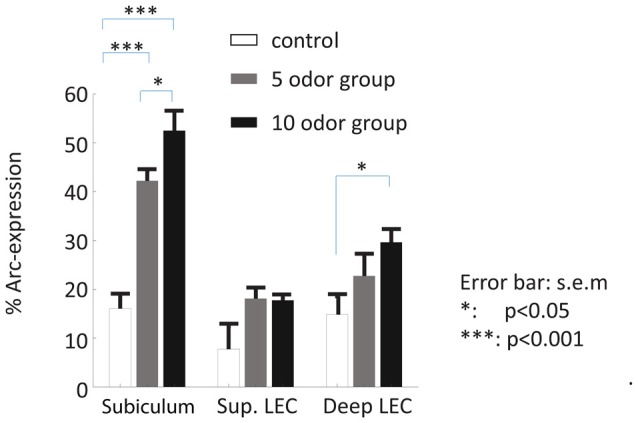
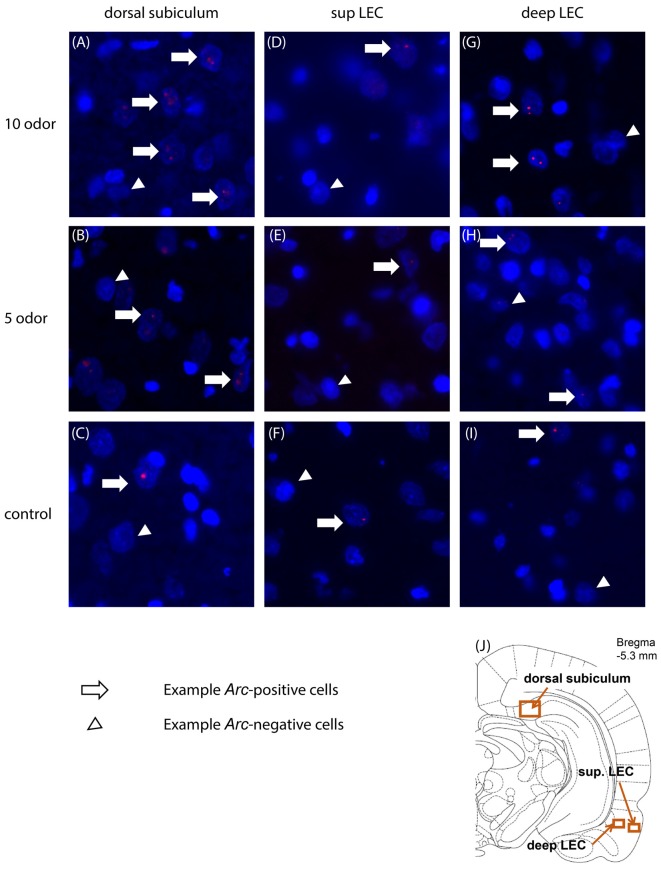
The subiculum and the lateral entorhinal cortex (LEC) are the main output areas of the hippocampus which contribute to spatial and non-spatial memory. The proximal part of the subiculum (bordering CA1) receives heavy projections from the perirhinal cortex and the distal part of CA1 (bordering the subiculum), both known for their ties to object recognition memory. However, the extent to which the proximal subiculum contributes to non-spatial memory is still unclear. Comparatively, the involvement of the LEC in non-spatial information processing is quite well known. However, very few studies have investigated its role within the frame of memory function. Thus, it is not known whether its contribution depends on memory load. In addition, the deep layers of the EC have been shown to be predictive of subsequent memory performance, but not its superficial layers. Hence, here we tested the extent to which the proximal part of the subiculum and the superficial and deep layers of the LEC contribute to non-spatial memory, and whether this contribution depends on the memory load of the task. To do so, we imaged brain activity at cellular resolution in these areas in rats performing a delayed nonmatch to sample task based on odors with two different memory loads (5 or 10 odors). This imaging technique is based on the detection of the RNA of the immediate-early gene , which is especially tied to synaptic plasticity and behavioral demands, and is commonly used to map activity in the medial temporal lobe. We report for the first time that the proximal part of the subiculum is recruited in a memory-load dependent manner and the deep layers of the LEC engaged under high memory load conditions during the retrieval of non-spatial memory, thus shedding light on the specific networks contributing to non-spatial memory retrieval.
海马旁回和外侧内嗅皮质(LEC)是海马体的主要输出区域,对空间和非空间记忆有重要作用。海马旁回的近端部分(与CA1相邻)接收来自梨状周皮质的大量投射,以及CA1的远端部分(与海马旁回相邻),这两部分都与物体识别记忆密切相关。然而,海马旁回近端对非空间记忆的贡献程度仍不清楚。相比之下,LEC在非空间信息处理中的作用已广为人知。然而,很少有研究在记忆功能框架内探究其作用。因此,尚不清楚其贡献是否取决于记忆负荷。此外,已证明内嗅皮质的深层可预测后续记忆表现,但其浅层则不然。因此,我们在此测试了海马旁回近端以及LEC的浅层和深层对非空间记忆的贡献程度,以及这种贡献是否取决于任务的记忆负荷。为此,我们以细胞分辨率对执行基于气味的延迟样本非匹配任务的大鼠的这些区域进行脑活动成像,该任务有两种不同的记忆负荷(5种或10种气味)。这种成像技术基于对立即早期基因RNA的检测,该基因特别与突触可塑性和行为需求相关,常用于绘制内侧颞叶的活动图谱。我们首次报告,在非空间记忆检索过程中,海马旁回近端以记忆负荷依赖的方式被激活,LEC深层在高记忆负荷条件下参与其中,从而揭示了对非空间记忆检索有贡献的特定网络。