Mercator Research Group, Functional Architecture of Memory Unit, Ruhr-University Bochum, Germany.
Otto von Guericke University, Medical Faculty, Functional Neuroplasticity Department, Magdeburg, Germany.
PLoS Biol. 2018 Aug 28;16(8):e2006100. doi: 10.1371/journal.pbio.2006100. eCollection 2018 Aug.
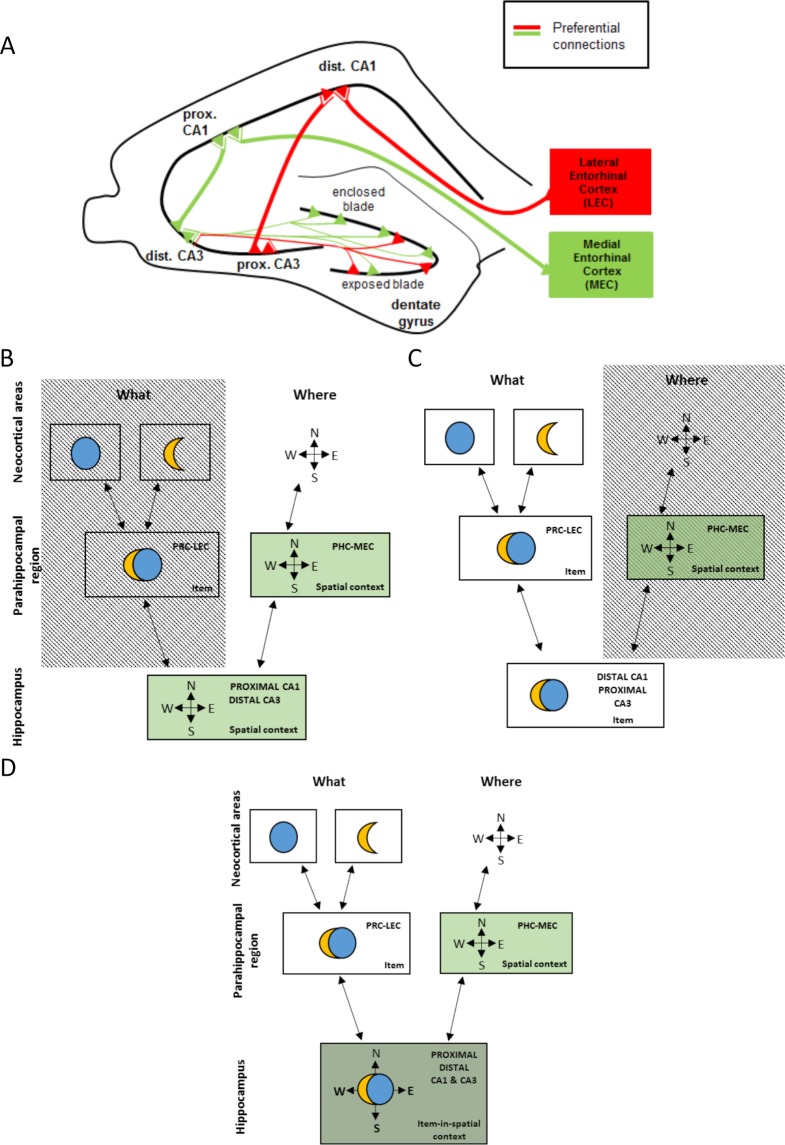
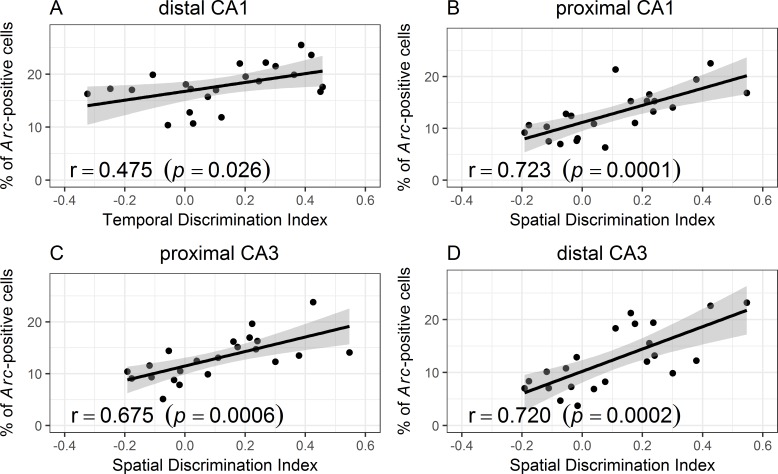
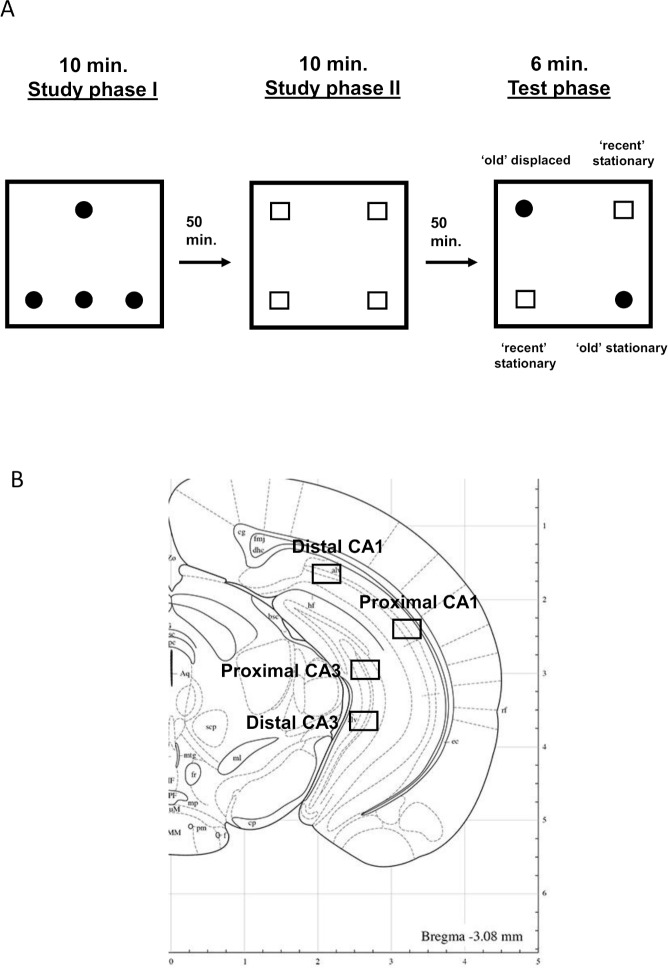
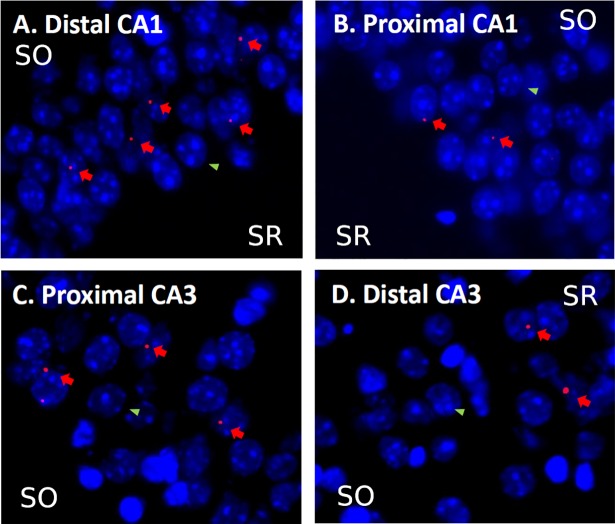
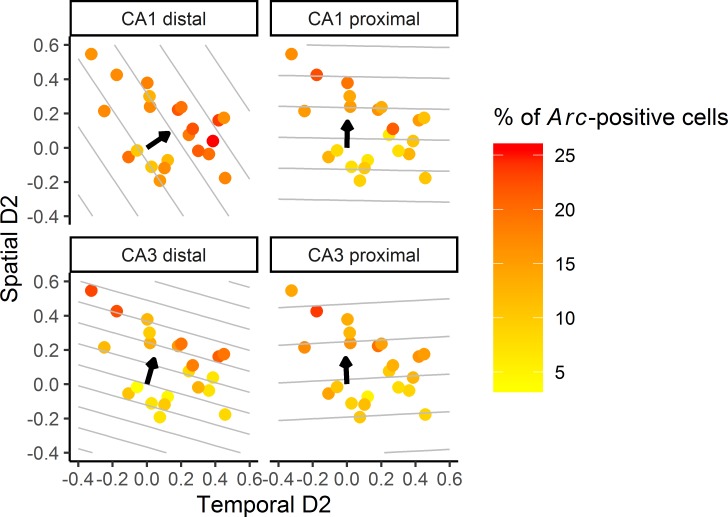
A well-accepted model of episodic memory involves the processing of spatial and non-spatial information by segregated pathways and their association within the hippocampus. However, these pathways project to distinct proximodistal levels of the hippocampus. Moreover, spatial and non-spatial subnetworks segregated along this axis have been recently described using memory tasks with either a spatial or a non-spatial salient dimension. Here, we tested whether the concept of segregated subnetworks and the traditional model are reconcilable by studying whether activity within CA1 and CA3 remains segregated when both dimensions are salient, as is the case for episodes. Simultaneously, we investigated whether temporal or spatial information bound to objects recruits similar subnetworks as items or locations per se, respectively. To do so, we studied the correlations between brain activity and spatial and/or temporal discrimination ratios in proximal and distal CA1 and CA3 by detecting Arc RNA in mice. We report a robust proximodistal segregation in CA1 for temporal information processing and in both CA1 and CA3 for spatial information processing. Our results suggest that the traditional model of episodic memory and the concept of segregated networks are reconcilable, to a large extent and put forward distal CA1 as a possible "home" location for time cells.
一个被广泛接受的情景记忆模型涉及到空间和非空间信息通过分离的通路进行处理,以及它们在海马体内的关联。然而,这些通路投射到海马体的不同近-远侧水平。此外,最近使用具有空间或非空间显著维度的记忆任务描述了沿着该轴分离的空间和非空间子网。在这里,我们通过研究当两个维度都很显著时,即对于情节,CA1 和 CA3 内的活动是否仍然分离,来测试分离的子网和传统模型的概念是否可以协调。同时,我们还研究了与物体相关的时间或空间信息是否分别招募类似于项目或位置本身的类似子网。为此,我们通过在小鼠中检测 Arc RNA,研究了近端和远端 CA1 和 CA3 中脑活动与空间和/或时间辨别率之间的相关性。我们报告了 CA1 中用于处理时间信息的强大的近-远侧分离,以及 CA1 和 CA3 中用于处理空间信息的分离。我们的结果表明,情景记忆的传统模型和分离网络的概念在很大程度上是可以协调的,并提出远端 CA1 可能是时间细胞的“家”位置。