Wang Miao, He Su-Fei, Liu Lei-Lei, Sun Xiao-Xia, Yang Fan, Ge Qian, Wong Wei-Kang, Meng Jing-Yan
College of Chinese Medicine, Tianjin University of Traditional Chinese Medicine, Tianjin 300193, P.R. China.
Collaborative Innovation Center of Modern Chinese Medicine, Tianjin University of Traditional Chinese Medicine, Tianjin 300193, P.R. China.
Oncol Rep. 2017 Oct;38(4):1941-1948. doi: 10.3892/or.2017.5888. Epub 2017 Aug 8.
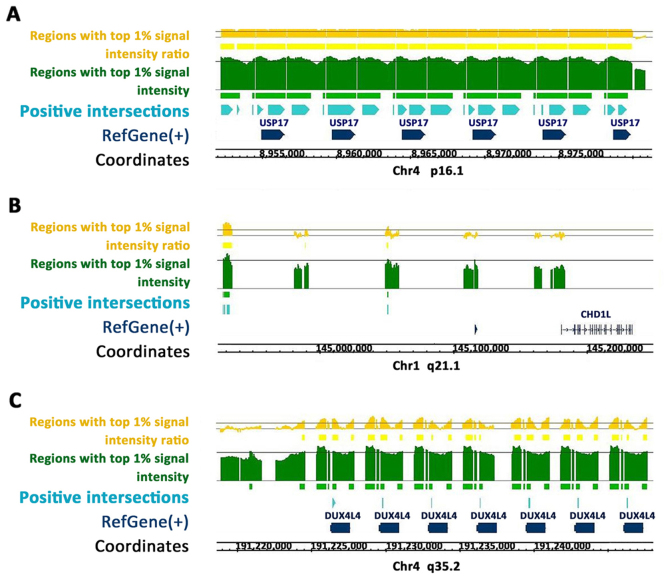
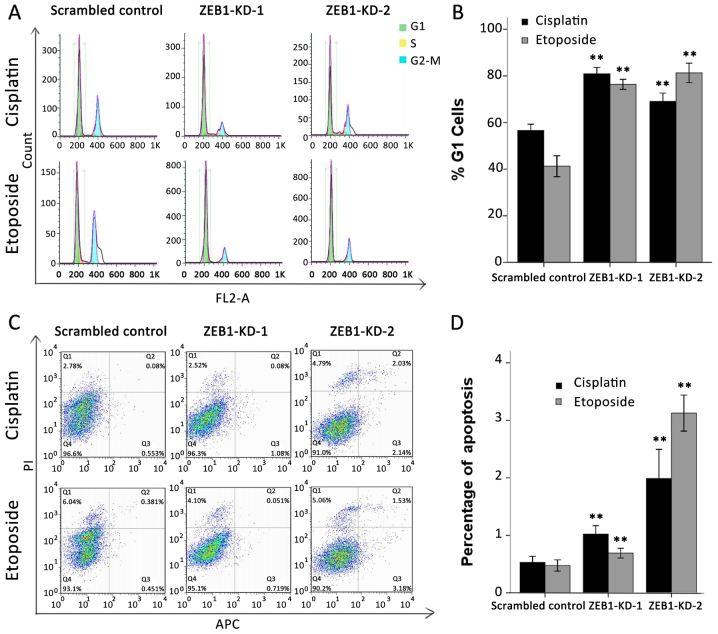
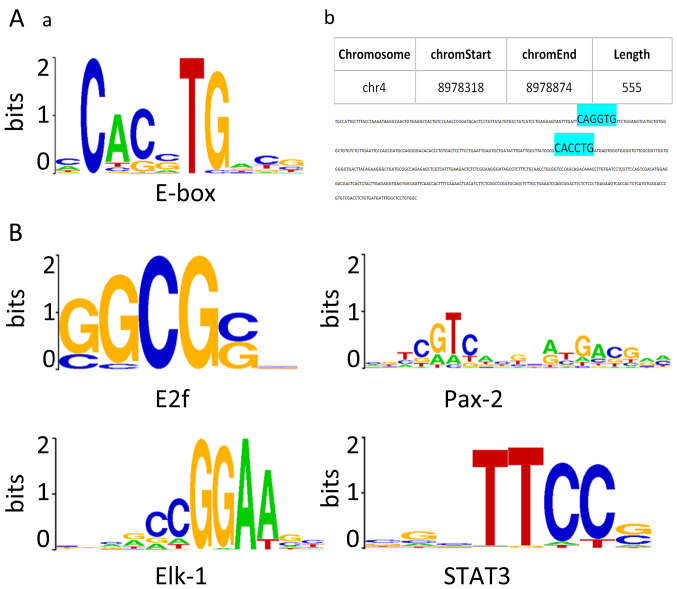
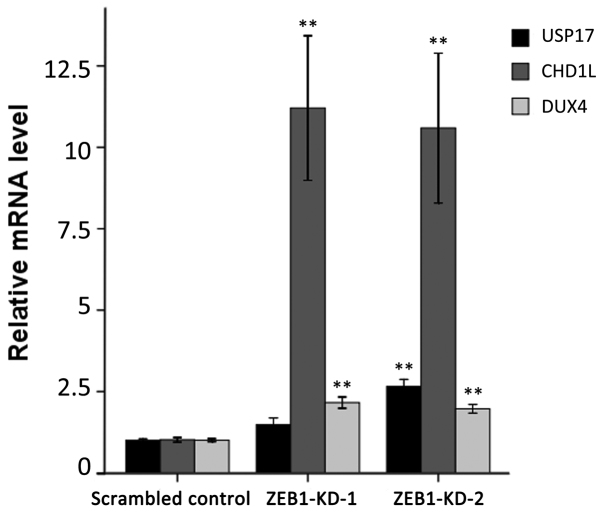
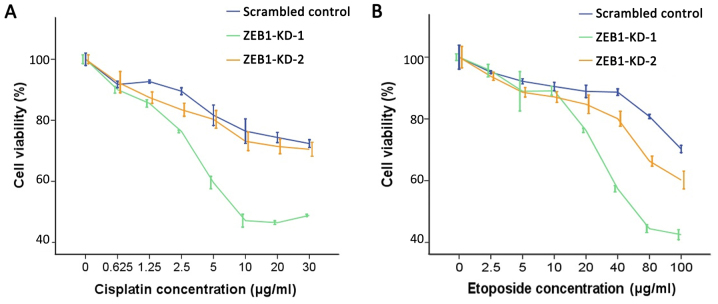
Besides being a key contributor to epithelial‑to‑mesenchymal transition (EMT) activation and stemness maintenance, zinc finger E-box binding homeobox 1 (ZEB1) is also a crucial inducer of chemoresistance and radioresistance. Unlike the clear mechanism that mediates its effect on EMT and dedifferentiation, the mechanism of how ZEB1 promotes chemo- and radio-resistance remains to be elucidated. It has been previously reported that ZEB1 promotes DNA double-strand break clearance by enhancing the deubiquitylating activity of ubiquitin-specific peptidase (USP)7 on checkpoint kinase 1, which is an important step during DNA repair. It was hypothesized that as a transcriptional suppressor, ZEB1 may be involved in an unbalanced DNA damage response (DDR) by affecting other key components. Therefore, in the present study, the target gene occupancy of ZEB1 was mapped in colorectal cancer cells using the ChIP-on-chip method, revealing positive intervals enriched along the three DDR-associated genes: USP17, chromodomain helicase DNA-binding protein 1-like and double homeobox 4. The E-boxes identified in the binding regions and the enhanced mRNA expression of the three genes following the knockdown of ZEB1 supported the identification of these three genes as downstream target genes of ZEB1. Furthermore, ZEB1 knockdown initiated a chemosensitization effect, induced G1/S arrest and increased apoptosis, which functionally validated the three ZEB1 downstream targets. In summary, the present study identified three DDR-associated genes as ZEB1 downstream targets, and demonstrated that their suppression by ZEB1 contributes to ZEB1-mediated chemoresistance.
锌指E盒结合同源框1(ZEB1)不仅是上皮-间质转化(EMT)激活和干性维持的关键促成因素,也是化疗耐药性和放疗抵抗性的重要诱导因子。与介导其对EMT和去分化作用的明确机制不同,ZEB1促进化疗和放疗抵抗的机制仍有待阐明。此前有报道称,ZEB1通过增强泛素特异性肽酶(USP)7对检查点激酶1的去泛素化活性来促进DNA双链断裂清除,这是DNA修复过程中的重要一步。据推测,作为一种转录抑制因子,ZEB1可能通过影响其他关键成分参与不平衡的DNA损伤反应(DDR)。因此,在本研究中,使用芯片上的染色质免疫沉淀(ChIP-on-chip)方法在结肠癌细胞中绘制了ZEB1的靶基因占据图谱,揭示了沿三个DDR相关基因富集的正区间:USP17、染色质结构域解旋酶DNA结合蛋白1样蛋白和双同源框4。在结合区域鉴定出的E盒以及ZEB1敲低后这三个基因的mRNA表达增强,支持将这三个基因鉴定为ZEB1的下游靶基因。此外,ZEB1敲低引发了化学增敏作用,诱导G1/S期阻滞并增加细胞凋亡,这在功能上验证了ZEB1的三个下游靶点。总之,本研究鉴定出三个DDR相关基因作为ZEB1的下游靶点,并证明ZEB1对它们的抑制作用导致了ZEB1介导的化疗耐药性。