Department of Oral and Maxillofacial Surgery, School and Hospital of Stomatology, Jilin University, Changchun 130021, China.
Department of Oral Emergency, Hospital of Stomatology, Jilin University, Changchun 130021, China.
Molecules. 2022 Jul 25;27(15):4750. doi: 10.3390/molecules27154750.
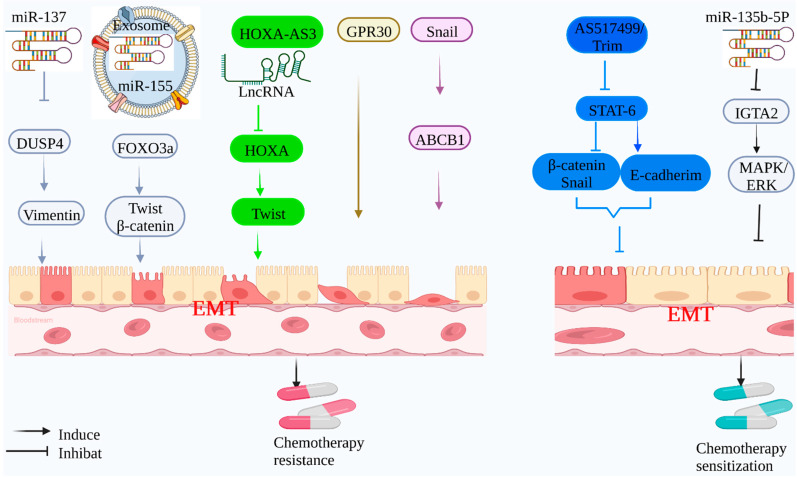
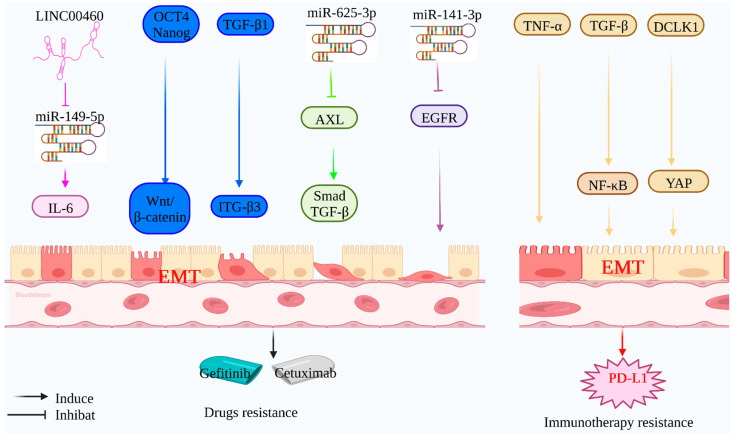
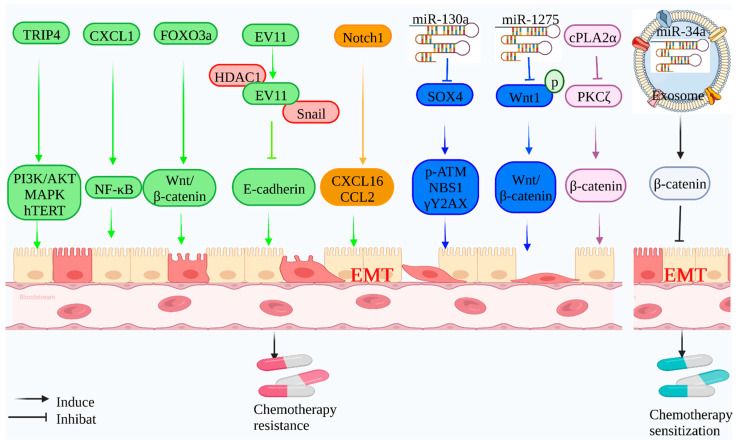
Cancer is one of the world's most burdensome diseases, with increasing prevalence and a high mortality rate threat. Tumor recurrence and metastasis due to treatment resistance are two of the primary reasons that cancers have been so difficult to treat. The epithelial-mesenchymal transition (EMT) is essential for tumor drug resistance. EMT causes tumor cells to produce mesenchymal stem cells and quickly adapt to various injuries, showing a treatment-resistant phenotype. In addition, multiple signaling pathways and regulatory mechanisms are involved in the EMT, resulting in resistance to treatment and hard eradication of the tumors. The purpose of this study is to review the link between EMT, therapeutic resistance, and the molecular process, and to offer a theoretical framework for EMT-based tumor-sensitization therapy.
癌症是世界上最具负担性的疾病之一,其发病率不断上升,死亡率高。由于治疗耐药性导致的肿瘤复发和转移是癌症难以治疗的两个主要原因。上皮-间充质转化(EMT)是肿瘤耐药性的关键。EMT 使肿瘤细胞产生间充质干细胞,并迅速适应各种损伤,表现出治疗耐药表型。此外,多种信号通路和调节机制参与 EMT,导致治疗耐药和肿瘤难以根除。本研究旨在综述 EMT、治疗耐药性和分子过程之间的联系,并为基于 EMT 的肿瘤增敏治疗提供理论框架。