Wang Hua, Chu Yixuan, Fang Chengran, Huang Fang, Song Yali, Xue Xiangdong
Key Laboratory of Recycling and Eco-treatment of Waste Biomass of Zhejiang Province, Zhejiang University of Science and Technology, Hangzhou, Zhejiang, China.
School of Civil Engineering and Architecture, Zhejiang University of Science and Technology, Hangzhou, Zhejiang, China.
PLoS One. 2017 Aug 8;12(8):e0182776. doi: 10.1371/journal.pone.0182776. eCollection 2017.
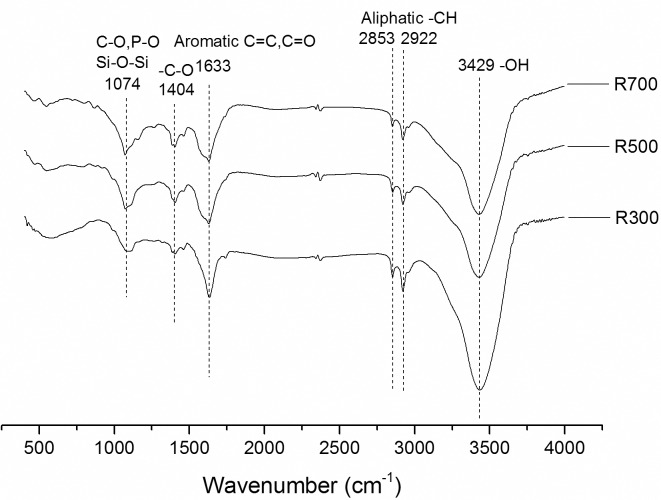
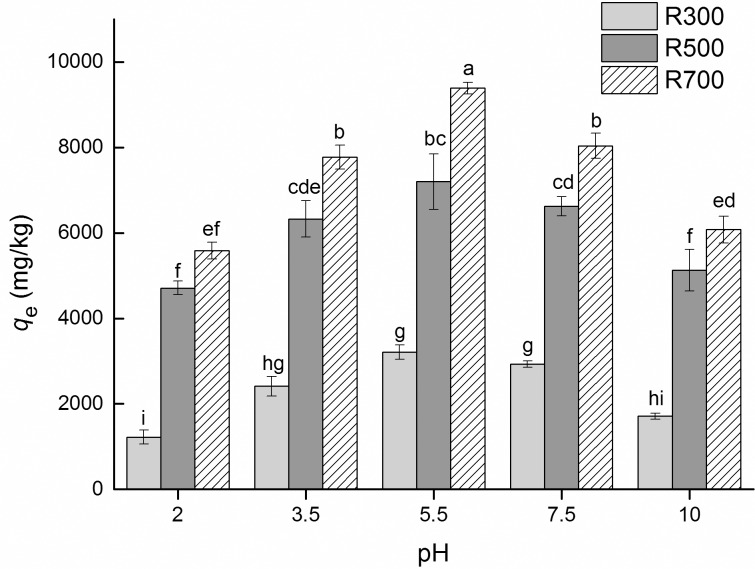
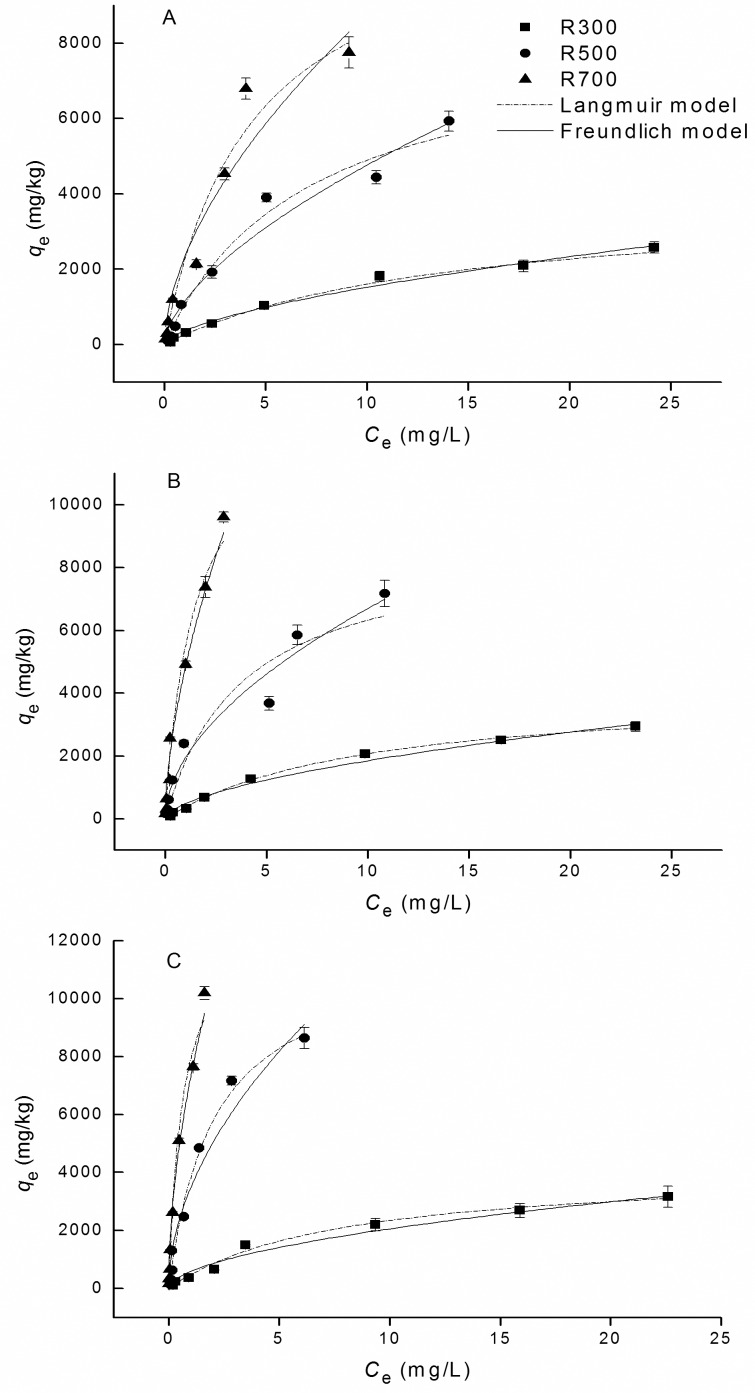
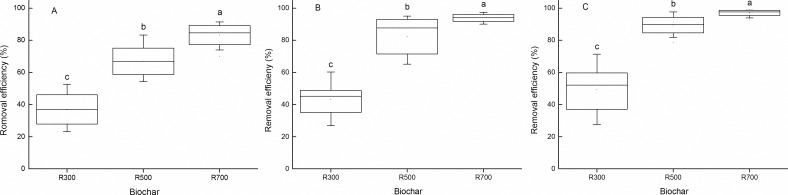
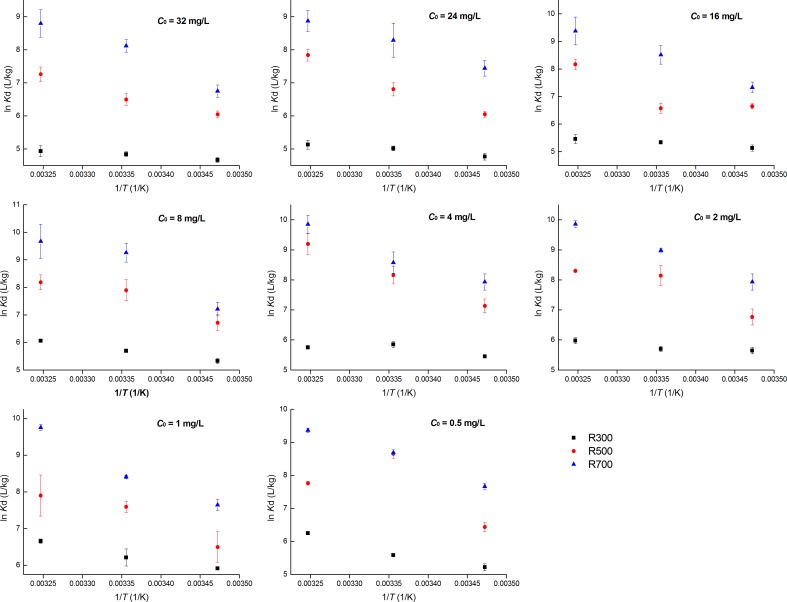
Biochars produced from the pyrolysis of waste biomass under limited oxygen conditions could serve as adsorbents in environmental remediation processes. Biochar samples derived from rice straw that were pyrolyzed at 300 (R300), 500 (R500) and 700°C (R700) were used as adsorbents to remove tetracycline from an aqueous solution. Both the Langmuir and Freundlich models fitted the adsorption data well (R2 > 0.919). The adsorption capacity increased with pyrolysis temperature. The R500 and R700 samples exhibited relative high removal efficiencies across a range of initial tetracycline concentrations (0.5mg/L-32mg/L) with the maximum (92.8%-96.7%) found for adsorption on R700 at 35°C. The relatively high surface area of the R700 sample and π-π electron-donor acceptor contributed to the high adsorption capacities. A thermodynamic analysis indicated that the tetracycline adsorption process was spontaneous and endothermic. The pH of solution was also found to influence the adsorption processes; the maximum adsorption capacity occurred at a pH of 5.5. These experimental results highlight that biochar derived from rice straw is a promising candidate for low-cost removal of tetracycline from water.
在有限氧气条件下通过废弃生物质热解产生的生物炭可作为环境修复过程中的吸附剂。将稻草在300℃(R300)、500℃(R500)和700℃(R700)下热解得到的生物炭样品用作吸附剂,以从水溶液中去除四环素。Langmuir模型和Freundlich模型均能很好地拟合吸附数据(R²>0.919)。吸附容量随热解温度升高而增加。R500和R700样品在一系列初始四环素浓度(0.5mg/L - 32mg/L)范围内表现出相对较高的去除效率,在35℃下R700上的吸附去除率最高(92.8% - 96.7%)。R700样品相对较高的比表面积和π-π电子供体-受体作用促成了高吸附容量。热力学分析表明四环素吸附过程是自发且吸热的。还发现溶液pH值会影响吸附过程;最大吸附容量出现在pH为5.5时。这些实验结果表明,稻草衍生的生物炭是从水中低成本去除四环素的有前景的候选材料。