Liu Benyu, Ye Buqing, Zhu Xiaoxiao, Huang Guanling, Yang Liuliu, Zhu Pingping, Du Ying, Wu Jiayi, Meng Shu, Tian Yong, Fan Zusen
Key Laboratory of Infection and Immunity of CAS, CAS Center for Excellence in Biomacromolecules, Institute of Biophysics, Chinese Academy of Sciences, Beijing, 100101, China.
University of Chinese Academy of Sciences, Beijing, 100049, China.
Nat Commun. 2017 Aug 10;8(1):231. doi: 10.1038/s41467-017-00235-x.
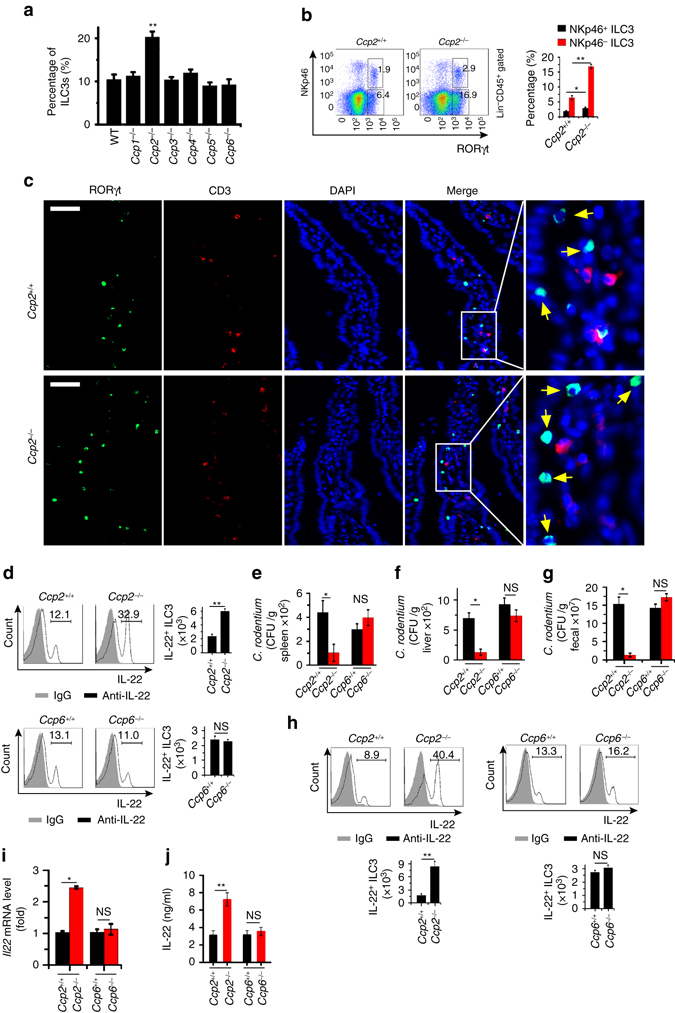
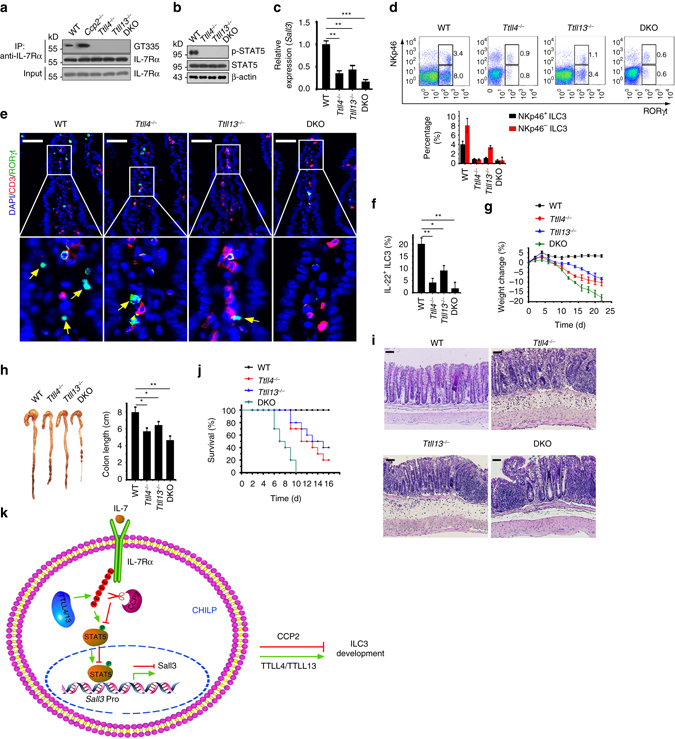
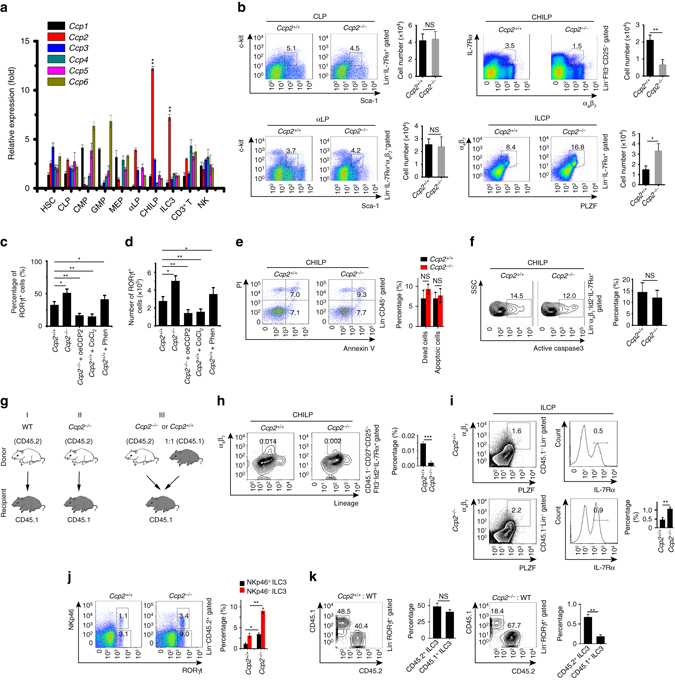
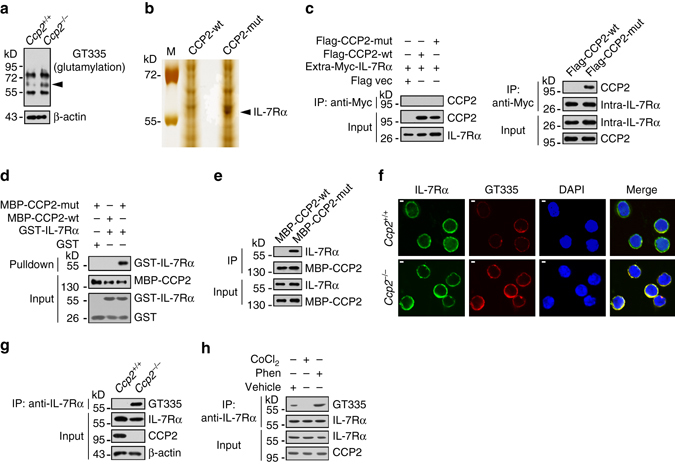
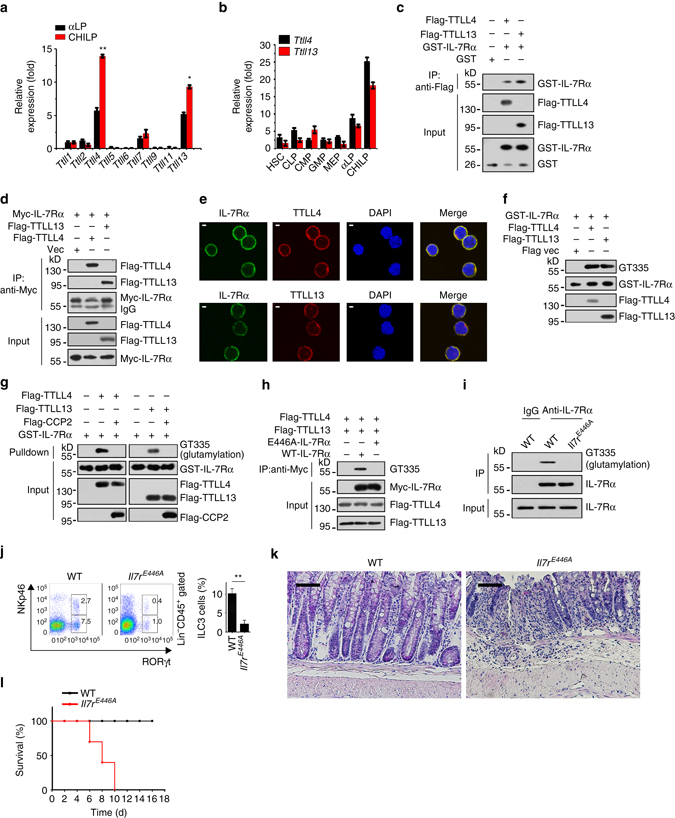
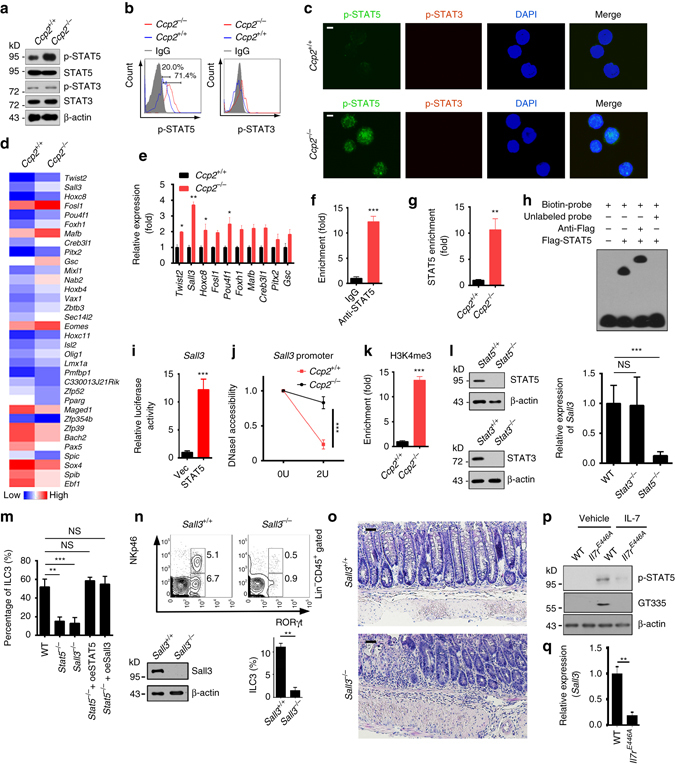
Group 3 innate lymphoid cells (ILC3) promote lymphoid organogenesis and potentiate immune responses against bacterial infection. However, how ILC3 cells are developed and maintained is still unclear. Here, we show that carboxypeptidase CCP2 is highly expressed in common helper-like innate lymphoid progenitors, the progenitor of innate lymphoid cells, and CCP2 deficiency increases ILC3 numbers. Interleukin-7 receptor subunit alpha (IL-7Rα) is identified as a substrate of CCP2 for deglutamylation, and IL-7Rα polyglutamylation is catalyzed by polyglutamylases TTLL4 and TTLL13 in common helper-like innate lymphoid progenitors. IL-7Rα polyglutamylation triggers STAT5 activation to initiate transcription factor Sall3 expression in common helper-like innate lymphoid progenitors, which drives ILC3 cell differentiation. Moreover, Ttll4 or Ttll13 mice have reduced IL-7Rα polyglutamylation and Sall3 expression in common helper-like innate lymphoid progenitors. Importantly, mice with IL-7Rα E446A mutation have reduced Sall3 expression and ILC3 population. Thus, polyglutamylation and deglutamylation of IL-7Rα tightly controls the development and effector functions of ILC3s.Innate lymphoid cells (ILC) are important regulators of mucosal immunity, but how their development and homeostasis are modulated is still unclear. Here the authors show that the differentiation of group 3 ILCs is controlled by the glutamylation of IL-7Rα and the induction of transcription factor Sall3.
第3组固有淋巴细胞(ILC3)促进淋巴器官生成并增强针对细菌感染的免疫反应。然而,ILC3细胞如何发育和维持仍不清楚。在此,我们表明羧肽酶CCP2在常见的辅助样固有淋巴细胞祖细胞(固有淋巴细胞的祖细胞)中高表达,并且CCP2缺陷会增加ILC3的数量。白细胞介素-7受体亚基α(IL-7Rα)被鉴定为CCP2进行去谷氨酰化的底物,并且在常见的辅助样固有淋巴细胞祖细胞中,多聚谷氨酰胺酶TTLL4和TTLL13催化IL-7Rα的多聚谷氨酰化。IL-7Rα的多聚谷氨酰化触发STAT5激活,从而在常见的辅助样固有淋巴细胞祖细胞中启动转录因子Sall3的表达,这驱动ILC3细胞分化。此外,Ttll4或Ttll13基因敲除小鼠的常见辅助样固有淋巴细胞祖细胞中IL-7Rα的多聚谷氨酰化和Sall3表达减少。重要的是,具有IL-7Rα E446A突变的小鼠Sall3表达减少且ILC3群体减少。因此,IL-7Rα的多聚谷氨酰化和去谷氨酰化严格控制ILC3的发育和效应功能。固有淋巴细胞(ILC)是黏膜免疫的重要调节因子,但其发育和稳态如何被调节仍不清楚。在此,作者表明第3组ILC的分化受IL-7Rα的谷氨酰化和转录因子Sall3的诱导控制。