Awasthi Praveen, Sharma Vikrant, Kaur Navjot, Kaur Navneet, Pandey Pankaj, Tiwari Siddharth
National Agri-Food Biotechnology Institute (NABI), Department of Biotechnology, Ministry of Science and Technology (Government of India), Knowledge City, Mohali, Punjab, India.
Department of Biotechnology, Panjab University, Chandigarh, India.
PLoS One. 2017 Aug 10;12(8):e0182242. doi: 10.1371/journal.pone.0182242. eCollection 2017.
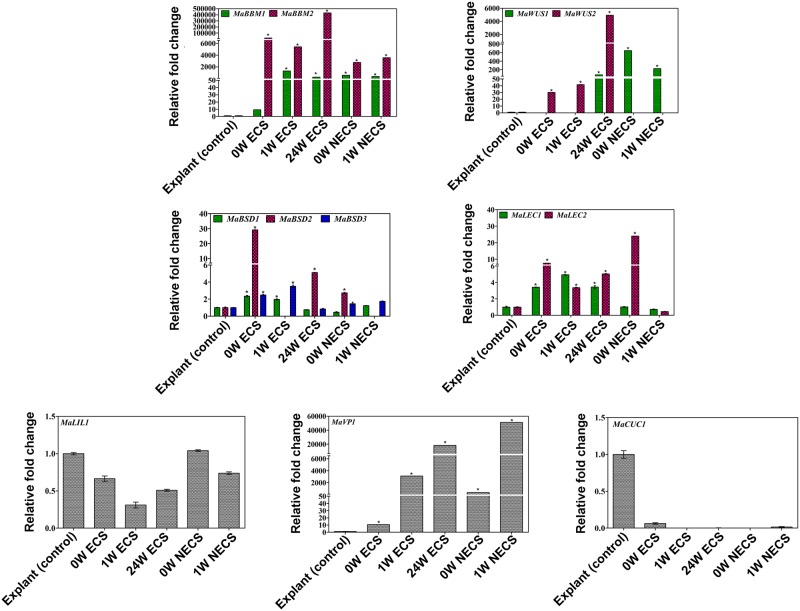
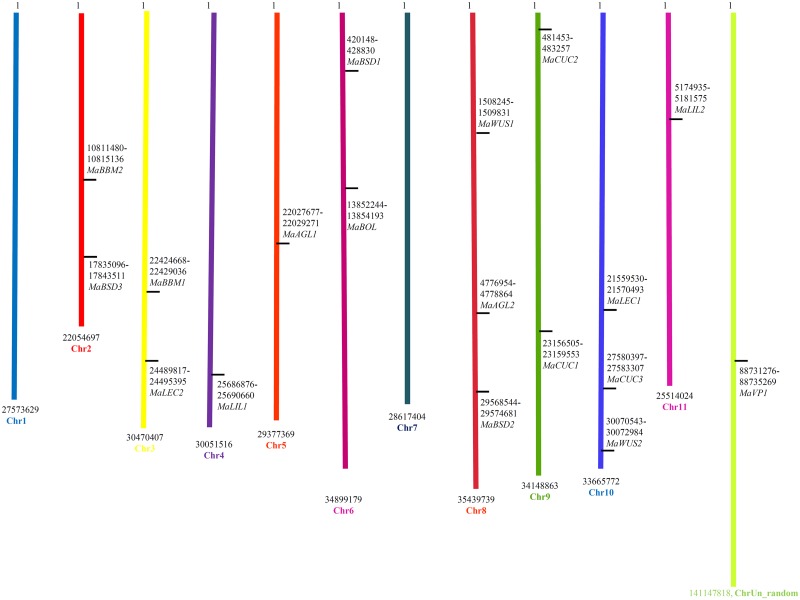
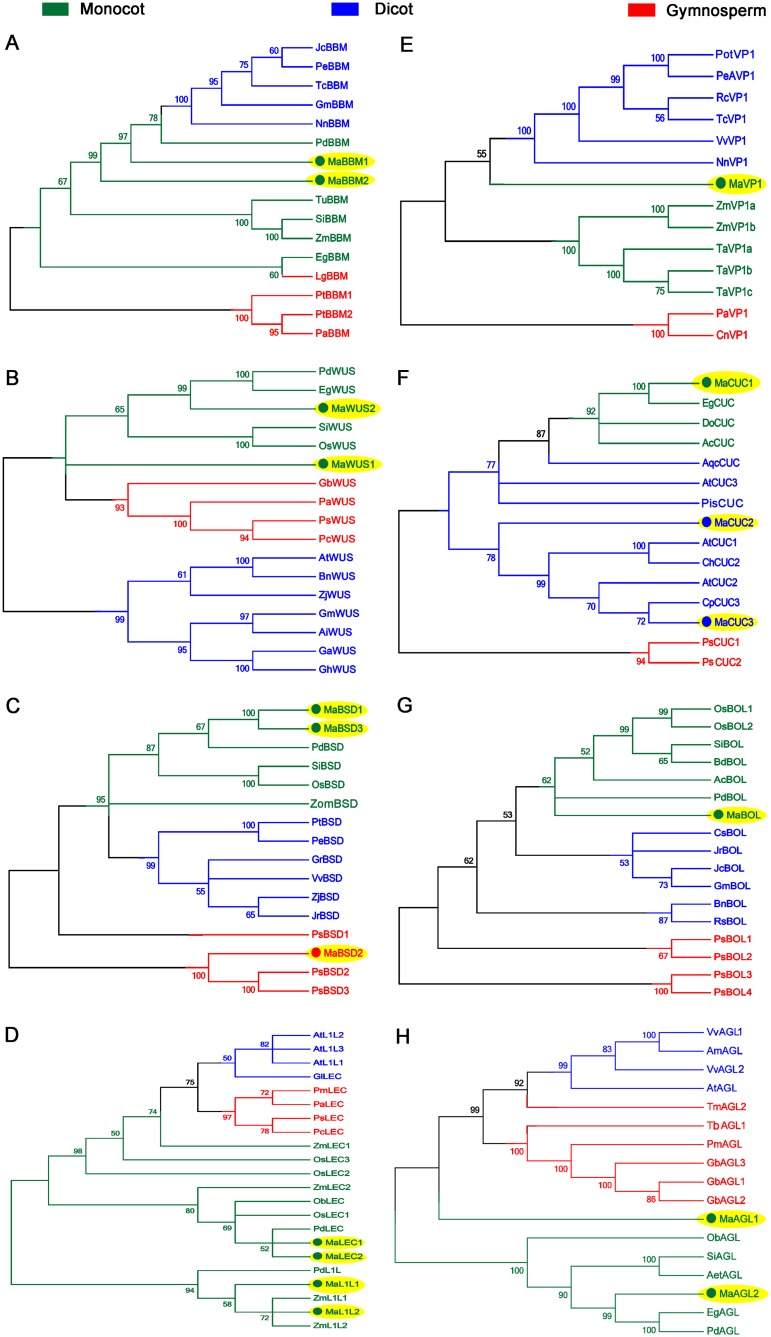
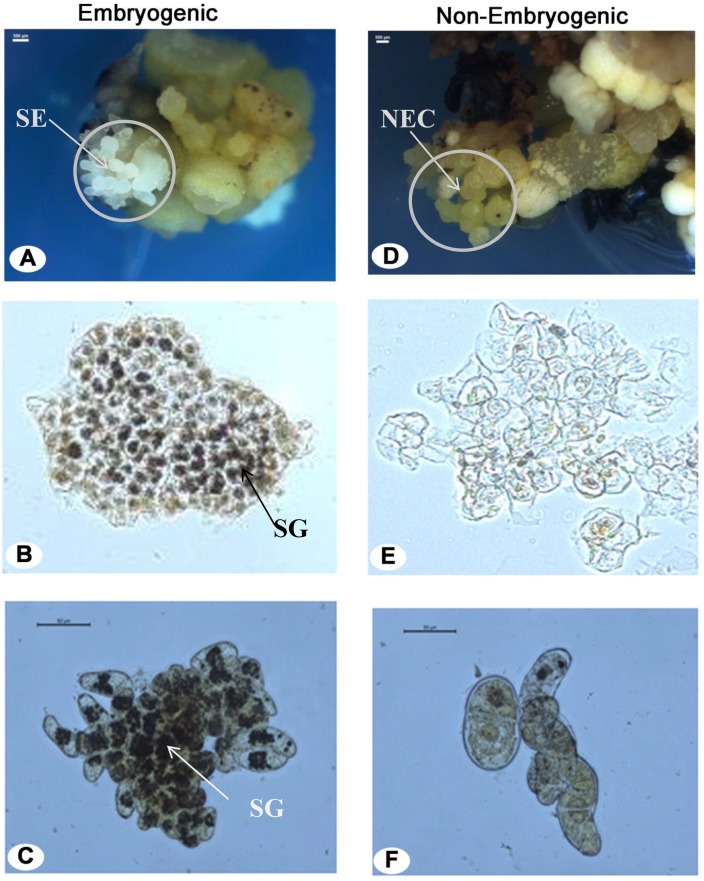
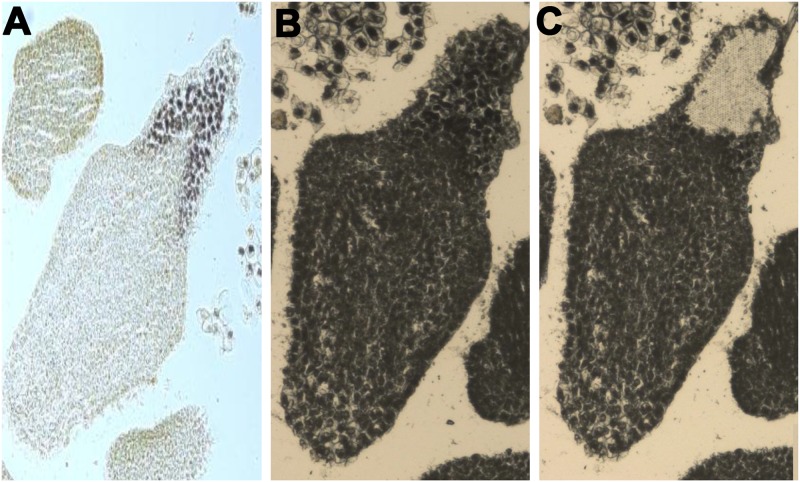
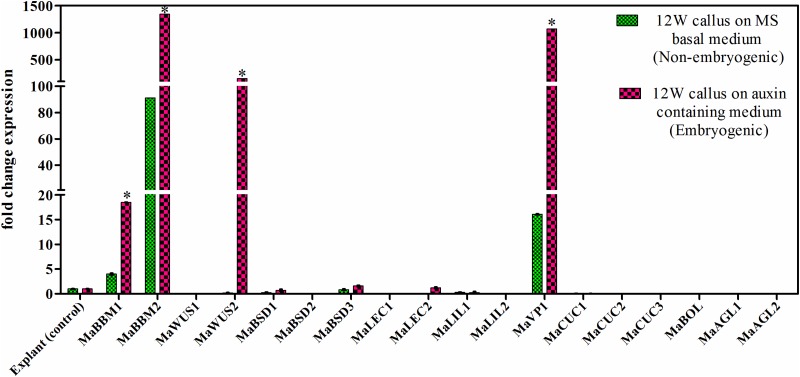
Transcription factors BABY BOOM (BBM), WUSCHEL (WUS), BSD, LEAFY COTYLEDON (LEC), LEAFY COTYLEDON LIKE (LIL), VIVIPAROUS1 (VP1), CUP SHAPED COTYLEDONS (CUC), BOLITA (BOL), and AGAMOUS LIKE (AGL) play a crucial role in somatic embryogenesis. In this study, we identified eighteen genes of these nine transcription factors families from the banana genome database. All genes were analyzed for their structural features, subcellular, and chromosomal localization. Protein sequence analysis indicated the presence of characteristic conserved domains in these transcription factors. Phylogenetic analysis revealed close evolutionary relationship among most transcription factors of various monocots. The expression patterns of eighteen genes in embryogenic callus containing somatic embryos (precisely isolated by Laser Capture Microdissection), non-embryogenic callus, and cell suspension cultures of banana cultivar Grand Naine were analyzed. The application of 2, 4-dichlorophenoxyacetic acid (2, 4-D) in the callus induction medium enhanced the expression of MaBBM1, MaBBM2, MaWUS2, and MaVP1 in the embryogenic callus. It suggested 2, 4-D acts as an inducer for the expression of these genes. The higher expression of MaBBM2 and MaWUS2 in embryogenic cell suspension (ECS) as compared to non-embryogenic cells suspension (NECS), suggested that these genes may play a crucial role in banana somatic embryogenesis. MaVP1 showed higher expression in both ECS and NECS, whereas MaLEC2 expression was significantly higher in NECS. It suggests that MaLEC2 has a role in the development of non-embryogenic cells. We postulate that MaBBM2 and MaWUS2 can be served as promising molecular markers for the embryogencity in banana.
转录因子BABY BOOM(BBM)、WUSCHEL(WUS)、BSD、LEAFY COTYLEDON(LEC)、LEAFY COTYLEDON LIKE(LIL)、VIVIPAROUS1(VP1)、CUP SHAPED COTYLEDONS(CUC)、BOLITA(BOL)和AGAMOUS LIKE(AGL)在体细胞胚胎发生中起关键作用。在本研究中,我们从香蕉基因组数据库中鉴定出这九个转录因子家族的18个基因。对所有基因进行了结构特征、亚细胞定位和染色体定位分析。蛋白质序列分析表明这些转录因子中存在特征性保守结构域。系统发育分析揭示了各种单子叶植物的大多数转录因子之间存在密切的进化关系。分析了香蕉品种大麦克的含体细胞胚的胚性愈伤组织(通过激光捕获显微切割精确分离)、非胚性愈伤组织和细胞悬浮培养物中18个基因的表达模式。在愈伤组织诱导培养基中添加2,4-二氯苯氧乙酸(2,4-D)可增强胚性愈伤组织中MaBBM1、MaBBM2、MaWUS2和MaVP1的表达。这表明2,4-D是这些基因表达的诱导剂。与非胚性细胞悬浮液(NECS)相比,MaBBM2和MaWUS2在胚性细胞悬浮液(ECS)中表达较高,表明这些基因可能在香蕉体细胞胚胎发生中起关键作用。MaVP1在ECS和NECS中均表现出较高表达,而MaLEC2在NECS中的表达显著更高。这表明MaLEC2在非胚性细胞的发育中起作用。我们推测MaBBM2和MaWUS2可作为香蕉胚性的有前景的分子标记。