Mohammad Haroon, Younis Waleed, Ezzat Hany G, Peters Christine E, AbdelKhalek Ahmed, Cooper Bruce, Pogliano Kit, Pogliano Joe, Mayhoub Abdelrahman S, Seleem Mohamed N
Department of Comparative Pathobiology, Purdue University College of Veterinary Medicine, West Lafayette, Indiana, United States of America.
Department of Microbiology, Faculty of Veterinary Medicine, South Valley University, Qena, Egypt.
PLoS One. 2017 Aug 10;12(8):e0182821. doi: 10.1371/journal.pone.0182821. eCollection 2017.
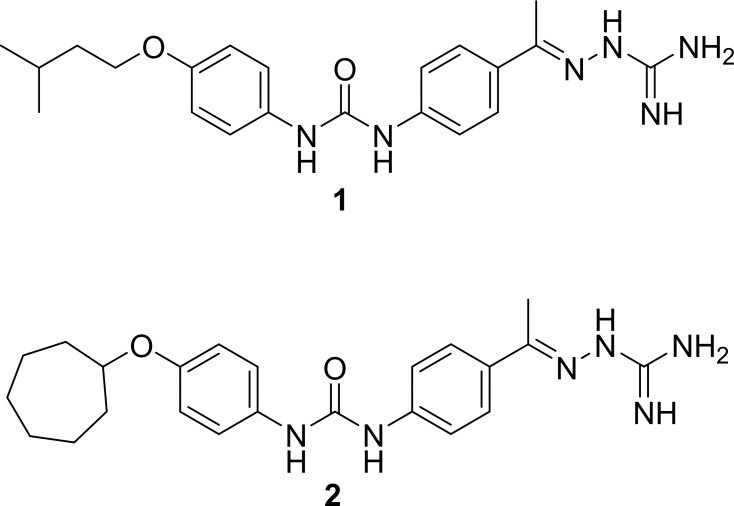
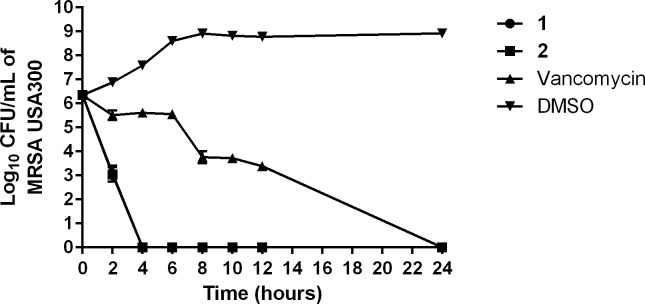
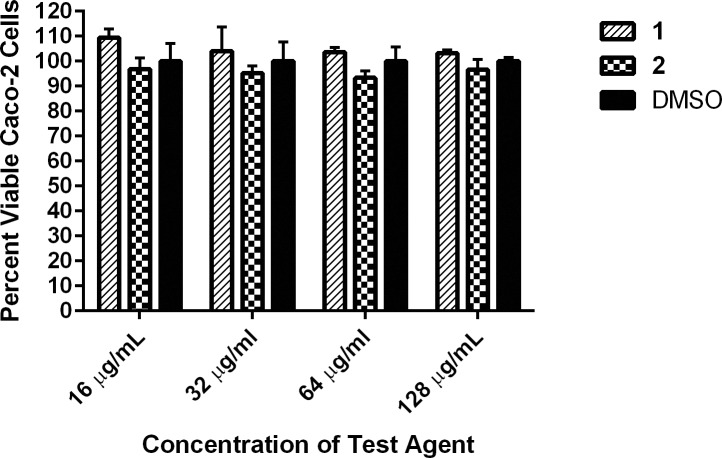
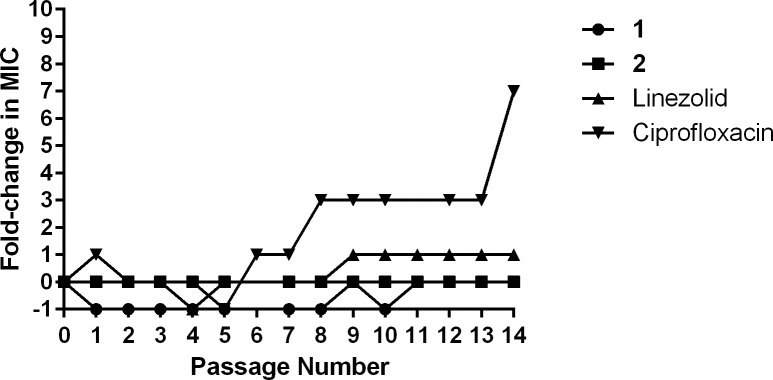
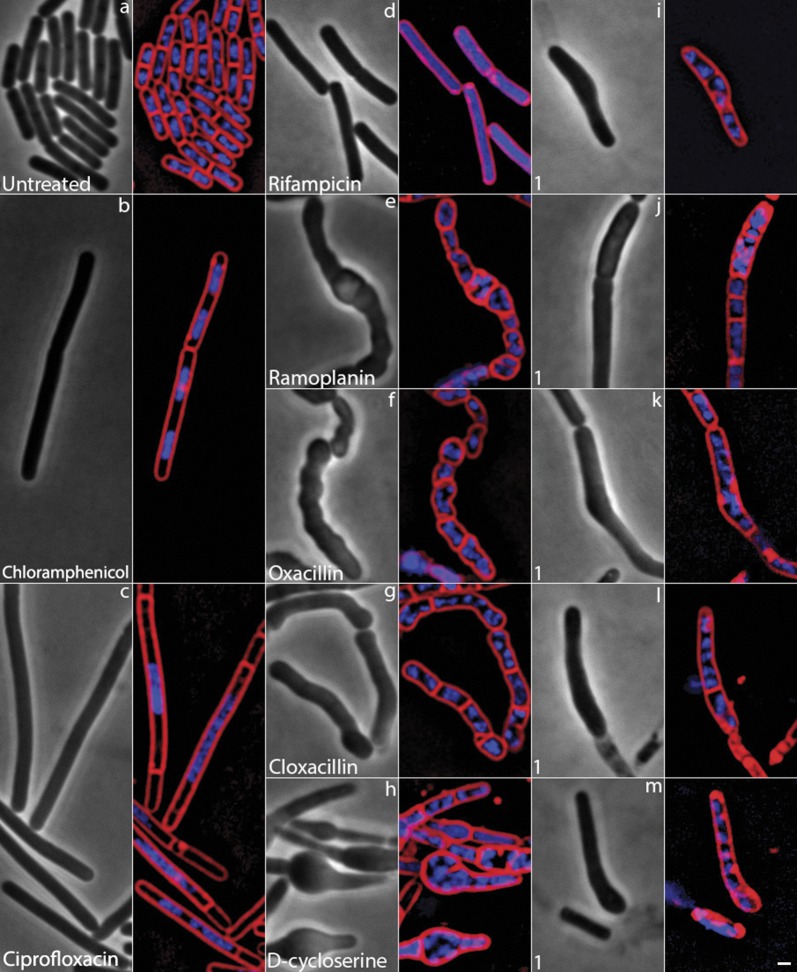
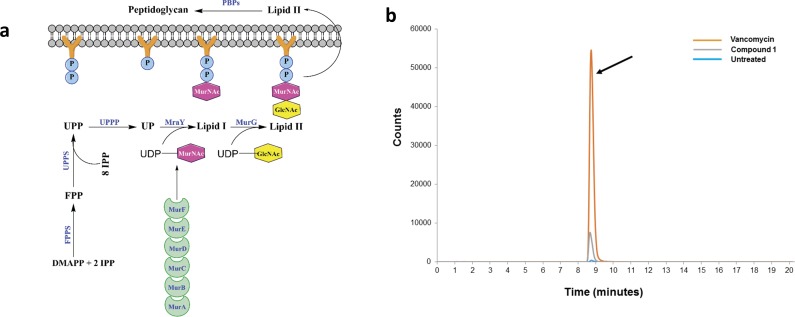
Bacterial resistance to antibiotics remains an imposing global public health challenge. Of the most serious pathogens, methicillin-resistant Staphylococcus aureus (MRSA) is problematic given strains have emerged that exhibit resistance to several antibiotic classes including β-lactams and agents of last resort such as vancomycin. New antibacterial agents composed of unique chemical scaffolds are needed to counter this public health challenge. The present study examines two synthetic diphenylurea compounds 1 and 2 that inhibit growth of clinically-relevant isolates of MRSA at concentrations as low as 4 µg/mL and are non-toxic to human colorectal cells at concentrations up to 128 μg/mL. Both compounds exhibit rapid bactericidal activity, completely eliminating a high inoculum of MRSA within four hours. MRSA mutants exhibiting resistance to 1 and 2 could not be isolated, indicating a low likelihood of rapid resistance emerging to these compounds. Bacterial cytological profiling revealed the diphenylureas exert their antibacterial activity by targeting bacterial cell wall synthesis. Both compounds demonstrate the ability to resensitize vancomycin-resistant Staphylococcus aureus to the effect of vancomycin. The present study lays the foundation for further investigation and development of diphenylurea compounds as a new class of antibacterial agents.
细菌对抗生素的耐药性仍然是一个严峻的全球公共卫生挑战。在最严重的病原体中,耐甲氧西林金黄色葡萄球菌(MRSA)是个问题,因为已经出现了对包括β-内酰胺类和万古霉素等最后手段药物在内的几种抗生素类别的耐药菌株。需要由独特化学骨架组成的新型抗菌剂来应对这一公共卫生挑战。本研究考察了两种合成二苯基脲化合物1和2,它们在低至4μg/mL的浓度下就能抑制临床相关MRSA分离株的生长,并且在高达128μg/mL的浓度下对人结肠直肠细胞无毒。这两种化合物都表现出快速杀菌活性,能在四小时内完全消除高接种量的MRSA。无法分离出对1和2耐药的MRSA突变体,表明这些化合物快速产生耐药性的可能性较低。细菌细胞学分析表明,二苯基脲通过靶向细菌细胞壁合成发挥其抗菌活性。这两种化合物都显示出使耐万古霉素金黄色葡萄球菌对万古霉素的作用重新敏感的能力。本研究为进一步研究和开发二苯基脲化合物作为一类新型抗菌剂奠定了基础。