Department of Gynecology and Obstetrics, Zhengzhou Peoples HospitalZhengzhouP.R. China.
Department of Traditional Chinese Medicine, Zhengzhou Peoples HospitalZhengzhouP.R. China.
Oncol Res. 2018 Apr 10;26(3):401-410. doi: 10.3727/096504017X15017209042610. Epub 2017 Aug 10.
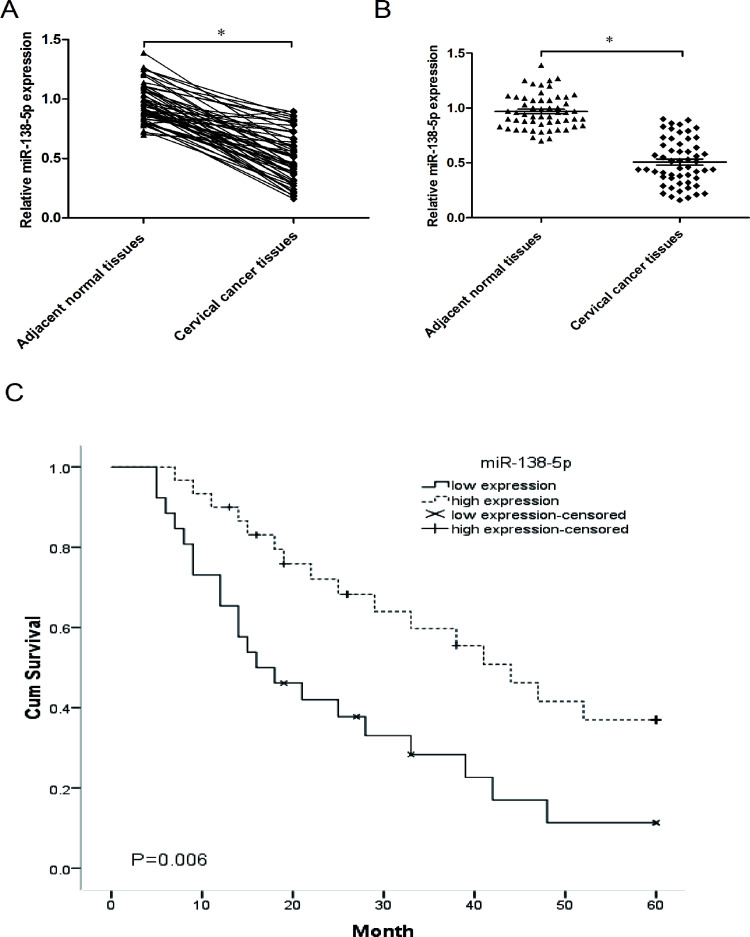
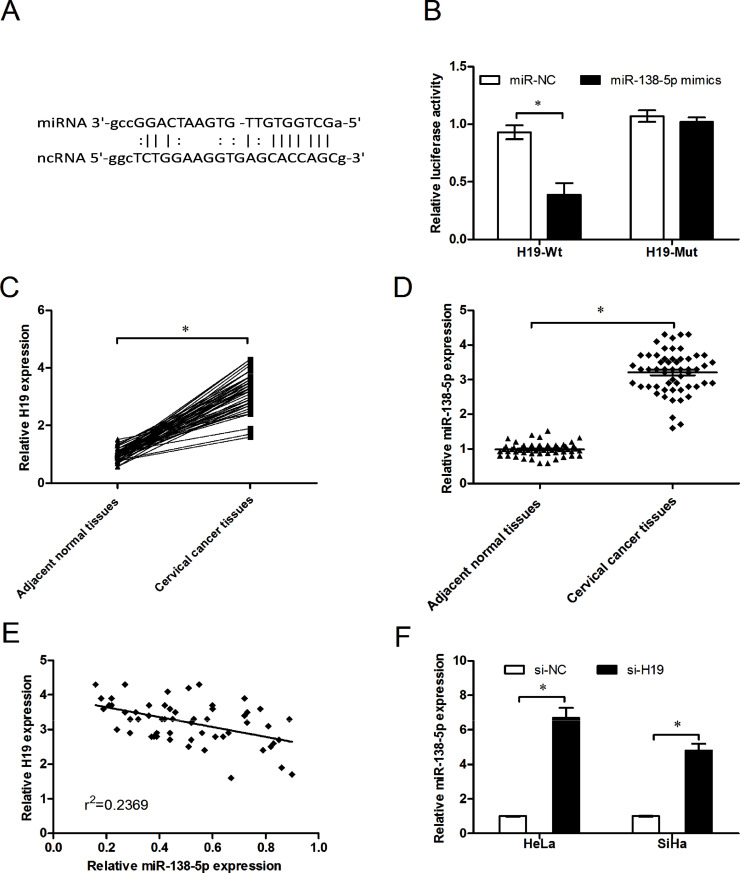
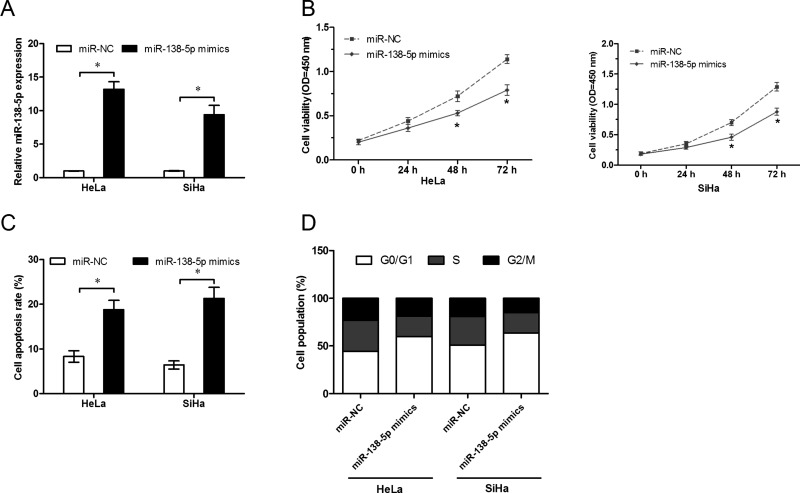
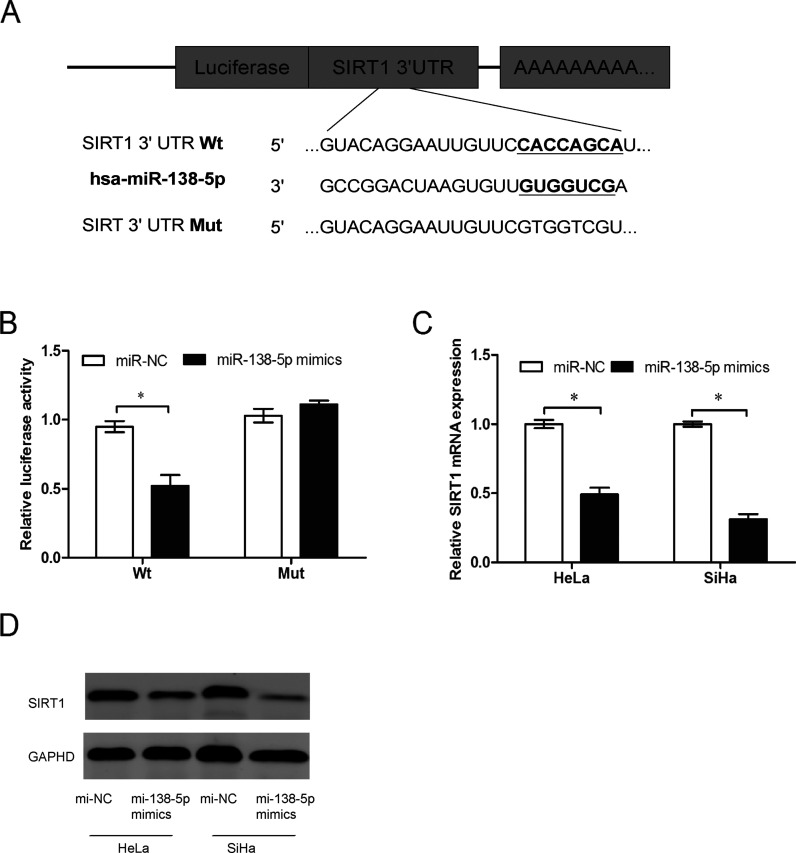
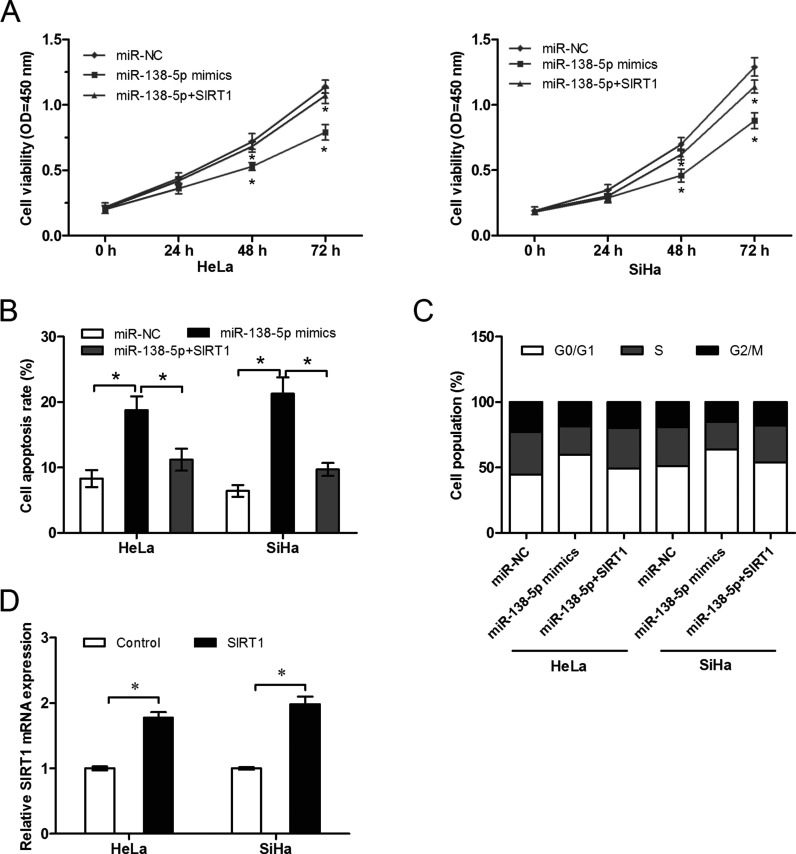
MicroRNAs (miRNAs) play important roles in the carcinogenesis of cervical cancer. However, the expression and underlying mechanisms of miRNA in cervical cancer progression remain unclear. In the present study, our data showed that the expression of miR-138-5p was significantly downregulated in cervical cancer tissues, and decreased expression of miR-138-5p was correlated with advanced FIGO stage, poor differentiation, lymph node metastasis, and poor overall survival of cervical cancer patients. Function assays showed that overexpression of miR-138-5p reduced cervical cancer cell proliferation, arrested cells in the G/G phase, and induced cell apoptosis in vitro. Remarkably, SIRT1 was confirmed as a direct target of miR-138-5p in cervical cancer, and miR-138-5p exerted the reduced tumor functions by suppressing SIRT1 expression. Moreover, we further identified that lncRNA H19 could act as a molecular sponge of miR-138-5p in cervical cancer progression. Taken together, these results suggested that miR-138-5p could suppress cervical cancer cell progression by targeting SIRT1.
微小 RNA(miRNA)在宫颈癌的发生发展中发挥重要作用。然而,miRNA 在宫颈癌进展中的表达及其潜在机制尚不清楚。本研究结果表明,miR-138-5p 在宫颈癌组织中表达明显下调,miR-138-5p 表达降低与 FIGO 分期较晚、分化较差、淋巴结转移和宫颈癌患者总体生存率差相关。功能分析表明,过表达 miR-138-5p 可降低宫颈癌细胞的增殖能力,将细胞阻滞在 G1/G0 期,并诱导细胞凋亡。值得注意的是,SIRT1 被确认为宫颈癌中 miR-138-5p 的直接靶基因,miR-138-5p 通过抑制 SIRT1 的表达发挥抑制肿瘤的作用。此外,我们还进一步证实,lncRNA H19 可作为宫颈癌进展过程中 miR-138-5p 的分子海绵。综上所述,这些结果表明,miR-138-5p 可能通过靶向 SIRT1 抑制宫颈癌细胞的进展。