El-Kirat-Chatel Sofiane, Puymege Aurore, Duong The H, Van Overtvelt Perrine, Bressy Christine, Belec Lénaïk, Dufrêne Yves F, Molmeret Maëlle
CNRS and Université de Lorraine, Laboratoire de Chimie Physique et Microbiologie pour l'Environnement (LCPME), UMR 7564Nancy, France.
Institute of Life Sciences, Université catholique de LouvainLouvain-la-Neuve, Belgium.
Front Microbiol. 2017 Jul 27;8:1399. doi: 10.3389/fmicb.2017.01399. eCollection 2017.
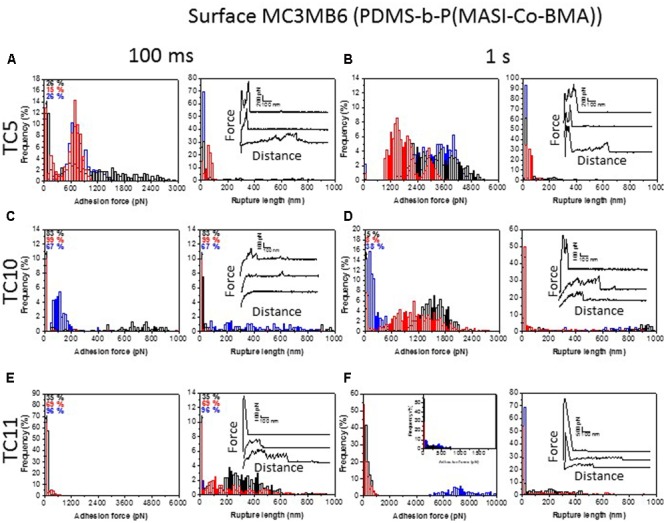
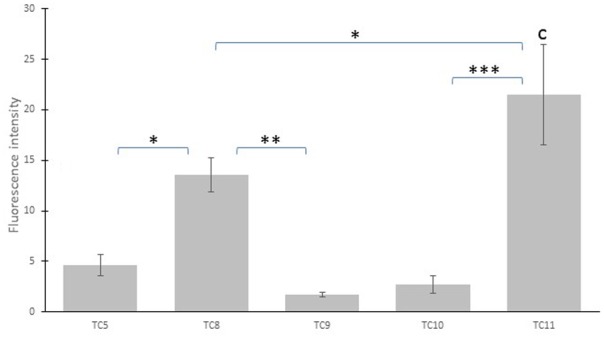
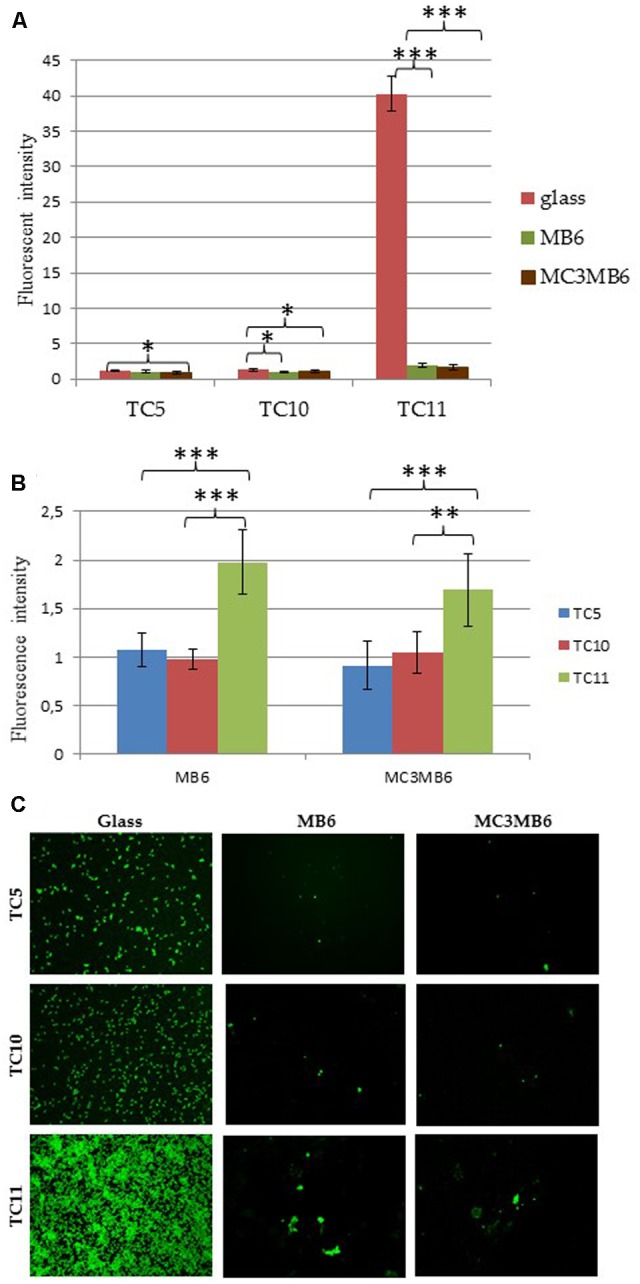
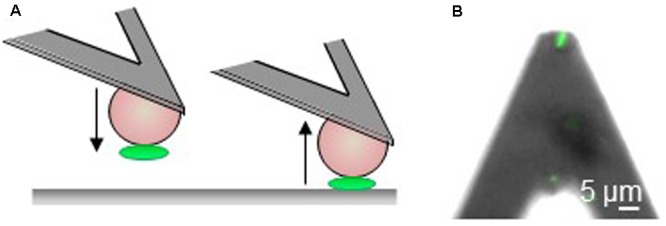
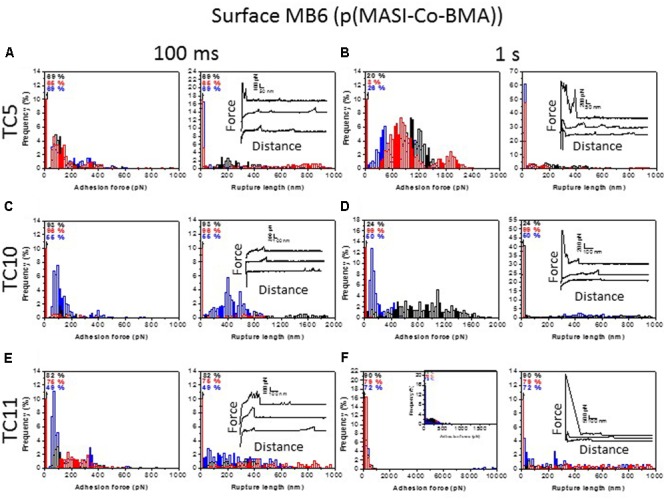
Up to recent years, bacterial adhesion has mostly been evaluated at the population level. Single cell level has improved in the past few years allowing a better comprehension of the implication of individual behaviors as compared to the one of a whole community. A new approach using atomic force microscopy (AFM) to measure adhesion forces between a live bacterium attached via a silica microbead to the AFM tipless cantilever and the surface has been recently developed. The objectives of this study is to examine the bacterial adhesion to a surface dedicated to ship hulls at the population and the cellular level to understand to what extent these two levels could be correlated. Adhesion of marine bacteria on inert surfaces are poorly studied in particular when substrata are dedicated to ship hulls. Studying these interactions in this context are worthwhile as they may involve different adhesion behaviors, taking place in salty conditions, using different surfaces than the ones usually utilized in the literacy. FRC (fouling release coatings)-SPC (self-polishing coatings) hybrids antifouling coatings have been used as substrata and are of particular interest for designing environmentally friendly surfaces, combining progressive surface erosion and low adhesion properties. In this study, a hybrid coating has been synthetized and used to study the adhesion of three marine bacteria, displaying different surface characteristics, using microplate assays associated with confocal scanning laser microscopy (CSLM) and AFM. This study shows that the bacterial strain that appeared to have the weakest adhesion and biofilm formation abilities when evaluated at the population level using microplates assays and CSLM, displayed stronger adhesion forces on the same surfaces at the single cell level using AFM. In addition, one of the strains tested which presented a strong ability to adhere and to form biofilm at the population level, displayed a heterogeneous phenotypic behavior at the single cell level. Therefore, these results suggest that the evaluation of adhesion at the population level cannot always be correlated with adhesion forces measured individually by AFM and that some bacteria are prone to phenotypic heterogeneity among their population.
直到近年来,细菌黏附大多是在群体水平上进行评估的。在过去几年里,单细胞水平的研究有所改进,与整个群落相比,能更好地理解个体行为的影响。最近开发了一种新方法,利用原子力显微镜(AFM)来测量通过二氧化硅微珠附着在AFM无尖悬臂上的活细菌与表面之间的黏附力。本研究的目的是在群体和细胞水平上研究细菌对专门用于船体的表面的黏附情况,以了解这两个水平在多大程度上具有相关性。海洋细菌在惰性表面上的黏附研究较少,特别是当底物专门用于船体时。在这种情况下研究这些相互作用是值得的,因为它们可能涉及不同的黏附行为,发生在含盐条件下,使用的表面与文献中通常使用的表面不同。FRC(防污释放涂层)-SPC(自抛光涂层)混合防污涂层已被用作底物,对于设计结合渐进性表面侵蚀和低黏附性能的环保表面特别有意义。在本研究中,合成了一种混合涂层,并用于研究三种具有不同表面特征的海洋细菌的黏附情况,采用了与共聚焦扫描激光显微镜(CSLM)和AFM相关的微孔板测定法。这项研究表明,在使用微孔板测定法和CSLM在群体水平上评估时,似乎具有最弱黏附力和生物膜形成能力的细菌菌株,在单细胞水平上使用AFM时在相同表面上表现出更强的黏附力。此外,所测试的菌株之一在群体水平上表现出很强的黏附力和形成生物膜的能力,但在单细胞水平上表现出异质的表型行为。因此,这些结果表明,在群体水平上对黏附的评估并不总是与通过AFM单独测量的黏附力相关,并且一些细菌在其群体中容易出现表型异质性。