Department of Biosciences, University of Oslo, N-0316, Oslo, Norway.
Institute of Basic Medical Sciences, University of Oslo, N-0372, Oslo, Norway.
Sci Rep. 2017 Aug 11;7(1):7884. doi: 10.1038/s41598-017-07385-4.
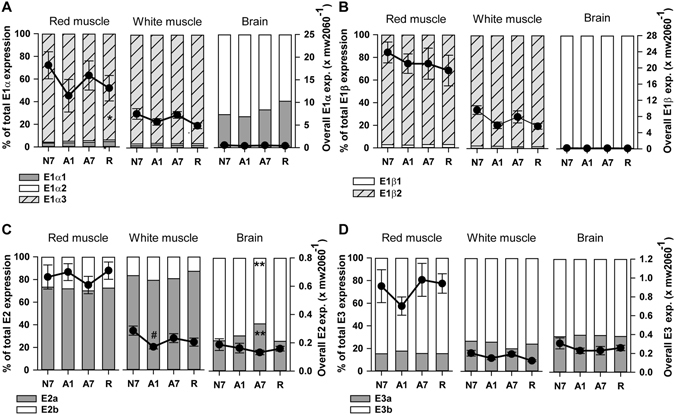
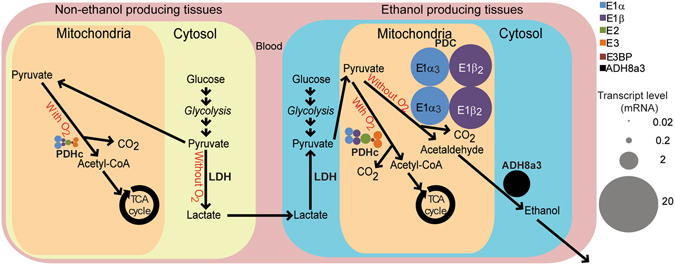
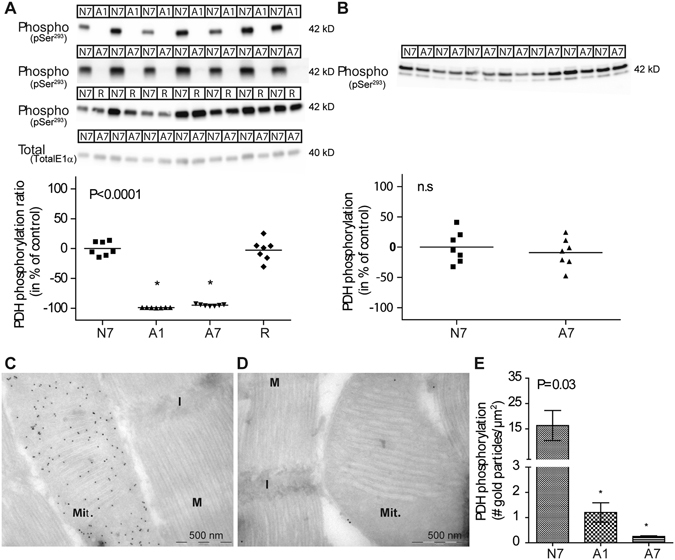
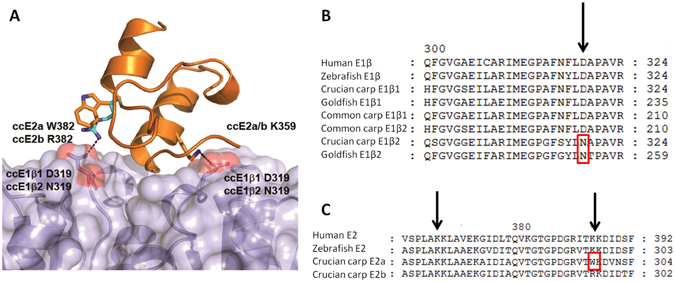
Without oxygen, most vertebrates die within minutes as they cannot meet cellular energy demands with anaerobic metabolism. However, fish of the genus Carassius (crucian carp and goldfish) have evolved a specialized metabolic system that allows them to survive prolonged periods without oxygen by producing ethanol as their metabolic end-product. Here we show that this has been made possible by the evolution of a pyruvate decarboxylase, analogous to that in brewer's yeast and the first described in vertebrates, in addition to a specialized alcohol dehydrogenase. Whole-genome duplication events have provided additional gene copies of the pyruvate dehydrogenase multienzyme complex that have evolved into a pyruvate decarboxylase, while other copies retained the essential function of the parent enzymes. We reveal the key molecular substitution in duplicated pyruvate dehydrogenase genes that underpins one of the most extreme hypoxic survival strategies among vertebrates and that is highly deleterious in humans.
在没有氧气的情况下,大多数脊椎动物在几分钟内就会死亡,因为它们无法通过无氧代谢满足细胞的能量需求。然而,鲤鱼属(鲫鱼和金鱼)的鱼类已经进化出一种特殊的代谢系统,使它们能够通过产生乙醇作为代谢终产物来在长时间内没有氧气的情况下存活。在这里,我们表明,这是通过进化出类似于酿酒酵母中的丙酮酸脱羧酶以及脊椎动物中首次描述的丙酮酸脱羧酶来实现的,此外还有一种特殊的醇脱氢酶。全基因组复制事件为丙酮酸脱氢酶多酶复合物提供了额外的基因副本,这些副本进化成了丙酮酸脱羧酶,而其他副本则保留了亲本酶的基本功能。我们揭示了在复制的丙酮酸脱氢酶基因中关键的分子取代,这是脊椎动物中最极端的缺氧生存策略之一,在人类中是高度有害的。