a Department of Microbiology and Immunology , University of North Carolina at Chapel Hill , Chapel Hill , NC , USA.
Gut Microbes. 2018 Jan 2;9(1):76-83. doi: 10.1080/19490976.2017.1362526. Epub 2017 Sep 21.
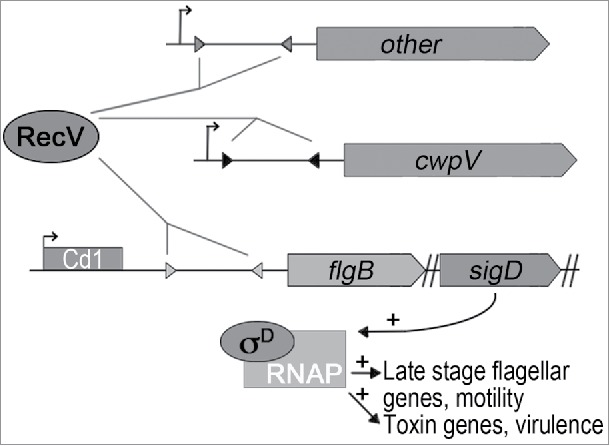
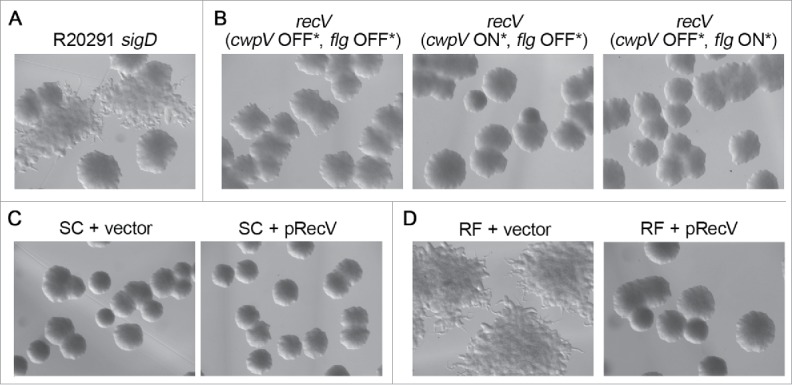
Clostridium difficile is a leading cause of nosocomial infections, causing disease that ranges from mild diarrhea to potentially fatal colitis. A variety of surface proteins, including flagella, enable C. difficile colonization of the intestine. Once in the intestine, toxigenic C. difficile secretes two glucosylating toxins, TcdA and TcdB, which elicit inflammation and diarrheal disease symptoms. Regulation of colonization factors and TcdA and TcdB is an intense area of research in C. difficile biology. A recent publication from our group describes a novel regulatory mechanism that mediates the ON/OFF expression of co-regulated virulence factors of C. difficile, flagella and toxins. Herein, we review key findings from our work, present new data, and speculate the functional consequence of the ON/OFF expression of these virulence factors during host infection.
艰难梭菌是医院获得性感染的主要原因,可引起从轻度腹泻到潜在致命性结肠炎等多种疾病。多种表面蛋白,包括鞭毛,使艰难梭菌能够在肠道中定植。一旦进入肠道,产毒艰难梭菌就会分泌两种葡糖基化毒素,TcdA 和 TcdB,引发炎症和腹泻症状。定植因子以及 TcdA 和 TcdB 的调控是艰难梭菌生物学研究的一个热点领域。我们小组最近的一篇论文描述了一种新的调控机制,介导艰难梭菌共同调控的毒力因子——鞭毛和毒素的开/关表达。本文中,我们将回顾我们工作中的关键发现,呈现新的数据,并推测这些毒力因子在宿主感染过程中的开/关表达的功能后果。