Byker Shanks Carmen, Banna Jinan, Serrano Elena L
J Acad Nutr Diet. 2017 Nov;117(11):1792-1807. doi: 10.1016/j.jand.2017.06.008. Epub 2017 Aug 12.
Food waste studies have been used for more than 40 years to assess nutrient intake, dietary quality, menu performance, food acceptability, cost, and effectiveness of nutrition education in the National School Lunch Program (NSLP).
Describe methods used to measure food waste and respective results in the NSLP across time.
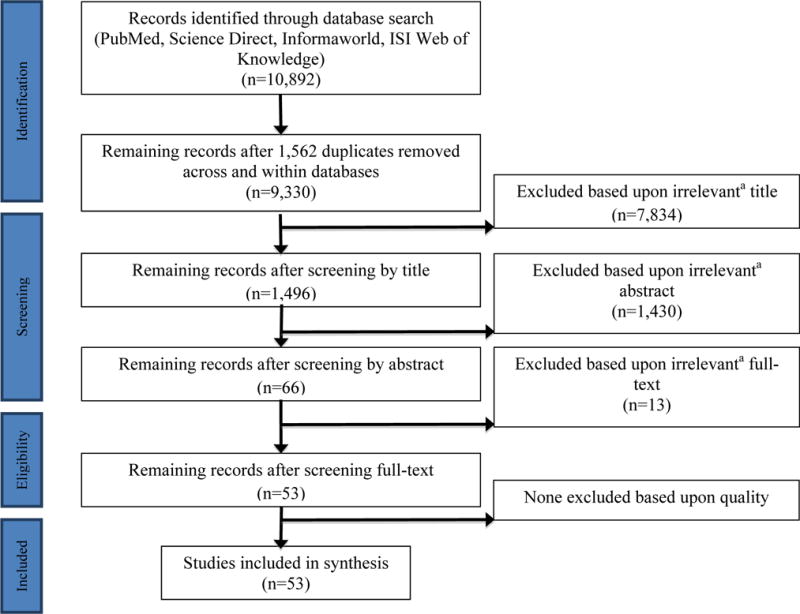
A systematic review using PubMed, Science Direct, Informaworld, and Institute of Scientific Information Web of Knowledge was conducted using the following search terms: waste, school lunch, plate waste, food waste, kitchen, half method, quarter method, weight, and photography. Studies published through June 2015 were included. The systematic review followed preferred reporting items for systematic reviews and meta-analyses recommendations.
The final review included 53 articles. Food waste methodologies included in-person visual estimation (n=11), digital photography (n=11), direct weighing (n=23), and a combination of in-person visual estimation, digital photography, and/or direct weighing (n=8). A majority of studies used a pre-post intervention or cross-sectional design. Fruits and vegetables were the most researched dietary component on the lunch tray and yielded the greatest amount of waste across studies.
Food waste is commonly assessed in the NSLP, but the methods are diverse and reporting metrics are variable. Future research should focus on establishing more uniform metrics to measure and report on food waste in the NSLP. Consistent food waste measurement methods will allow for better comparisons between studies. Such measures may facilitate better decision making about NSLP practices, programs, and policies that influence student consumption patterns across settings and interventions.
在过去40多年里,食物浪费研究一直被用于评估国家学校午餐计划(NSLP)中的营养摄入、饮食质量、菜单表现、食物可接受性、成本以及营养教育的效果。
描述NSLP中随时间推移测量食物浪费的方法及相应结果。
使用PubMed、Science Direct、Informaworld和科学信息研究所的Web of Knowledge进行系统综述,搜索词如下:浪费、学校午餐、餐盘浪费、食物浪费、厨房、半份法、四分之一法、重量和摄影。纳入截至2015年6月发表的研究。该系统综述遵循系统综述和荟萃分析的首选报告项目建议。
最终综述纳入53篇文章。食物浪费的方法包括现场视觉估计(n = 11)、数码摄影(n = 11)、直接称重(n = 23)以及现场视觉估计、数码摄影和/或直接称重的组合(n = 8)。大多数研究采用干预前后或横断面设计。水果和蔬菜是午餐盘中研究最多的饮食成分,且在各项研究中产生的浪费量最大。
NSLP中通常会评估食物浪费,但方法多样且报告指标各不相同。未来的研究应专注于建立更统一的指标来测量和报告NSLP中的食物浪费。一致的食物浪费测量方法将有助于更好地比较各项研究。这些措施可能有助于就影响不同环境和干预措施下学生消费模式的NSLP实践、计划和政策做出更好的决策。