Kim Ji-Youn, Choi Ho-Gyu, Lee Hae-Miru, Lee Geum-A, Hwang Kyung-A, Choi Kyung-Chul
Laboratory of Biochemistry and Immunology, Veterinary Medical Center and College of Veterinary Medicine, Chungbuk National University, Cheongju, Chungbuk, 28644 Republic of Korea.
J Biomed Res. 2017 Jul 13;31(4):358-369. doi: 10.7555/JBR.31.20160162.
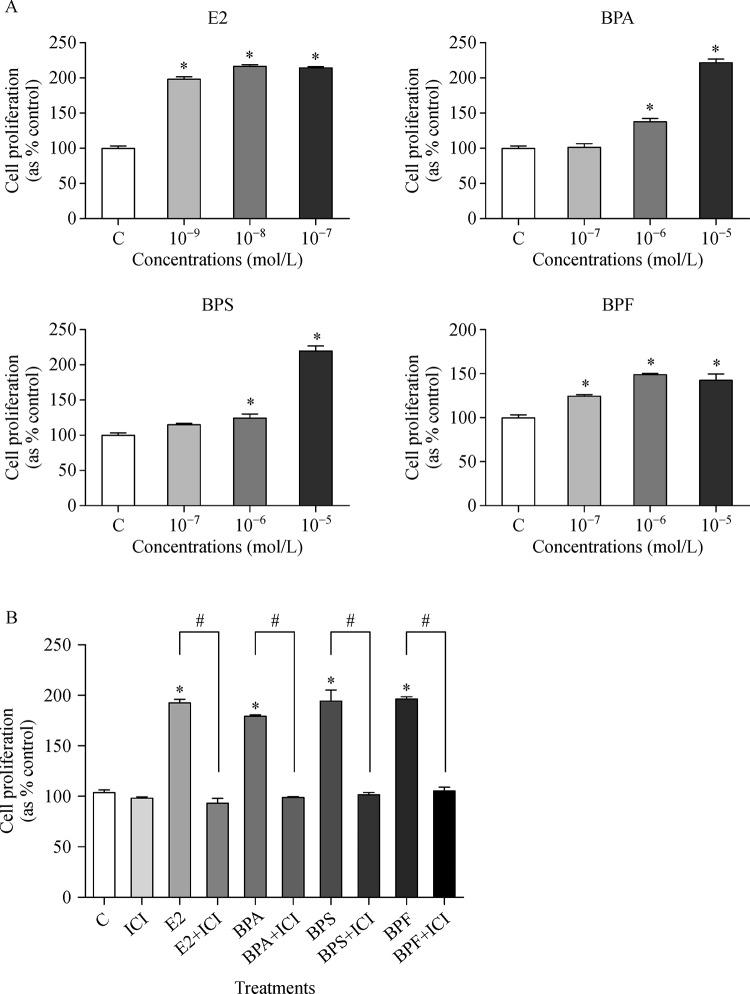
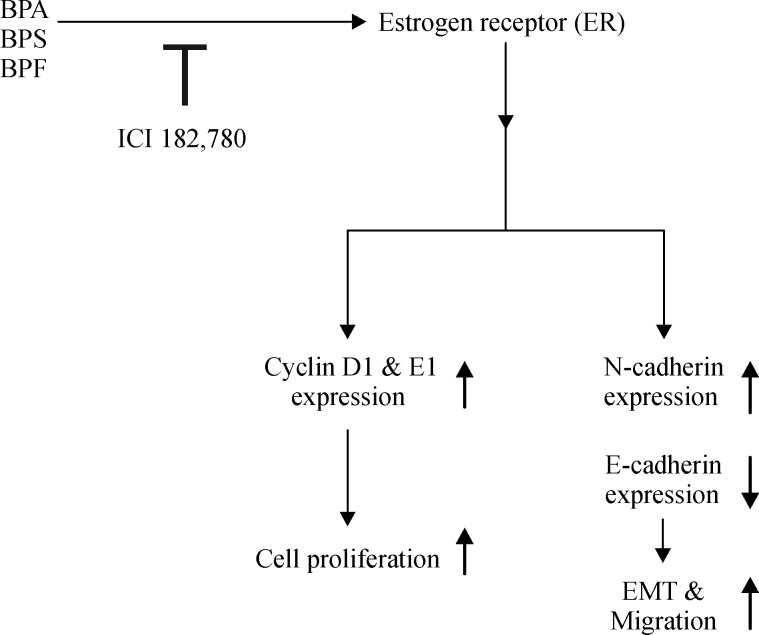
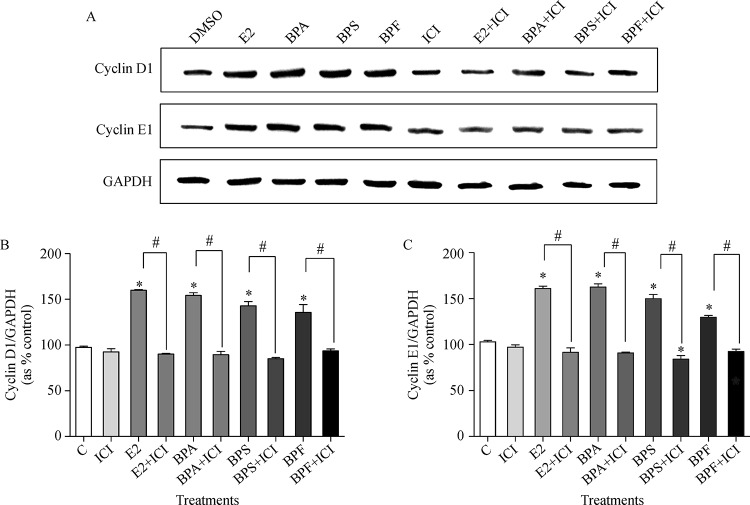
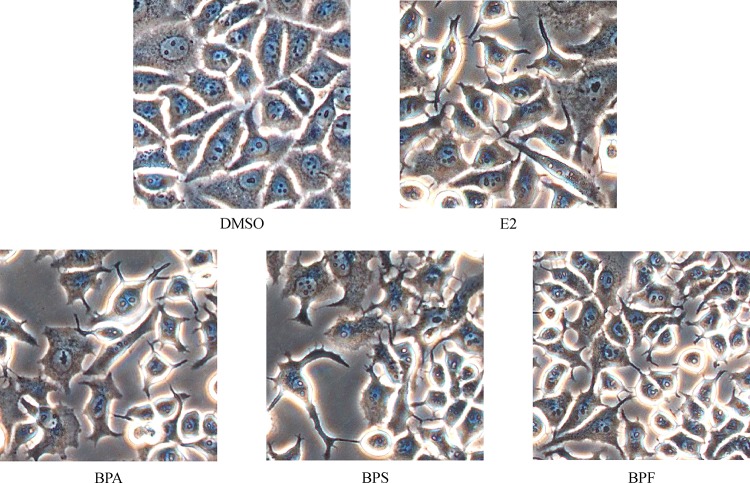
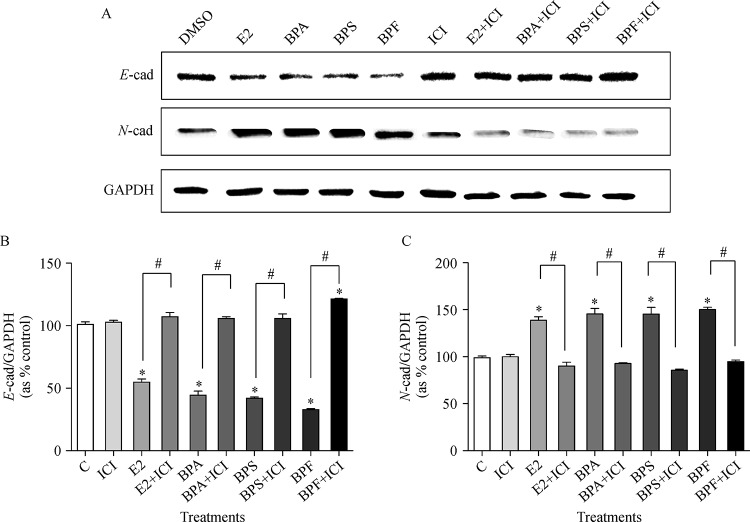
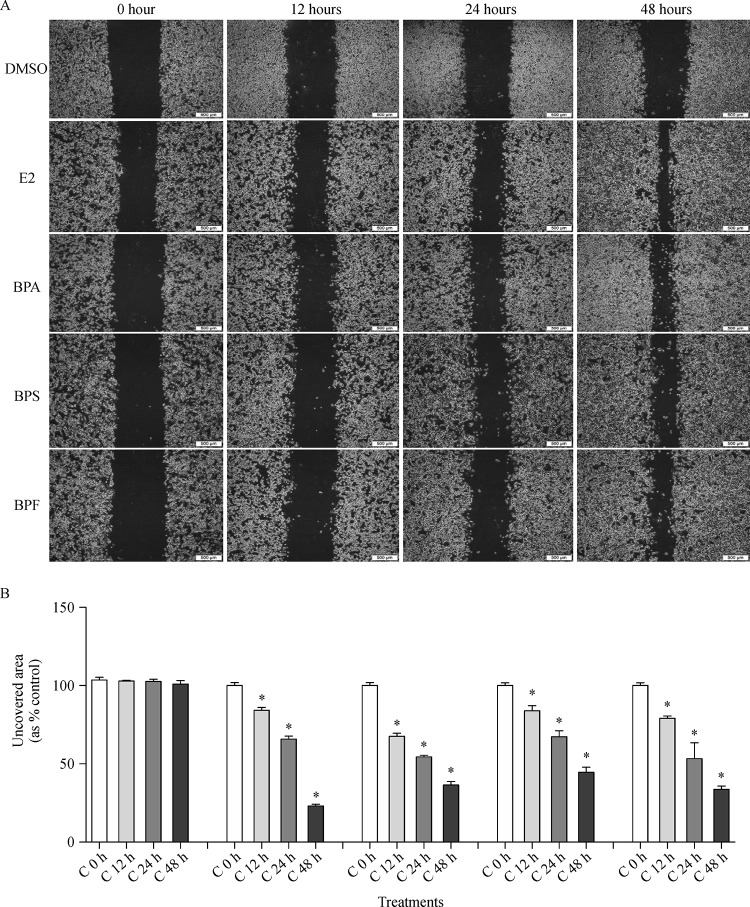
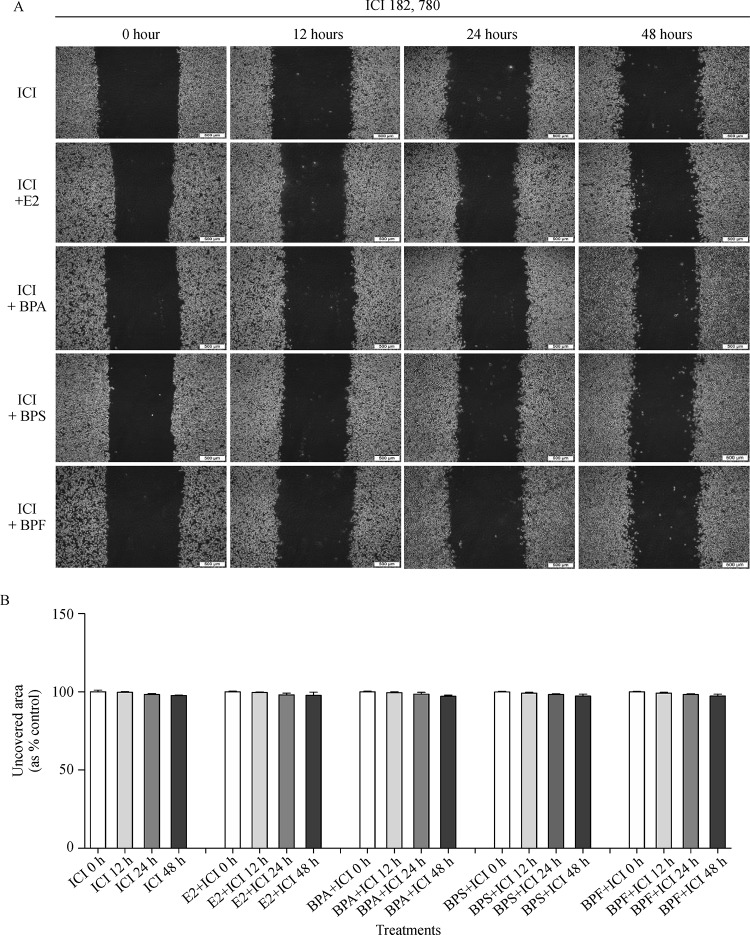
Bisphenol-A (BPA) has been considered as an endocrine disrupting chemical (EDC) because it can exert estrogenic properties. For bisphenol-S (BPS) and bisphenol-F (BPF) that are BPA analogs and substitutes, their risk to estrogen-dependent cancer has been reported rarely compared with the numerous cases of BPA. In this study, we examined whether BPA, BPS, and BPF can lead to the proliferation, migration, and epithelial mesenchymal transition (EMT) of MCF-7 clonal variant (MCF-7 CV) breast cancer cells expressing estrogen receptors (ERs). In a cell viability assay, BPA, BPS, and BPF significantly increased proliferation of MCF-7 CV cells compared to control (DMSO) as did 17β-estradiol (E2). In Western blotting assay, BPA, BPS, and BPF enhanced the protein expression of cell cycle progression genes such as cyclin D1 and E1. In addition, MCF-7 CV cells lost cell to cell contacts and acquired fibroblast-like morphology by the treatment of BPA, BPS, or BPF for 24 hours. In cell migration assay, BPA, BPS, and BPF accelerated the migration capability of MCF-7 CV cells as did E2. In relation with the EMT process, BPA, BPS, and BPF increased the protein expression ofN-cadherin, while they decreased the protein expression of E-cadherin. When BPA, BPS, and BPF were co-treated with ICI 182,780, an ER antagonist, proliferation effects were reversed, the expression of cyclin D1 and cyclin E1 was downregulated, and the altered cell migration and expression ofN-cadherin and E-cadherin by BPA, BPS, and BPF were restored to the control level. Thus, these results imply that BPS and BPF also have the risk of breast cancer progression as much as BPA in the induction of proliferation and migration of MCF-7 CV cells by regulating the protein expression of cell cycle-related genes and EMT markersvia the ER-dependent pathway.
双酚A(BPA)被认为是一种内分泌干扰化学物质(EDC),因为它具有雌激素特性。对于双酚S(BPS)和双酚F(BPF)这两种BPA类似物及替代品,与众多BPA的情况相比,它们对雌激素依赖性癌症的风险报道较少。在本研究中,我们检测了BPA、BPS和BPF是否会导致表达雌激素受体(ERs)的MCF-7克隆变体(MCF-7 CV)乳腺癌细胞的增殖、迁移及上皮-间质转化(EMT)。在细胞活力测定中,与对照(二甲基亚砜)相比,BPA、BPS和BPF显著增加了MCF-7 CV细胞的增殖,17β-雌二醇(E2)也是如此。在蛋白质印迹分析中,BPA、BPS和BPF增强了细胞周期进展相关基因如细胞周期蛋白D1和E1的蛋白质表达。此外,通过用BPA、BPS或BPF处理24小时,MCF-7 CV细胞失去了细胞间接触并获得了成纤维细胞样形态。在细胞迁移测定中,BPA、BPS和BPF与E2一样加速了MCF-7 CV细胞的迁移能力。与EMT过程相关,BPA、BPS和BPF增加了N-钙黏蛋白的蛋白质表达,同时降低了E-钙黏蛋白的蛋白质表达。当BPA、BPS和BPF与ER拮抗剂ICI 182,780共同处理时,增殖效应被逆转,细胞周期蛋白D1和细胞周期蛋白E1的表达下调,并且BPA、BPS和BPF改变的细胞迁移以及N-钙黏蛋白和E-钙黏蛋白的表达恢复到对照水平。因此,这些结果表明,在通过ER依赖性途径调节细胞周期相关基因和EMT标志物的蛋白质表达来诱导MCF-7 CV细胞增殖和迁移方面,BPS和BPF与BPA一样具有乳腺癌进展的风险。