Kim Cho-Won, Go Ryeo-Eun, Choi Kyung-Chul
Laboratory of Biochemistry and Immunology, College of Veterinary Medicine, Chungbuk National University, Cheongju, Korea.
Toxicol Res. 2015 Dec;31(4):331-7. doi: 10.5487/TR.2015.31.4.331.
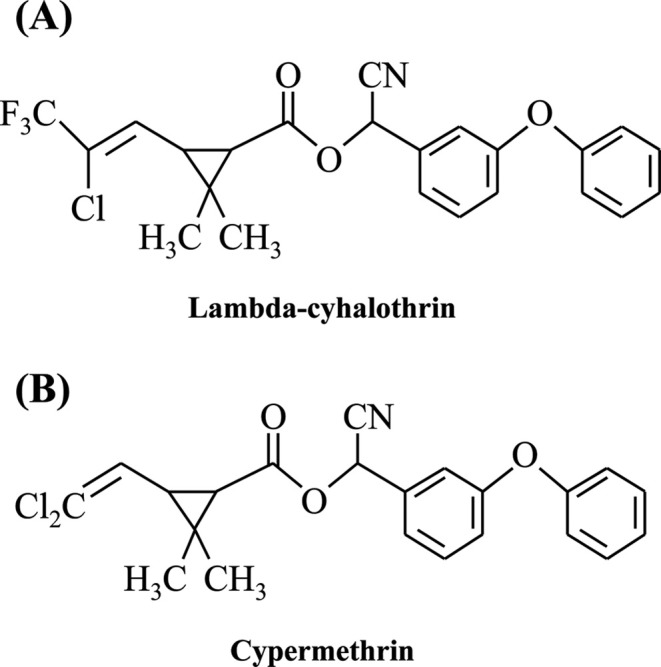
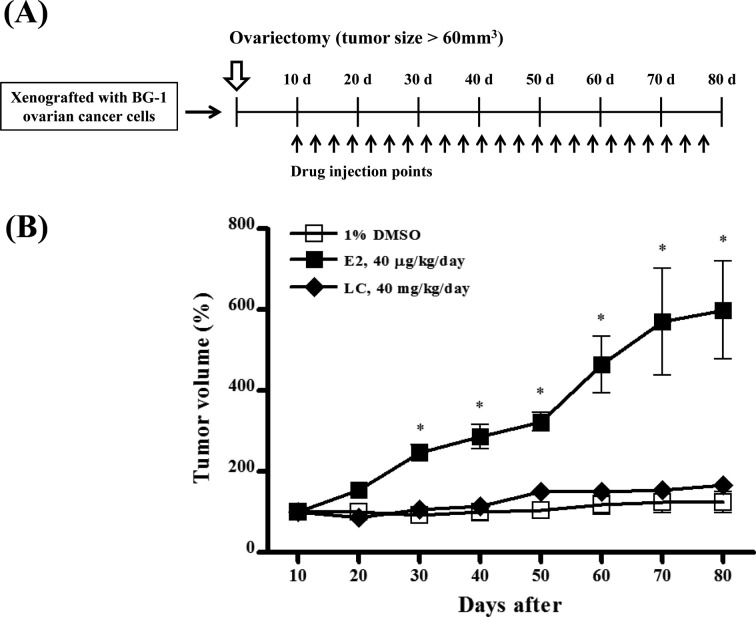
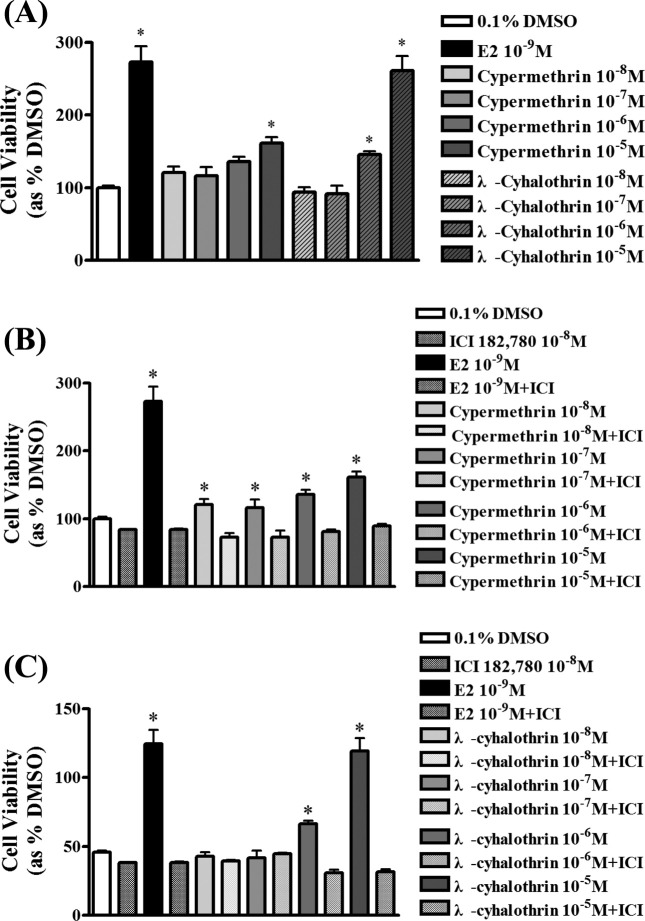
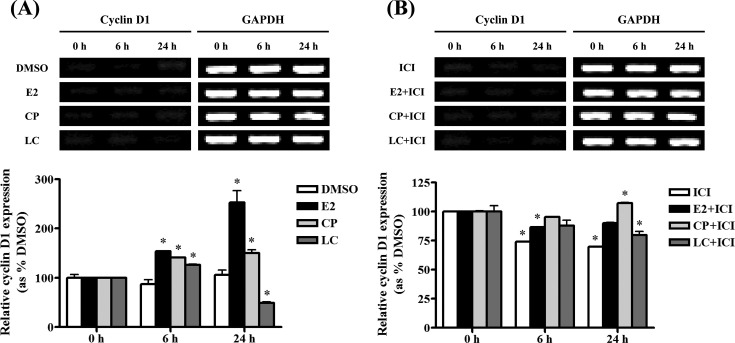
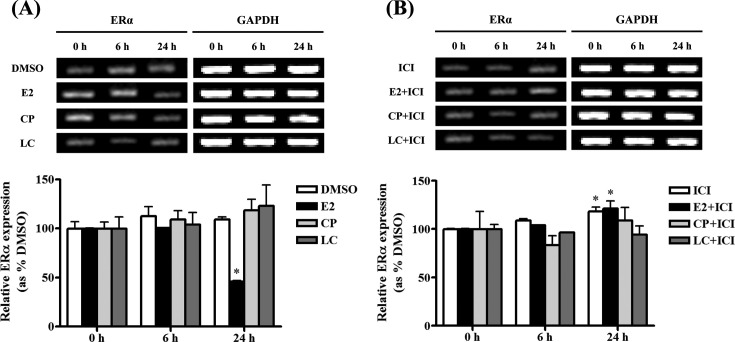
Synthetic pyrethroids (SPs) are the most common pesticides which are recently used for indoor pest control. The widespread use of SPs has resulted in the increased exposure to wild animals and humans. Recently, some SPs are suspected as endocrine disrupting chemicals (EDCs) and have been assessed for their potential estrogenicity by adopting various analyzing assays. In this study, we examined the estrogenic effects of lambda-cyhalothrin (LC) and cypermethrin (CP), the most commonly used pesticides in Korea, using BG-1 ovarian cancer cells expressing estrogen receptors (ERs). To evaluate the estrogenic activities of two SPs, LC and CP, we employed MTT assay and reverse-transcription polymerase chain reaction (RT-PCR) in LC or CP treated BG-1 ovarian cancer cells. In MTT assay, LC (10(-6) M) and CP (10(-5) M) significantly induced the growth of BG-1 cancer cells. LC or CP-induced cell growth was antagonized by addition of ICI 182,720 (10(-8) M), an ER antagonist, suggesting that this effect appears to be mediated by an ER-dependent manner. Moreover, RT-PCR results showed that transcriptional level of cyclin D1, a cell cycle-regulating gene, was significantly up-regulated by LC and CP, while these effects were reversed by co-treatment of ICI 182,780. However, p21, a cyclin D-ckd-4 inhibitor gene, was not altered by LC or CP. Moreover, ERα expression was not significantly changed by LC and CP, while downregulated by E2. Finally, in xenografted mouse model transplanted with human BG-1 ovarian cancer cells, E2 significantly increased the tumor volume compare to a negative control, but LC did not. Taken together, these results suggest that LC and CP may possess estrogenic potentials by stimulating the growth of BG-1 ovarian cancer cells via partially ER signaling pathway associated with cell cycle as did E2, but this estrogenic effect was not found in in vivo mouse model.
合成拟除虫菊酯(SPs)是最近用于室内害虫防治的最常见农药。SPs的广泛使用导致野生动物和人类接触增加。最近,一些SPs被怀疑是内分泌干扰化学物质(EDCs),并已通过各种分析方法评估其潜在雌激素活性。在本研究中,我们使用表达雌激素受体(ERs)的BG-1卵巢癌细胞,研究了韩国最常用的农药氯氟氰菊酯(LC)和氯氰菊酯(CP)的雌激素效应。为了评估两种SPs(LC和CP)的雌激素活性,我们在LC或CP处理的BG-1卵巢癌细胞中采用MTT法和逆转录聚合酶链反应(RT-PCR)。在MTT试验中,LC(10^(-6) M)和CP(10^(-5) M)显著诱导BG-1癌细胞生长。添加ER拮抗剂ICI 182,720(10^(-8) M)可拮抗LC或CP诱导的细胞生长,表明这种效应似乎是以ER依赖的方式介导的。此外,RT-PCR结果显示,细胞周期调节基因细胞周期蛋白D1的转录水平被LC和CP显著上调,而ICI 182,780的共同处理可逆转这些效应。然而,细胞周期蛋白D-ckd-4抑制剂基因p21未被LC或CP改变。此外,LC和CP未显著改变ERα表达,而E2可使其下调。最后,在移植了人BG-1卵巢癌细胞的异种移植小鼠模型中,与阴性对照相比,E2显著增加了肿瘤体积,但LC没有。综上所述,这些结果表明,LC和CP可能具有雌激素潜力,通过与E2一样,通过部分与细胞周期相关的ER信号通路刺激BG-1卵巢癌细胞生长,但在体内小鼠模型中未发现这种雌激素效应。