Weil Tobias, Santamaría Rodrigo, Lee Wanseon, Rung Johan, Tocci Noemi, Abbey Darren, Bezerra Ana R, Carreto Laura, Moura Gabriela R, Bayés Mónica, Gut Ivo G, Csikasz-Nagy Attila, Cavalieri Duccio, Berman Judith, Santos Manuel A S
Department of Medical Sciences & Institute of Biomedicine, iBiMED, University of Aveiro, Aveiro, Portugal.
Research and Innovation Centre, Fondazione E. Mach, San Michele All'Adige, Italy.
mSphere. 2017 Aug 9;2(4). doi: 10.1128/mSphere.00167-17. eCollection 2017 Jul-Aug.
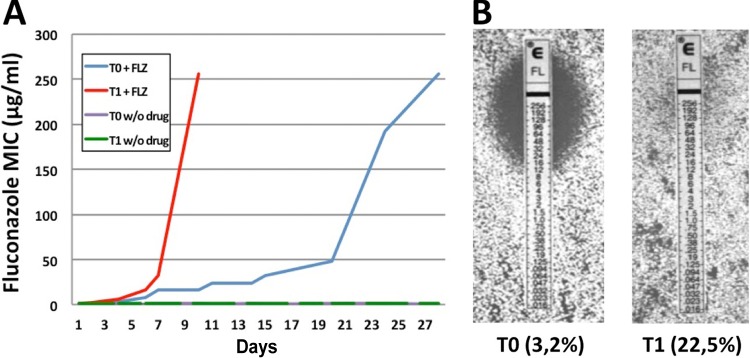
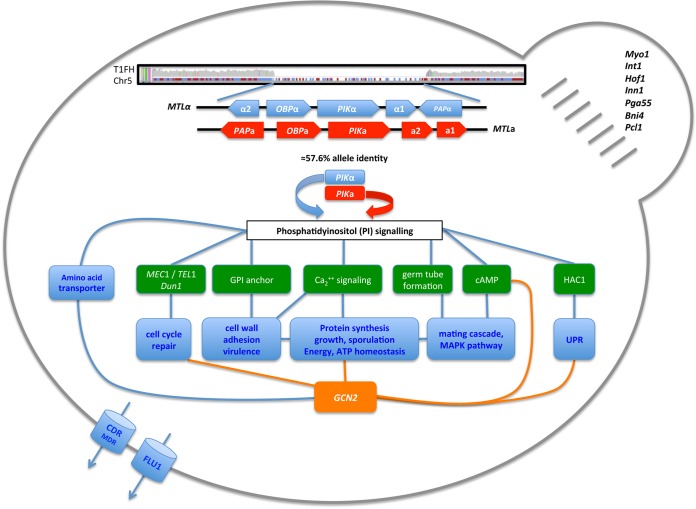
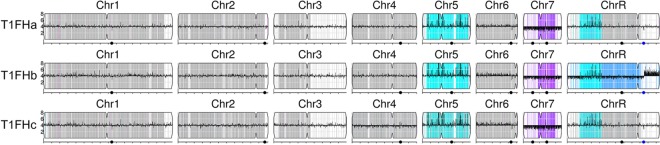
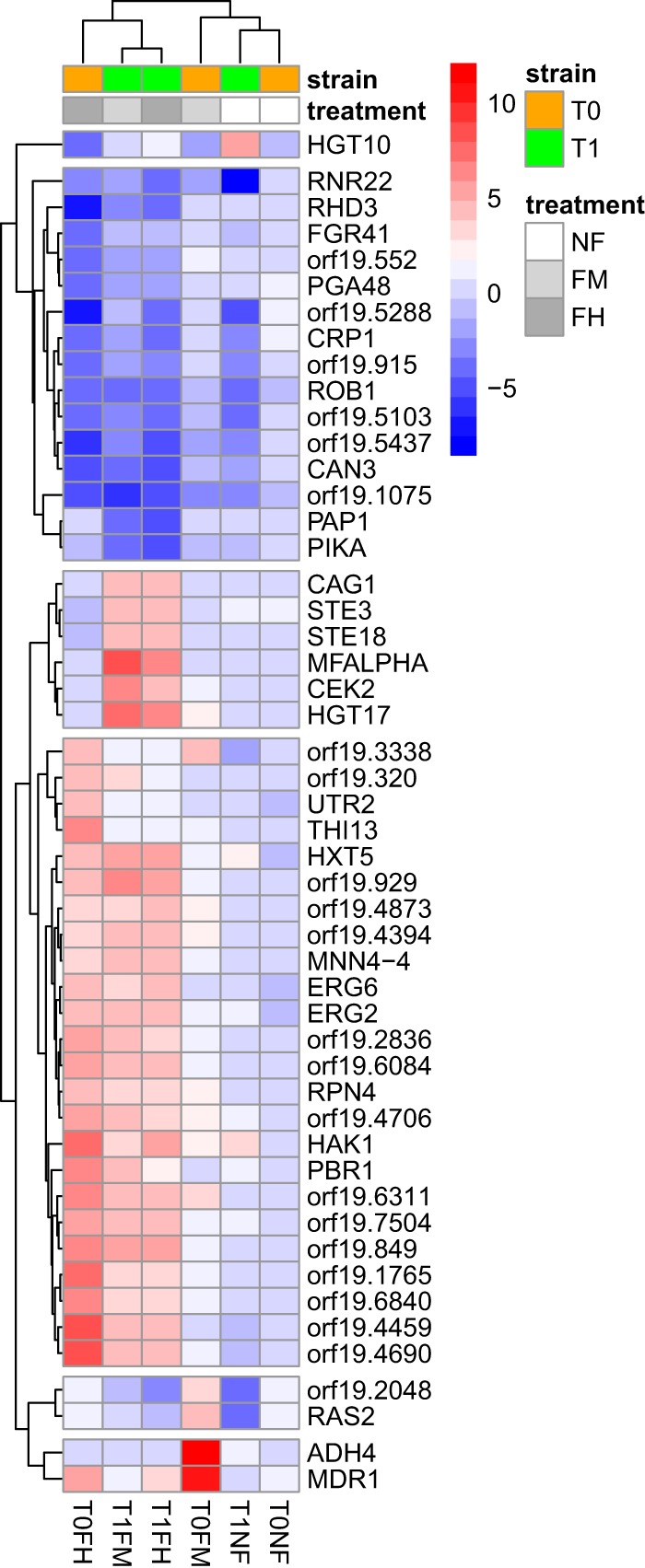
Regulated erroneous protein translation (adaptive mistranslation) increases proteome diversity and produces advantageous phenotypic variability in the human pathogen . It also increases fitness in the presence of fluconazole, but the underlying molecular mechanism is not understood. To address this question, we evolved hypermistranslating and wild-type strains in the absence and presence of fluconazole and compared their fluconazole tolerance and resistance trajectories during evolution. The data show that mistranslation increases tolerance and accelerates the acquisition of resistance to fluconazole. Genome sequencing, array-based comparative genome analysis, and gene expression profiling revealed that during the course of evolution in fluconazole, the range of mutational and gene deregulation differences was distinctively different and broader in the hypermistranslating strain, including multiple chromosome duplications, partial chromosome deletions, and polyploidy. Especially, the increased accumulation of loss-of-heterozygosity events, aneuploidy, translational and cell surface modifications, and differences in drug efflux seem to mediate more rapid drug resistance acquisition under mistranslation. Our observations support a pivotal role for adaptive mistranslation in the evolution of drug resistance in . Infectious diseases caused by drug-resistant fungi are an increasing threat to public health because of the high mortality rates and high costs associated with treatment. Thus, understanding of the molecular mechanisms of drug resistance is of crucial interest for the medical community. Here we investigated the role of regulated protein mistranslation, a characteristic mechanism used by to diversify its proteome, in the evolution of fluconazole resistance. Such codon ambiguity is usually considered highly deleterious, yet recent studies found that mistranslation can boost adaptation in stressful environments. Our data reveal that CUG ambiguity diversifies the genome in multiple ways and that the full spectrum of drug resistance mechanisms in goes beyond the traditional pathways that either regulate drug efflux or alter the interactions of drugs with their targets. The present work opens new avenues to understand the molecular and genetic basis of microbial drug resistance.
受调控的错误蛋白质翻译(适应性错译)增加了蛋白质组的多样性,并在人类病原体中产生有利的表型变异性。它还能在氟康唑存在的情况下提高适应性,但潜在的分子机制尚不清楚。为了解决这个问题,我们在有无氟康唑的情况下培养了超错译菌株和野生型菌株,并比较了它们在进化过程中的氟康唑耐受性和耐药性轨迹。数据表明,错译增加了耐受性并加速了对氟康唑耐药性的获得。基因组测序、基于阵列的比较基因组分析和基因表达谱分析表明,在氟康唑存在的进化过程中,超错译菌株的突变和基因失调差异范围明显不同且更广泛,包括多条染色体重复、部分染色体缺失和多倍体。特别是,杂合性缺失事件、非整倍体、翻译和细胞表面修饰的积累增加,以及药物外排的差异似乎介导了错译情况下更快速的耐药性获得。我们的观察结果支持适应性错译在该病原体耐药性进化中起关键作用。由耐药真菌引起的传染病对公共卫生构成越来越大的威胁,因为其死亡率高且治疗成本高。因此,了解耐药性的分子机制对医学界至关重要。在这里,我们研究了受调控的蛋白质错译(该病原体用于使其蛋白质组多样化的一种独特机制)在氟康唑耐药性进化中的作用。这种密码子模糊性通常被认为是高度有害的,但最近的研究发现错译可以增强在应激环境中的适应性。我们的数据表明,CUG模糊性以多种方式使基因组多样化,并且该病原体的全谱耐药机制超出了传统的调节药物外排或改变药物与其靶点相互作用的途径。目前的工作为理解微生物耐药性的分子和遗传基础开辟了新途径。