Buchegger Kurt, Riquelme Ismael, Viscarra Tamara, Ili Carmen, Brebi Priscilla, Huang Tim Hui-Ming, Roa Juan Carlos
Department of Pathology, Molecular Pathology Laboratory, School of Medicine, Universidad de La Frontera, Avenida Alemania 0458, 4810296 Temuco, Chile.
Centro de Excelencia en Medicina Traslacional-Scientific and Technological Bioresource Nucleus (CEMT-BIOREN), Universidad de La Frontera, Avenida Alemania 0458, 4810296 Temuco, Chile.
Int J Mol Sci. 2017 Aug 15;18(8):1525. doi: 10.3390/ijms18081525.
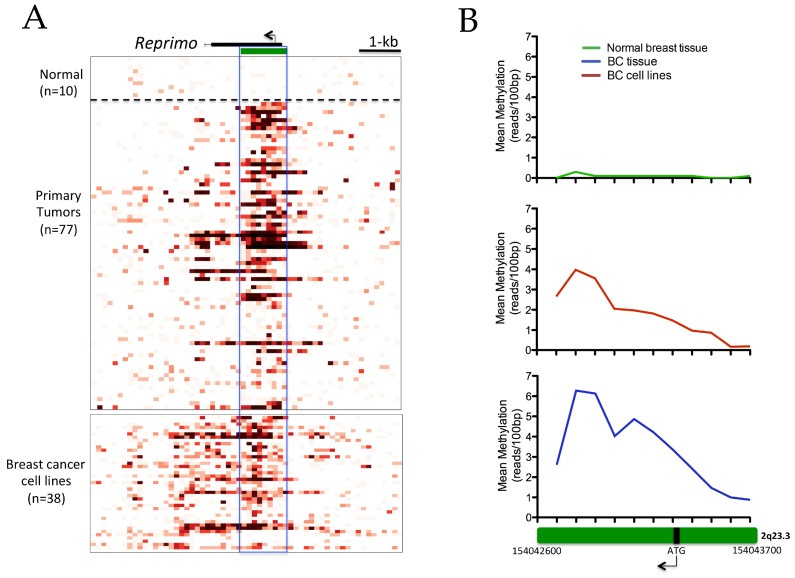
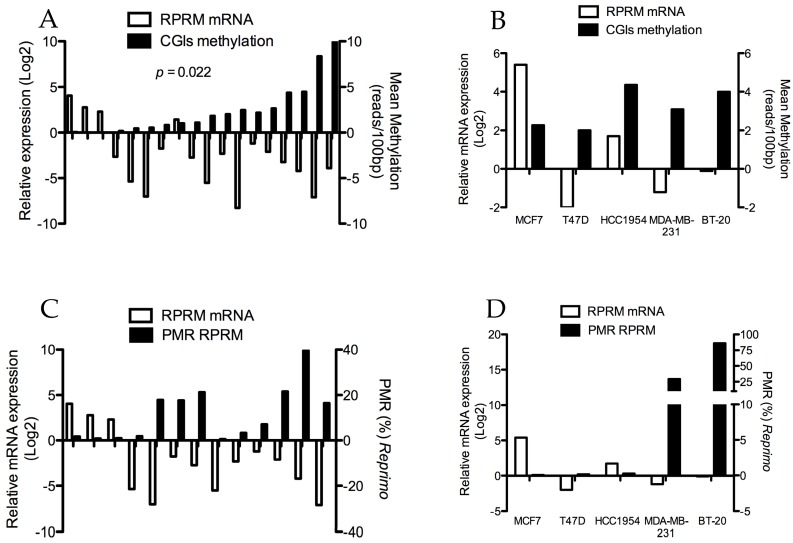
Aberrant DNA methylation is a hallmark of many cancers. Currently, there are four intrinsic molecular subtypes in breast cancer (BC): Luminal A, B, Her2-positive, and triple negative (TNBC). Recently, The Cancer Genome Atlas (TCGA) project has revealed that Luminal subtypes have higher levels of genome-wide methylation that may be a result of Estrogen/Estrogen receptor α (E2/ERα) signaling pathway activation. In this study, we analyze promoter CpG-island (CGIs) of the gene in breast cancers ( = 77), cell lines ( = 38), and normal breast tissue ( = 10) using a MBDCap-seq database. Then, a validation cohort ( = 26) was used to confirm the results found in the MBDCap-seq platform. A differential methylation pattern was found between BC and cell lines compared to normal breast tissue. In BC, a higher DNA methylation was observed in tissues that were ERα-positive than in ERα-negative ones; more precisely, subtypes Luminal A compared to TNBC. Also, significant reverse correlation was observed between DNA methylation and mRNA expression in BC. Our data suggest that ERα expression in BC may affect the DNA methylation of CGIs in the gene. This approach suggests that DNA methylation status in CGIs of some tumor suppressor genes could be driven by E2 availability, subsequently inducing the activation of the ERα pathway.
异常的DNA甲基化是许多癌症的一个标志。目前,乳腺癌(BC)存在四种内在分子亚型:管腔A型、B型、人表皮生长因子受体2阳性型和三阴性型(TNBC)。最近,癌症基因组图谱(TCGA)项目显示,管腔亚型的全基因组甲基化水平较高,这可能是雌激素/雌激素受体α(E2/ERα)信号通路激活的结果。在本研究中,我们使用MBDCap-seq数据库分析了乳腺癌(n = 77)、细胞系(n = 38)和正常乳腺组织(n = 10)中该基因的启动子CpG岛(CGIs)。然后,使用一个验证队列(n = 26)来确认在MBDCap-seq平台上发现的结果。与正常乳腺组织相比,在乳腺癌和细胞系之间发现了一种差异甲基化模式。在乳腺癌中,与ERα阴性组织相比,ERα阳性组织中观察到更高的DNA甲基化;更确切地说,是管腔A型亚型与TNBC相比。此外,在乳腺癌中还观察到DNA甲基化与该基因的mRNA表达之间存在显著的负相关。我们的数据表明,乳腺癌中ERα的表达可能会影响该基因CGIs的DNA甲基化。这种方法表明,一些肿瘤抑制基因CGIs中的DNA甲基化状态可能受E2可用性驱动,随后诱导ERα通路的激活。