Marie Bashir Institute for Infectious Diseases and Biosecurity, Westmead Institute for Medical Research, University of Sydney, Westmead, New South Wales, Australia.
Faculty of Veterinary and Agricultural Sciences, University of Melbourne, Melbourne, Victoria, Australia.
Sci Rep. 2017 Aug 15;7(1):8226. doi: 10.1038/s41598-017-08065-z.
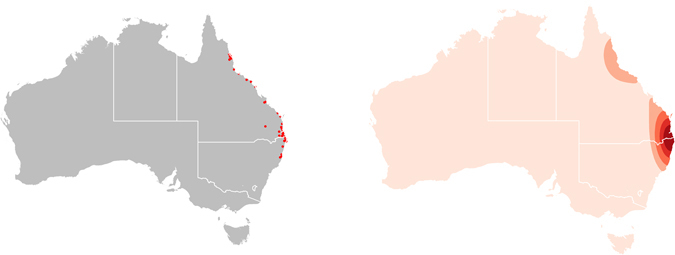
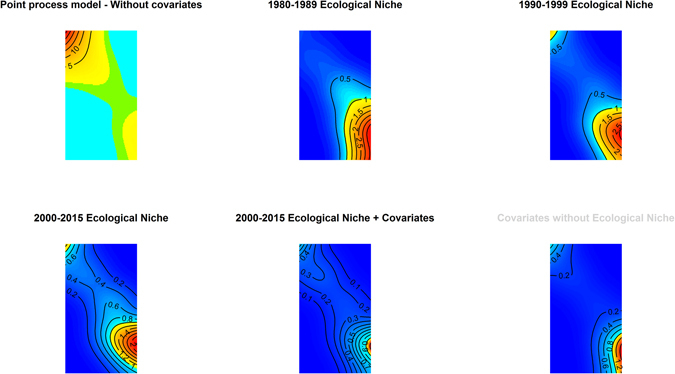
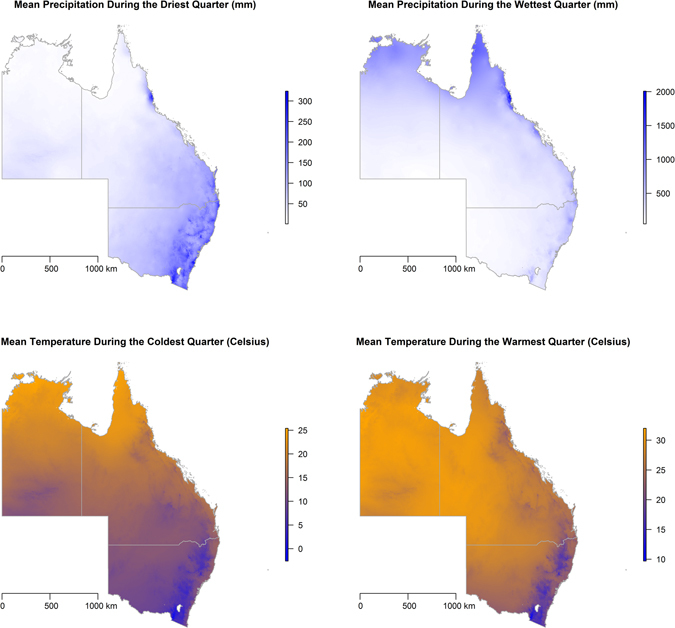
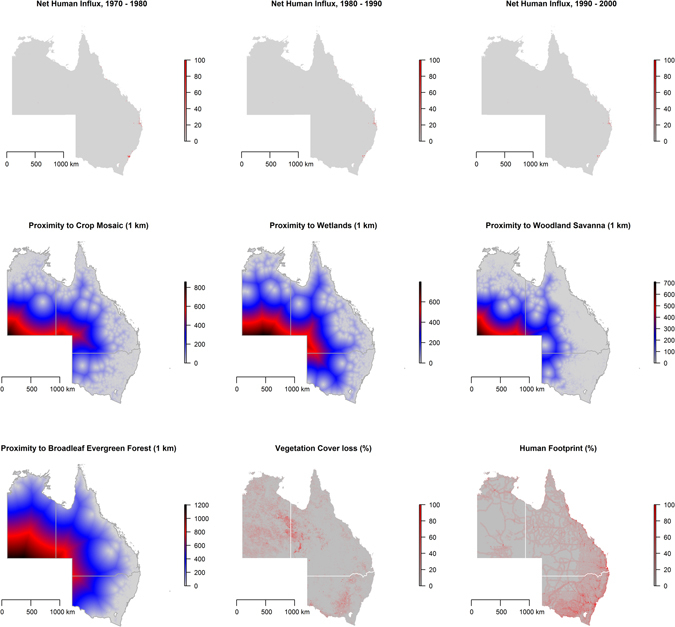
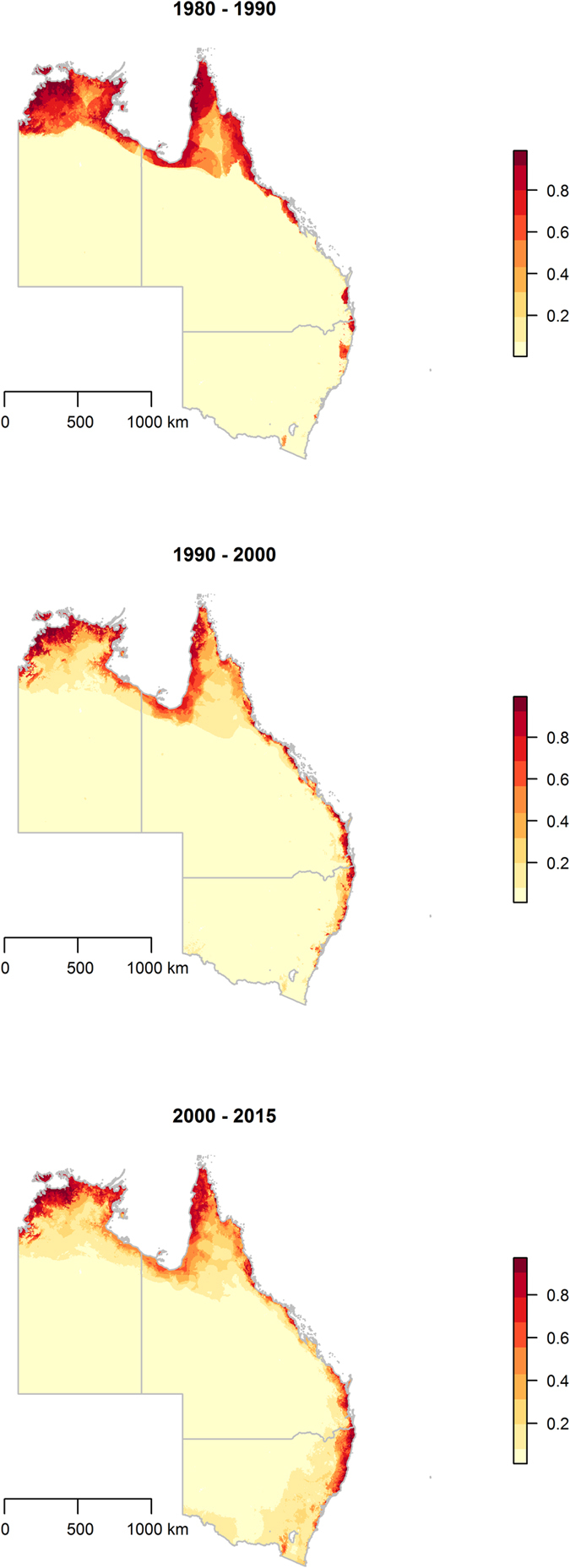
Hendra virus (HeV) is an emerging pathogen of concern in Australia given its ability to spillover from its reservoir host, pteropid bats, to horses and further on to humans, and the severe clinical presentation typical in these latter incidental hosts. Specific human pressures over recent decades, such as expanding human populations, urbanization, and forest fragmentation, may have altered the ecological niche of Pteropus species acting as natural HeV reservoirs and may modulate spillover risk. This study explored the influence of inter-decadal net human local migration between 1970 and 2000 on changes in the habitat suitability to P. alecto and P. conspicillatus from 1980 to 2015 in eastern Australia. These ecological niches were modeled using boosted regression trees and subsequently fitted, along with additional landscape factors, to HeV spillovers to explore the spatial dependency of this zoonosis. The spatial model showed that the ecological niche of these two flying fox species, the human footprint, and proximity to woody savanna were each strongly associated with HeV spillover and together explained most of the spatial dependency exhibited by this zoonosis. These findings reinforce the potential for anthropogenic pressures to shape the landscape epidemiology of HeV spillover.
亨德拉病毒(HeV)是一种在澳大利亚引起关注的新兴病原体,因为它能够从其天然宿主果蝠溢出到马身上,然后进一步传染给人类,而且在这些偶然宿主中通常会出现严重的临床症状。近几十年来,特定的人类压力,如人口扩张、城市化和森林破碎化,可能已经改变了作为天然 HeV 宿主的果蝠的生态位,从而可能改变溢出风险。本研究探讨了 1970 年至 2000 年期间人类局域迁移净变化对澳大利亚东部 1980 年至 2015 年期间 P. alecto 和 P. conspicillatus 栖息地适宜度的影响。这些生态位是使用增强回归树模型进行建模的,然后与其他景观因素一起拟合,以研究 HeV 溢出事件,从而探讨这种人畜共患病的空间依赖性。空间模型表明,这两种果蝠物种的生态位、人类足迹和与木质稀树草原的接近程度都与 HeV 溢出事件密切相关,这三个因素共同解释了这种人畜共患病表现出的大部分空间依赖性。这些发现强化了人为压力塑造 HeV 溢出景观流行病学的潜力。