Vihervaara Anniina, Mahat Dig Bijay, Guertin Michael J, Chu Tinyi, Danko Charles G, Lis John T, Sistonen Lea
Faculty of Science and Engineering, Cell Biology, Åbo Akademi University, Turku, 20520, Finland.
Department of Molecular Biology and Genetics, Cornell University, Ithaca, New York, 14853, USA.
Nat Commun. 2017 Aug 15;8(1):255. doi: 10.1038/s41467-017-00151-0.
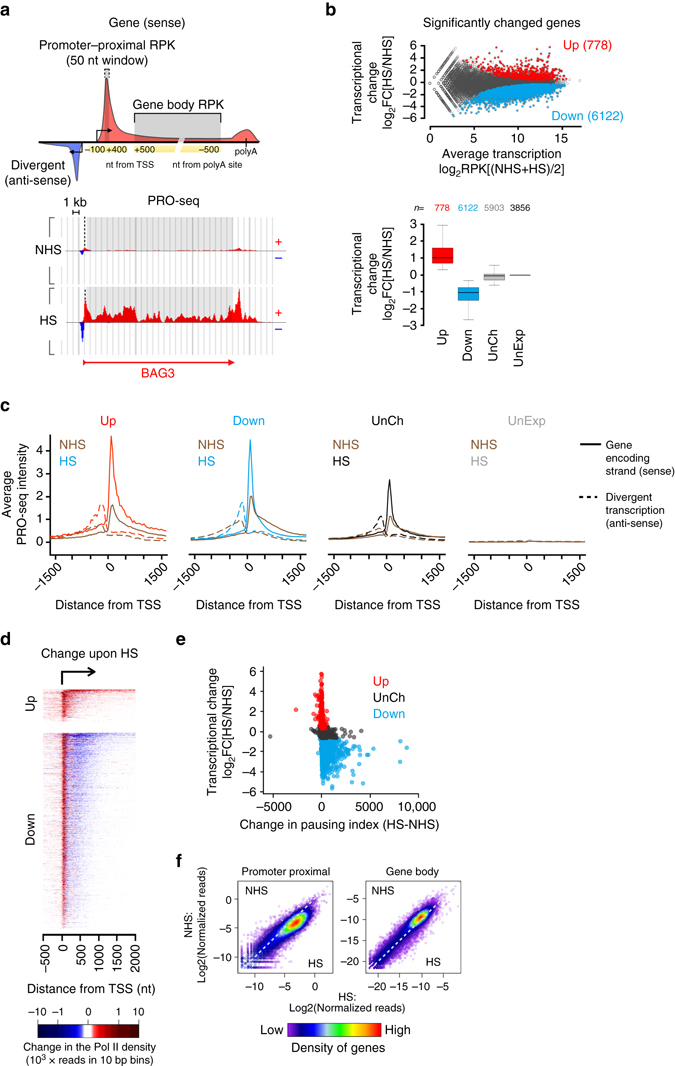
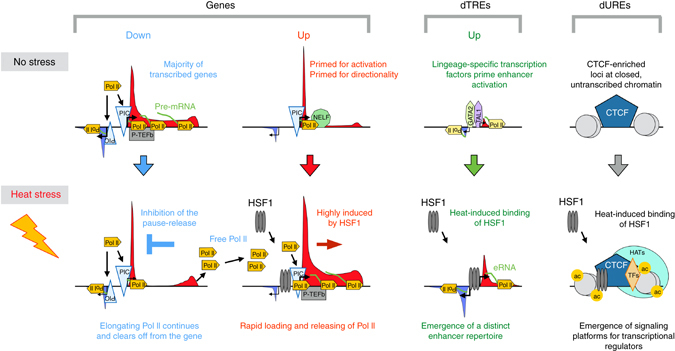
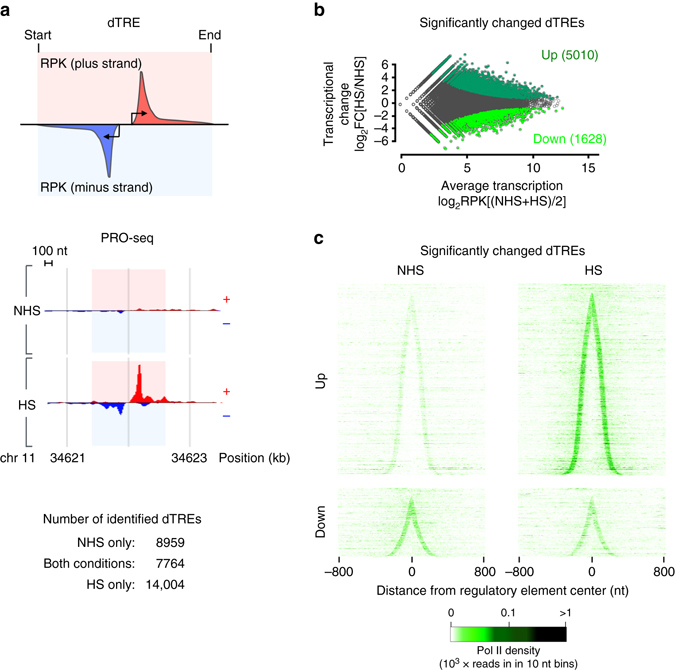
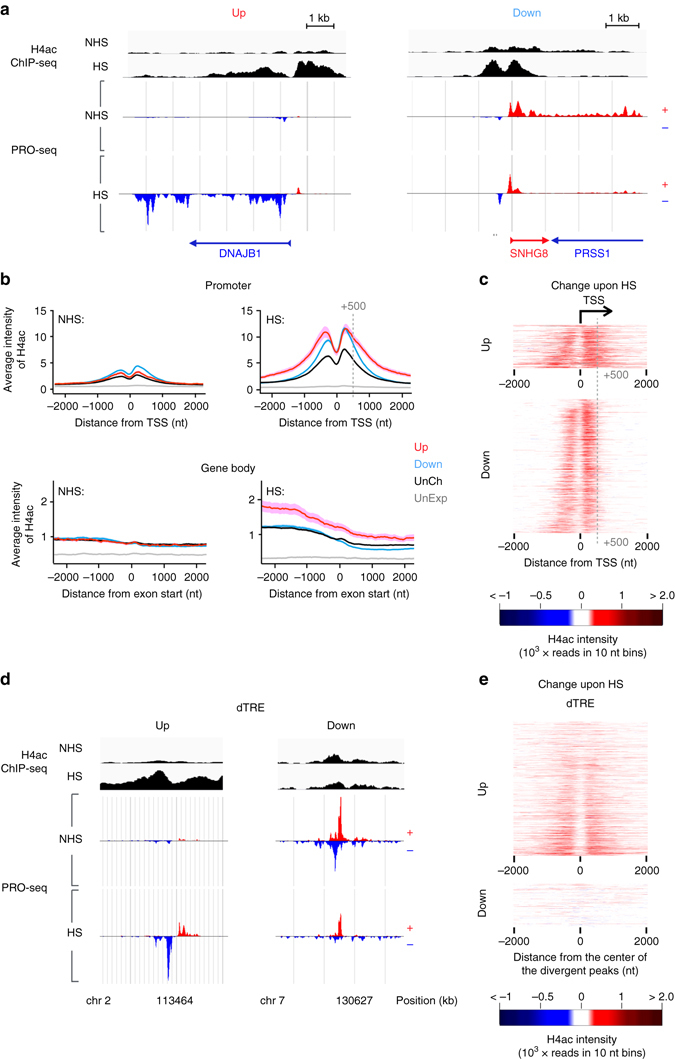
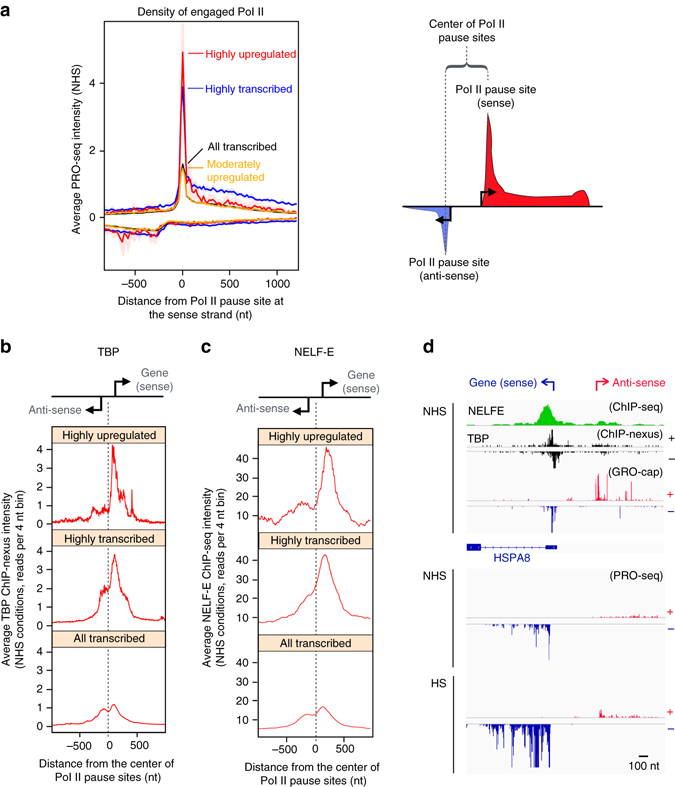
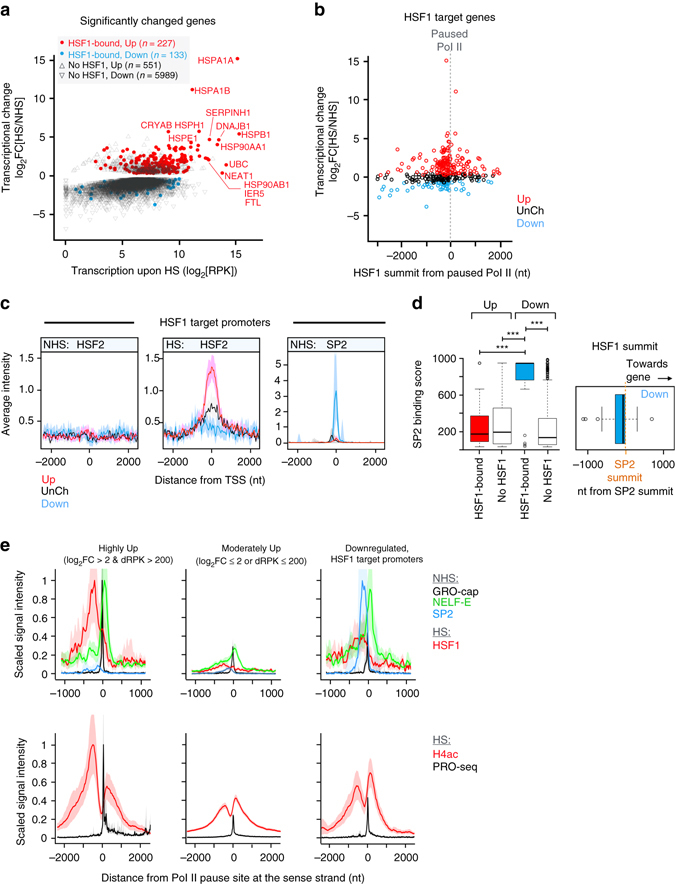
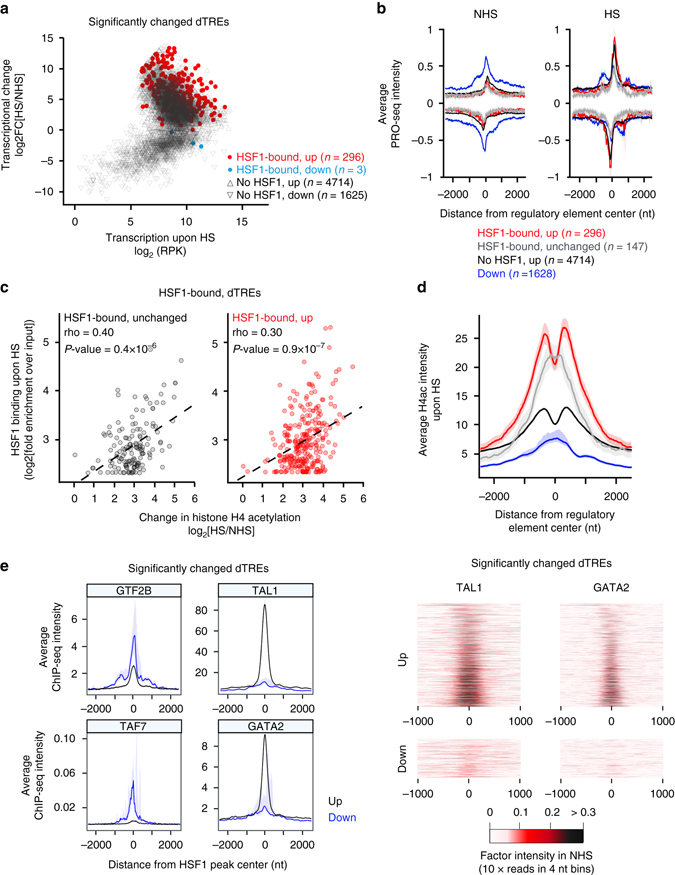
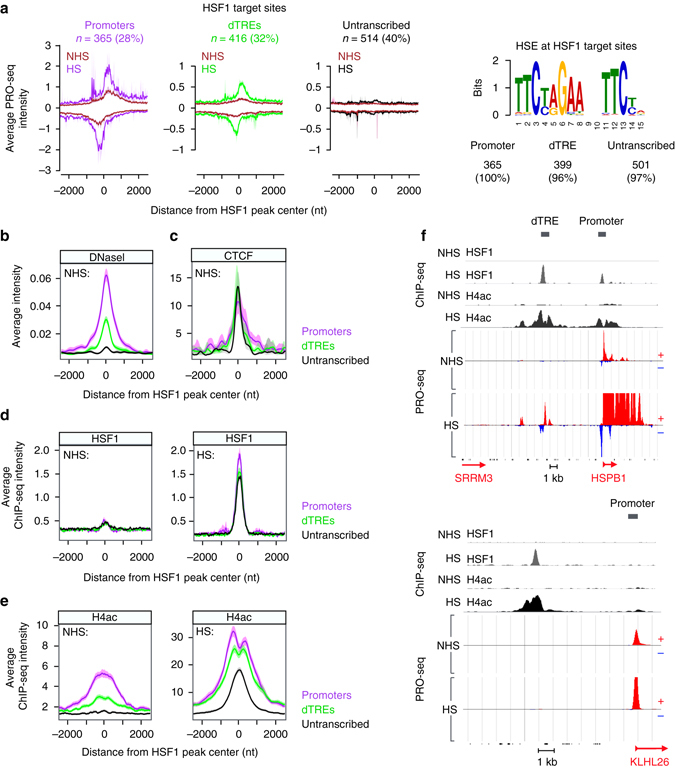
Programs of gene expression are executed by a battery of transcription factors that coordinate divergent transcription from a pair of tightly linked core initiation regions of promoters and enhancers. Here, to investigate how divergent transcription is reprogrammed upon stress, we measured nascent RNA synthesis at nucleotide-resolution, and profiled histone H4 acetylation in human cells. Our results globally show that the release of promoter-proximal paused RNA polymerase into elongation functions as a critical switch at which a gene's response to stress is determined. Highly transcribed and highly inducible genes display strong transcriptional directionality and selective assembly of general transcription factors on the core sense promoter. Heat-induced transcription at enhancers, instead, correlates with prior binding of cell-type, sequence-specific transcription factors. Activated Heat Shock Factor 1 (HSF1) binds to transcription-primed promoters and enhancers, and CTCF-occupied, non-transcribed chromatin. These results reveal chromatin architectural features that orient transcription at divergent regulatory elements and prime transcriptional responses genome-wide.Heat Shock Factor 1 (HSF1) is a regulator of stress-induced transcription. Here, the authors investigate changes to transcription and chromatin organization upon stress and find that activated HSF1 binds to transcription-primed promoters and enhancers, and to CTCF occupied, untranscribed chromatin.
基因表达程序由一系列转录因子执行,这些转录因子协调来自启动子和增强子的一对紧密相连的核心起始区域的不同转录。在这里,为了研究应激时不同转录是如何重新编程的,我们在核苷酸分辨率下测量了新生RNA合成,并分析了人类细胞中组蛋白H4的乙酰化情况。我们的结果总体表明,启动子近端暂停的RNA聚合酶释放到延伸过程中,作为一个关键开关,决定了基因对应激的反应。高转录和高诱导性基因在核心正义启动子上显示出强烈的转录方向性和一般转录因子的选择性组装。相反,增强子处的热诱导转录与细胞类型、序列特异性转录因子的先前结合相关。活化的热休克因子1(HSF1)与转录起始的启动子和增强子以及CTCF占据的非转录染色质结合。这些结果揭示了染色质结构特征,这些特征在不同的调控元件上定向转录,并在全基因组范围内引发转录反应。热休克因子1(HSF1)是应激诱导转录的调节因子。在这里,作者研究了应激时转录和染色质组织的变化,发现活化的HSF1与转录起始的启动子和增强子以及CTCF占据的未转录染色质结合。