Kienast Roland, Handler Michael, Stöger Markus, Baumgarten Daniel, Hanser Friedrich, Baumgartner Christian
Institute of Electrical and Biomedical Engineering, UMIT-University for Health Sciences, Medical Informatics and Technology, Hall, Tyrol, Austria.
Institute of Biomedical Engineering and Informatics, Technische Universität Ilmenau, Ilmenau, Germany.
PLoS One. 2017 Aug 16;12(8):e0182979. doi: 10.1371/journal.pone.0182979. eCollection 2017.
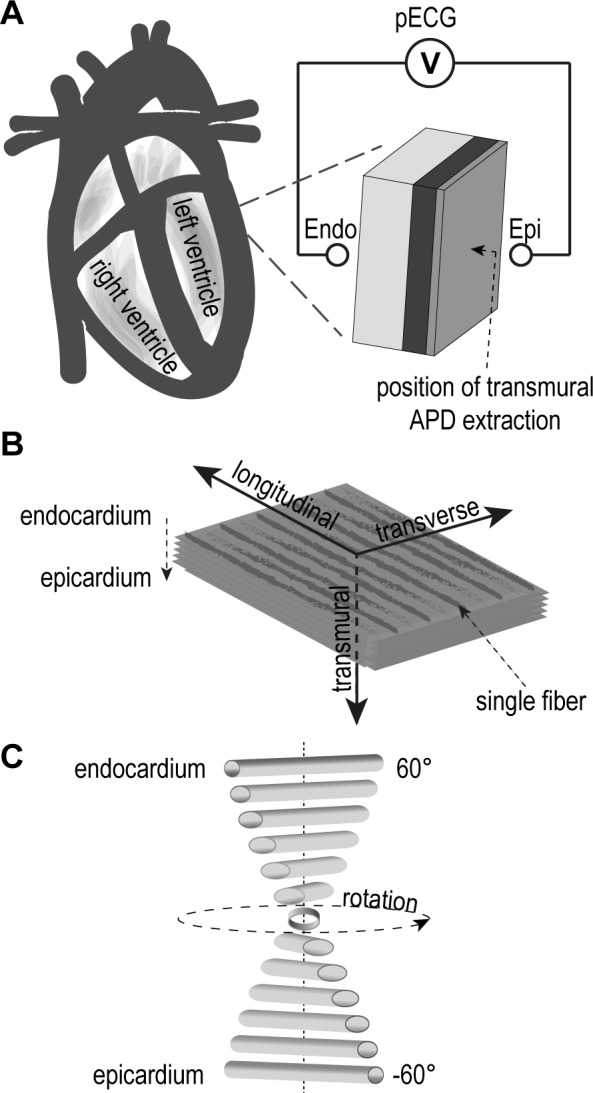
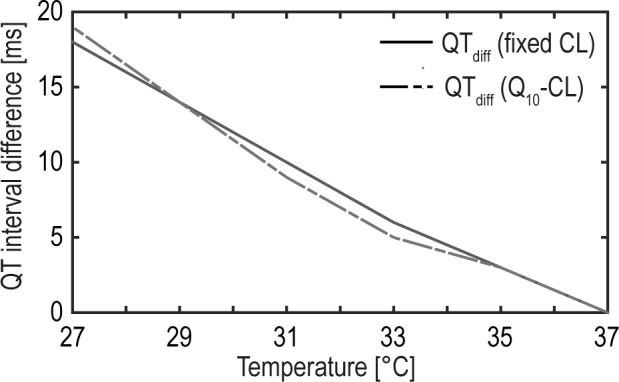
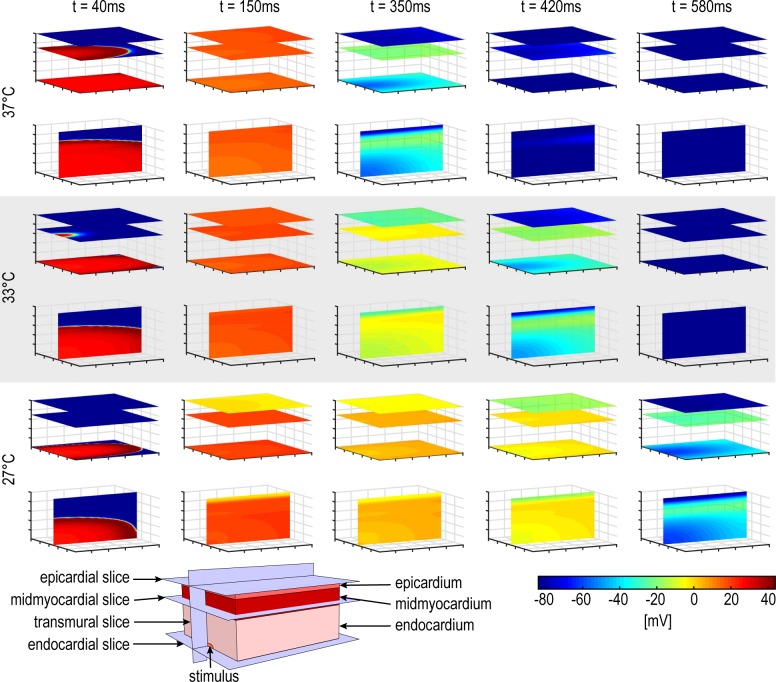
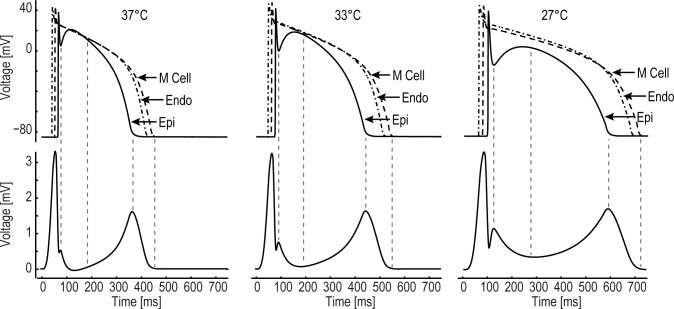
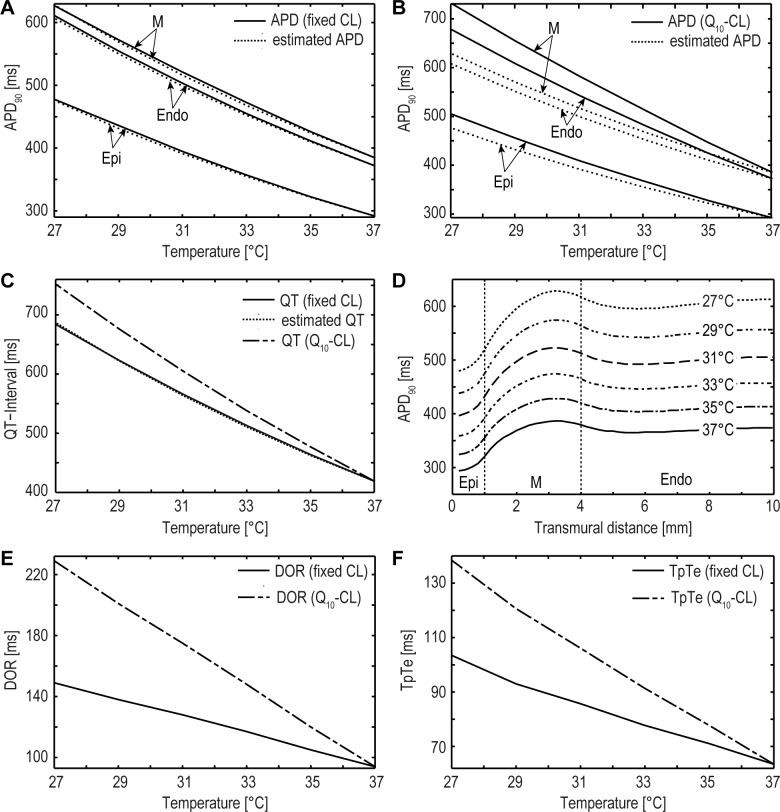
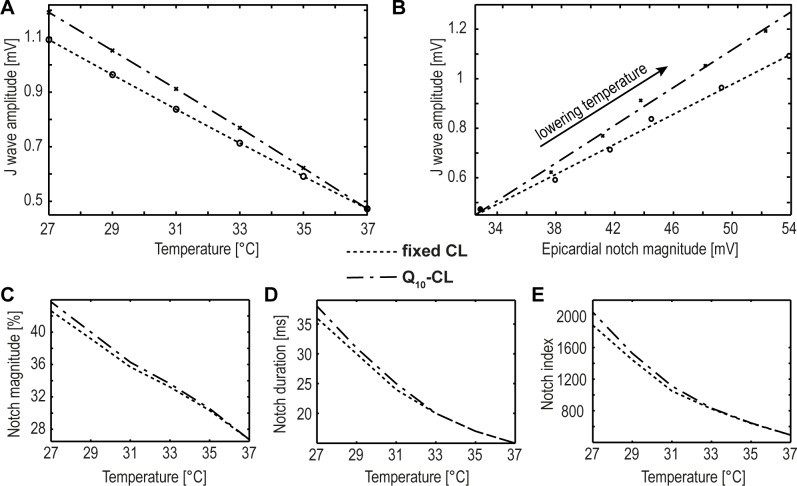
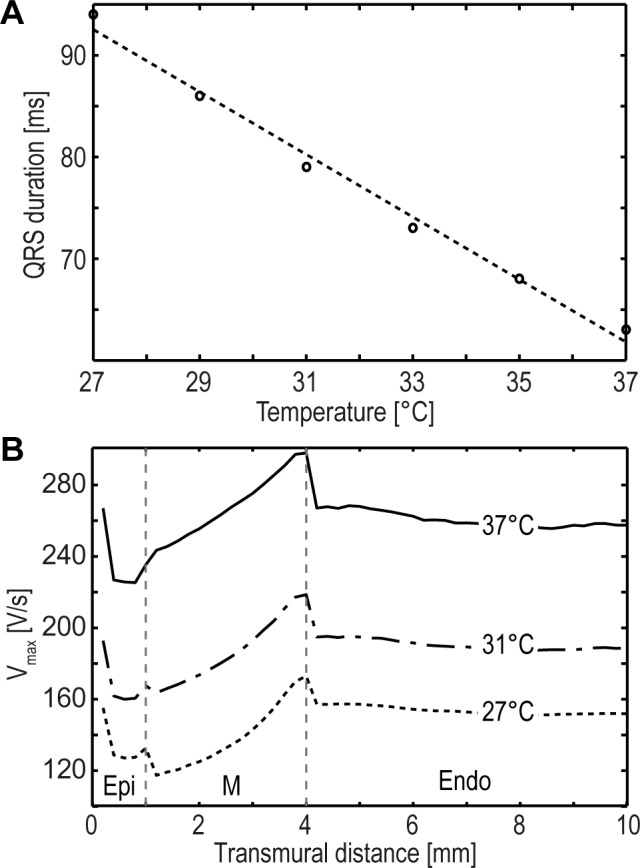
Hypothermia has a profound impact on the electrophysiological mechanisms of the heart. Experimental investigations provide a better understanding of electrophysiological alterations associated with cooling. However, there is a lack of computer models suitable for simulating the effects of hypothermia in cardio-electrophysiology. In this work, we propose a model that describes the cooling-induced electrophysiological alterations in ventricular tissue in a temperature range from 27°C to 37°C. To model the electrophysiological conditions in a 3D left ventricular tissue block it was essential to consider the following anatomical and physiological parameters in the model: the different cell types (endocardial, M, epicardial), the heterogeneous conductivities in longitudinal, transversal and transmural direction depending on the prevailing temperature, the distinct fiber orientations and the transmural repolarization sequences. Cooling-induced alterations on the morphology of the action potential (AP) of single myocardial cells thereby are described by an extension of the selected Bueno-Orovio model for human ventricular tissue using Q10 temperature coefficients. To evaluate alterations on tissue level, the corresponding pseudo electrocardiogram (pECG) was calculated. Simulations show that cooling-induced AP and pECG-related parameters, i.e. AP duration, morphology of the notch of epicardial AP, maximum AP upstroke velocity, AP rise time, QT interval, QRS duration and J wave formation are in good accordance with literature and our experimental data. The proposed model enables us to further enhance our knowledge of cooling-induced electrophysiological alterations from cellular to tissue level in the heart and may help to better understand electrophysiological mechanisms, e.g. in arrhythmias, during hypothermia.
体温过低对心脏的电生理机制有深远影响。实验研究有助于更好地理解与降温相关的电生理改变。然而,目前缺乏适用于模拟体温过低在心脏电生理学中作用的计算机模型。在这项工作中,我们提出了一个模型,该模型描述了在27°C至37°C温度范围内心室组织中降温诱导的电生理改变。为了模拟三维左心室组织块中的电生理状况,在模型中考虑以下解剖和生理参数至关重要:不同的细胞类型(心内膜、M细胞、心外膜)、取决于当前温度的纵向、横向和透壁方向的异质性电导率、不同的纤维取向以及透壁复极顺序。因此,使用Q10温度系数扩展选定的人类心室组织Bueno - Orovio模型来描述降温对单个心肌细胞动作电位(AP)形态的影响。为了评估组织水平的改变,计算了相应的伪心电图(pECG)。模拟结果表明,降温诱导的AP和与pECG相关的参数,即AP持续时间、心外膜AP切迹形态、最大AP上升速度、AP上升时间、QT间期、QRS持续时间和J波形成,与文献和我们的实验数据高度一致。所提出的模型使我们能够进一步增进对心脏中从细胞到组织水平的降温诱导电生理改变的认识,并可能有助于更好地理解体温过低期间的电生理机制,例如心律失常中的机制。