Molins Claudia R, Ashton Laura V, Wormser Gary P, Andre Barbara G, Hess Ann M, Delorey Mark J, Pilgard Mark A, Johnson Barbara J, Webb Kristofor, Islam M Nurul, Pegalajar-Jurado Adoracion, Molla Irida, Jewett Mollie W, Belisle John T
Division of Vector-Borne Diseases, Centers for Disease Control and Prevention, Fort Collins, CO 80521, USA.
Department of Microbiology, Immunology and Pathology, Colorado State University, Fort Collins, CO 80523, USA.
Sci Transl Med. 2017 Aug 16;9(403). doi: 10.1126/scitranslmed.aal2717.
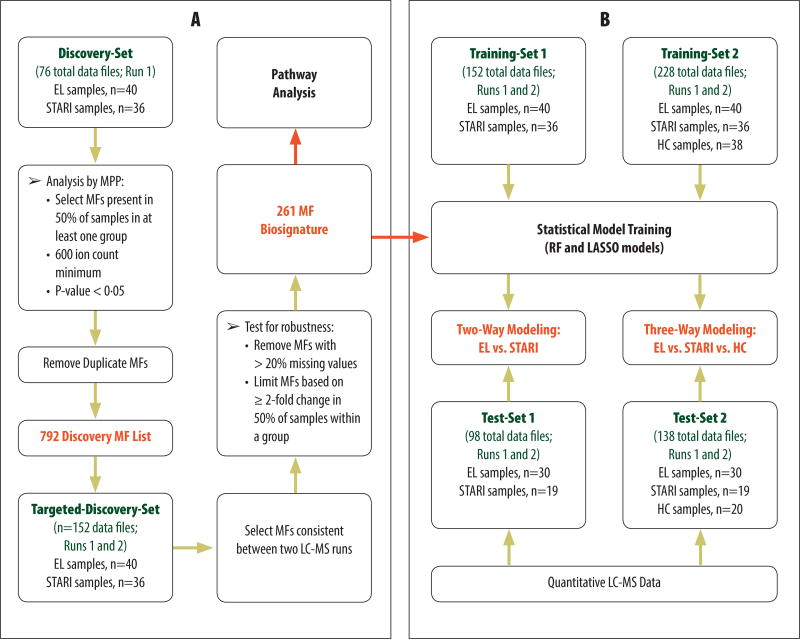
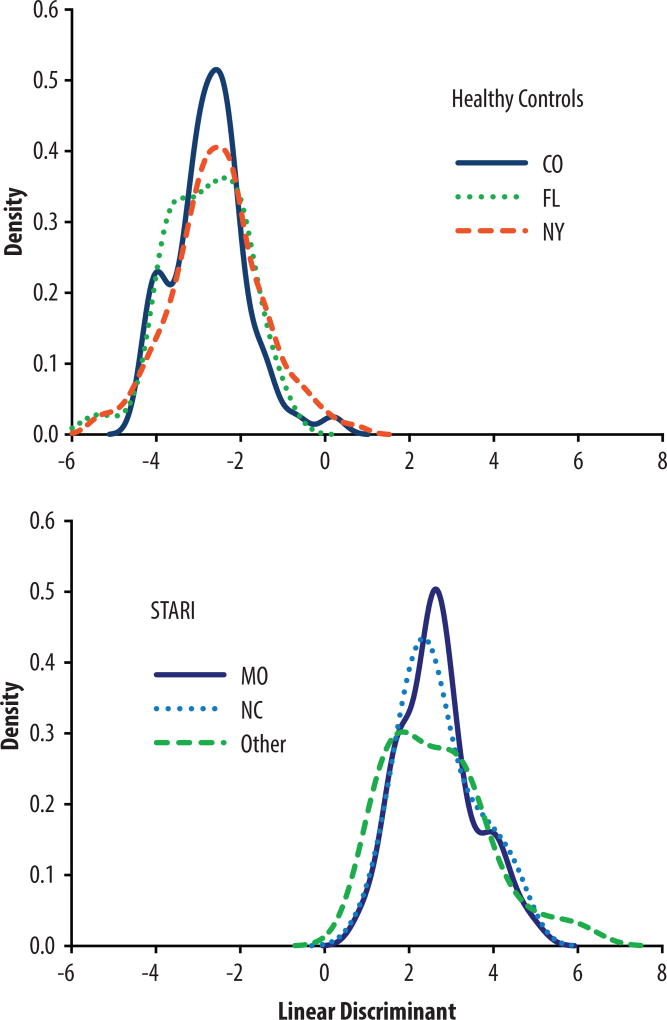
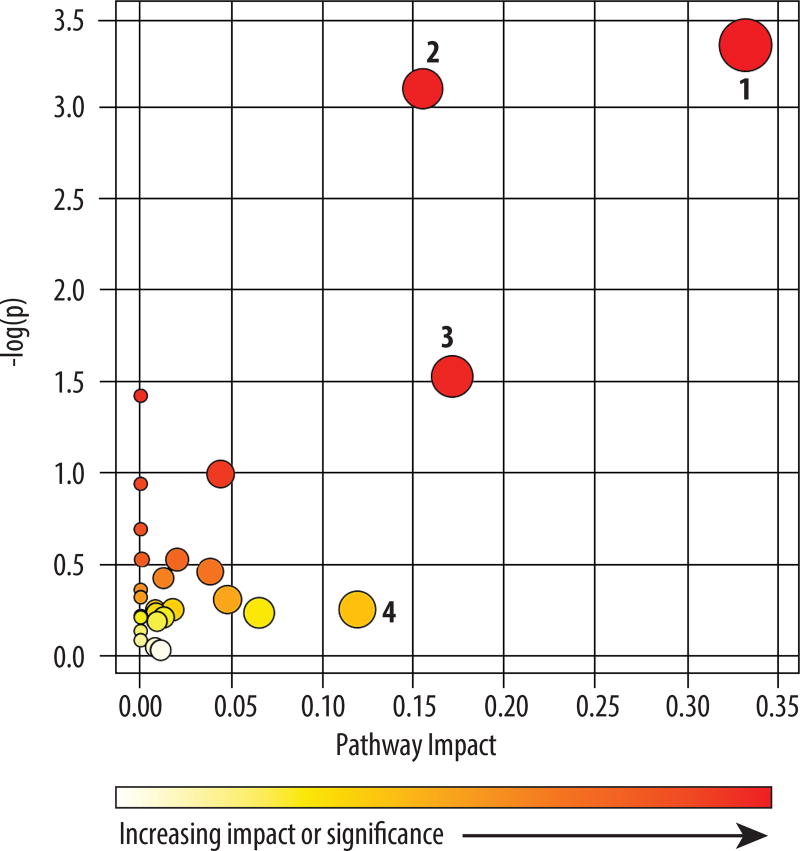
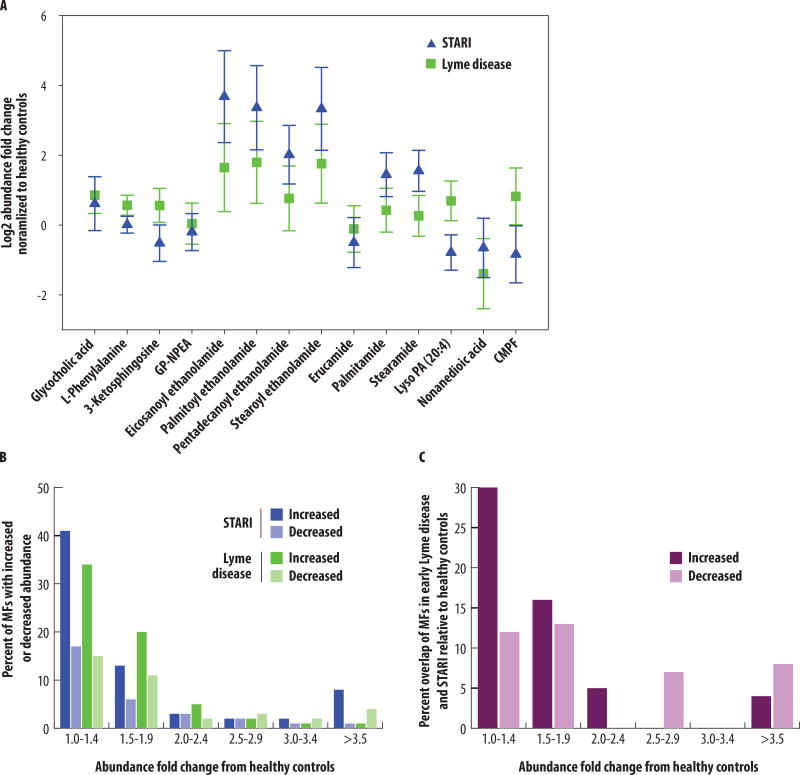
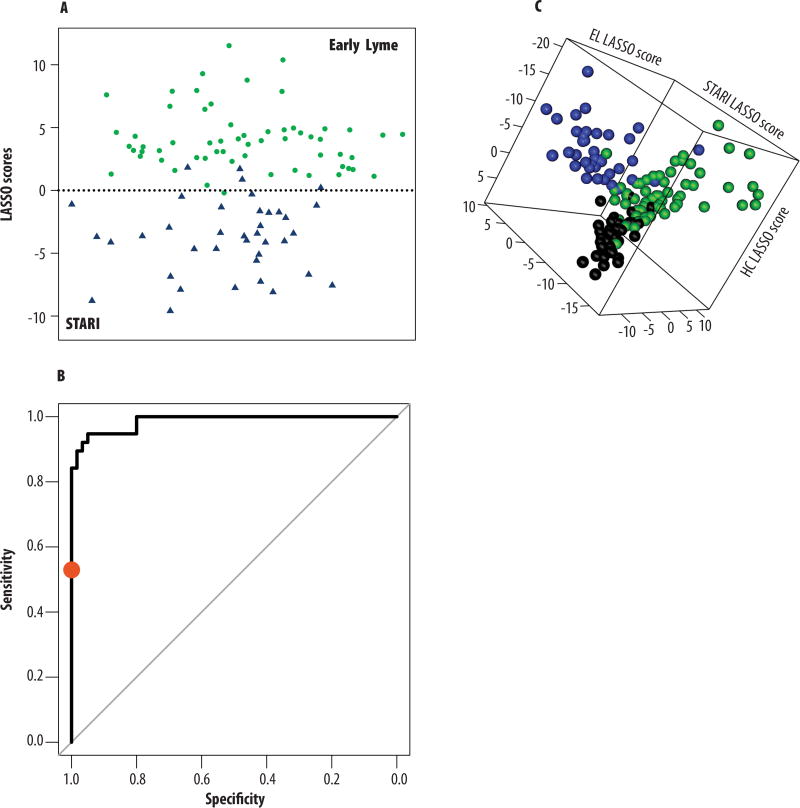
Lyme disease, the most commonly reported vector-borne disease in the United States, results from infection with Early clinical diagnosis of this disease is largely based on the presence of an erythematous skin lesion for individuals in high-risk regions. This, however, can be confused with other illnesses including southern tick-associated rash illness (STARI), an illness that lacks a defined etiological agent or laboratory diagnostic test, and is coprevalent with Lyme disease in portions of the eastern United States. By applying an unbiased metabolomics approach with sera retrospectively obtained from well-characterized patients, we defined biochemical and diagnostic differences between early Lyme disease and STARI. Specifically, a metabolic biosignature consisting of 261 molecular features (MFs) revealed that altered -acyl ethanolamine and primary fatty acid amide metabolism discriminated early Lyme disease from STARI. Development of classification models with the 261-MF biosignature and testing against validation samples differentiated early Lyme disease from STARI with an accuracy of 85 to 98%. These findings revealed metabolic dissimilarity between early Lyme disease and STARI, and provide a powerful and new approach to inform patient management by objectively distinguishing early Lyme disease from an illness with nearly identical symptoms.
莱姆病是美国报告最多的媒介传播疾病,由 感染引起。这种疾病的早期临床诊断很大程度上基于高危地区个体出现的皮肤红斑病变。然而,这可能会与其他疾病混淆,包括南方蜱相关皮疹病(STARI),一种缺乏明确病原体或实验室诊断测试的疾病,在美国东部部分地区与莱姆病共同流行。通过对从特征明确的患者中回顾性获取的血清应用无偏代谢组学方法,我们确定了早期莱姆病和 STARI 之间的生化和诊断差异。具体而言,由 261 个分子特征(MFs)组成的代谢生物标志物表明,酰基乙醇胺和初级脂肪酸酰胺代谢的改变将早期莱姆病与 STARI 区分开来。利用 261-MF 生物标志物开发分类模型并针对验证样本进行测试,区分早期莱姆病和 STARI 的准确率为 85%至 98%。这些发现揭示了早期莱姆病和 STARI 之间的代谢差异,并提供了一种强大的新方法,通过客观地区分早期莱姆病和症状几乎相同的疾病来指导患者管理。