Allison Logan Stephanie, Brissenden Amanda J, Szewczuk Myron R, Neufeld Ronald J
Department of Chemical Engineering.
Department of Biomedical and Molecular Sciences, Queen's University, Kingston, ON, Canada.
Drug Des Devel Ther. 2017 Jul 31;11:2239-2250. doi: 10.2147/DDDT.S137934. eCollection 2017.
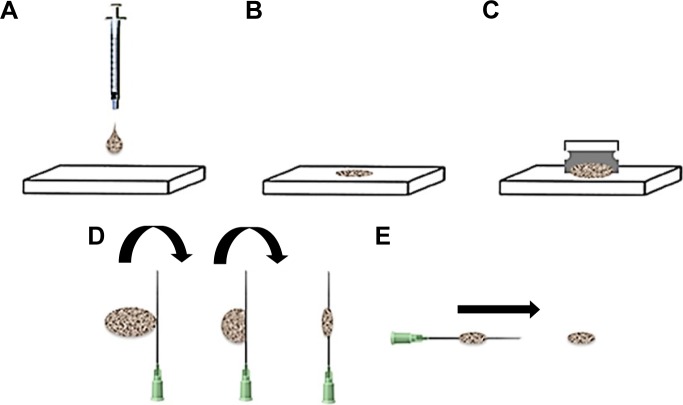
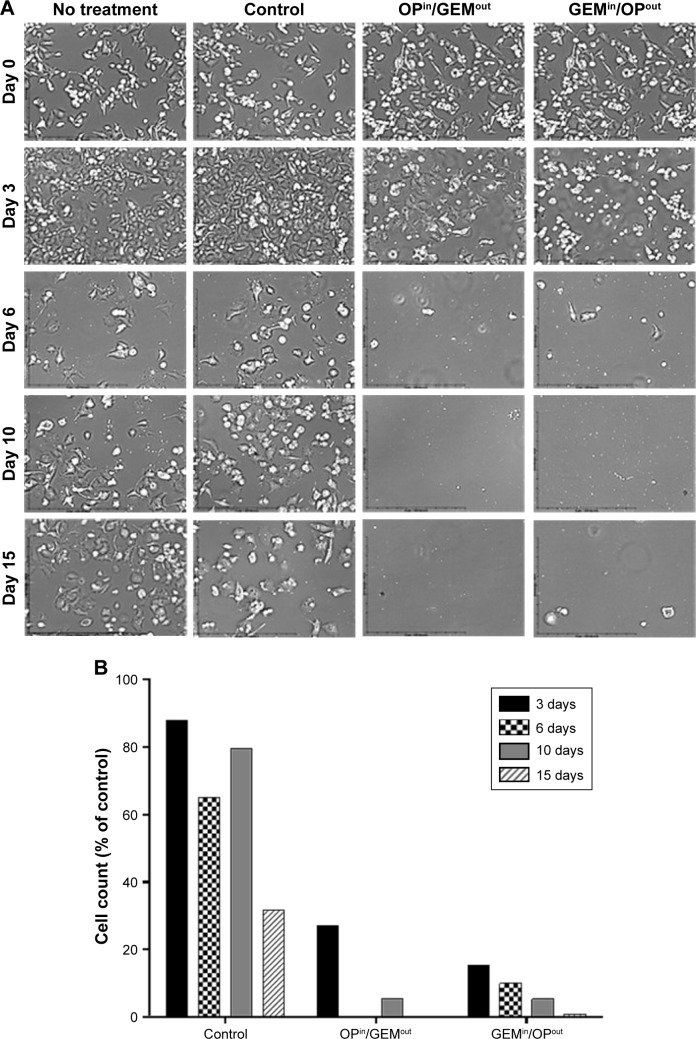
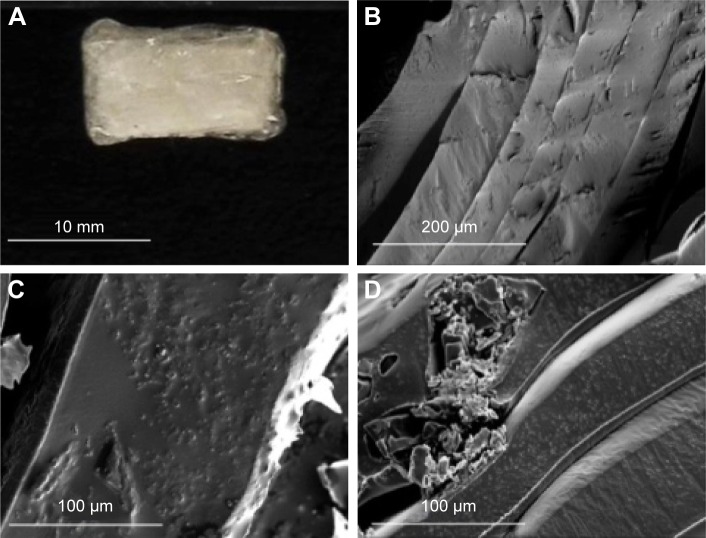
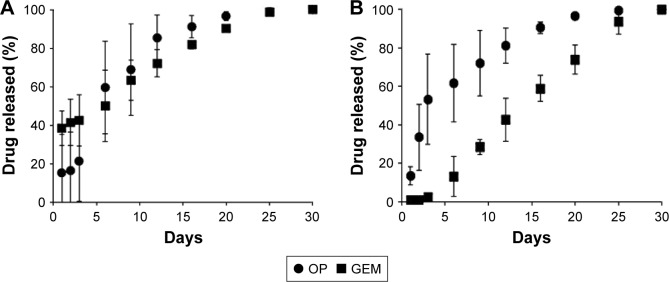
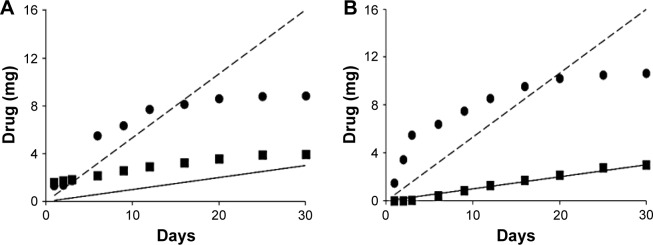
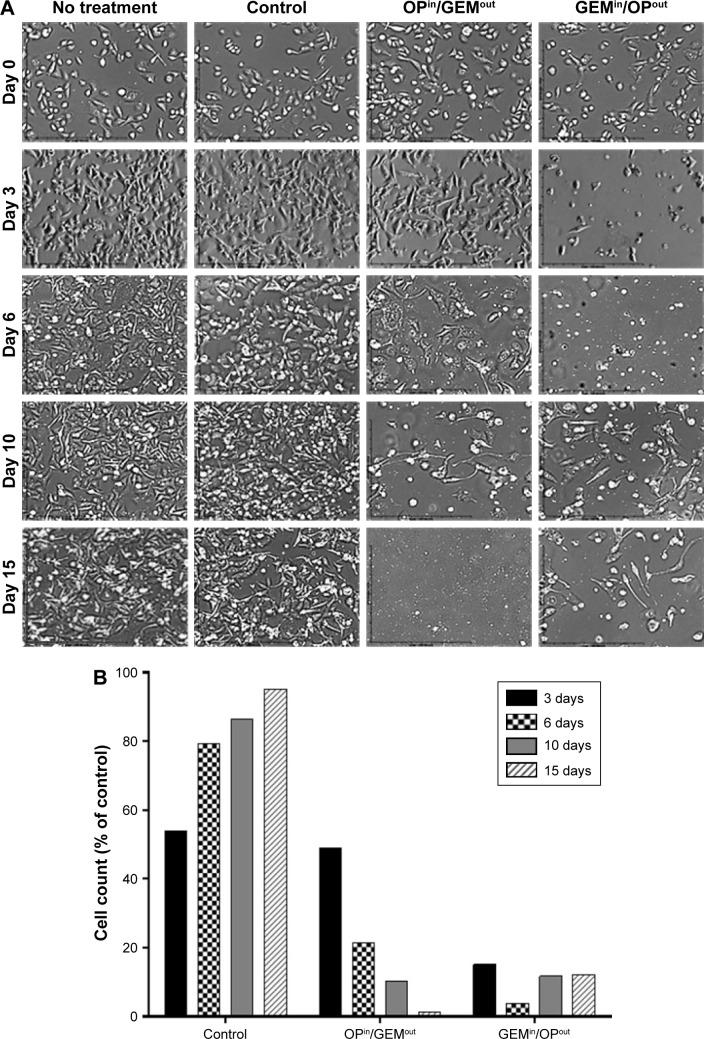
Combination therapies against multiple targets are currently being developed to prevent resistance to a single chemotherapeutic agent and to extirpate pre-existing resistance in heterogeneous cancer cells in tumors due to selective pressure from the single agent. Gemcitabine (GEM), a chemotherapeutic agent, is the current standard of care for patients with pancreatic cancer. Patients with pancreatic cancer receiving GEM have a low progression-free survival. Given the poor response rate to GEM, cancer cells are known to develop rapid resistance to this drug. Metronomic chemotherapy using combinatorial and sequential delivery systems are novel developmental approaches to disrupt tumor neovascularization, reduce systemic drug toxicity, and increase the sensitivity of chemotherapeutics in cancer. Here, implantable double-layered poly(d,l-lactic-co-glycolic acid) (PLGA) cylinders were engineered to sequentially release GEM in combination with oseltamivir phosphate (OP) over an extended time. Double-layered PLGA cylindrical implants loaded with these active hydrophilic drugs were fabricated with minimal loss of drugs during the formulation, enabling extensive control of drug loading and establishing uniform drug distribution throughout the polymer matrix. OP is used in the formulation because of its anticancer drug properties targeting mammalian neuraminidase 1 (Neu1) involved in multistage tumorigenesis. OP and GEM encapsulated in inner/outer GEM/OP or OP/GEM implantable double-layered PLGA cylinders displayed sustained near linear release over 30 days. OP and GEM released from the double-layered PLGA cylinders effectively reduced cell viability in pancreatic cancer cell line PANC1 and its GEM-resistant variant for up to 15 days.
目前正在开发针对多个靶点的联合疗法,以防止对单一化疗药物产生耐药性,并消除由于单一药物的选择性压力而在肿瘤异质性癌细胞中预先存在的耐药性。吉西他滨(GEM)是一种化疗药物,是目前胰腺癌患者的标准治疗药物。接受GEM治疗的胰腺癌患者无进展生存期较短。鉴于对GEM的反应率较低,已知癌细胞会对这种药物迅速产生耐药性。采用组合和序贯给药系统的节拍化疗是破坏肿瘤新生血管形成、降低全身药物毒性以及提高癌症化疗药物敏感性的新型开发方法。在此,可植入的双层聚(d,l-乳酸-共-乙醇酸)(PLGA)圆柱体被设计成在较长时间内依次释放GEM与磷酸奥司他韦(OP)。装载这些活性亲水药物的双层PLGA圆柱形植入物在制剂过程中药物损失最小,能够广泛控制药物负载并在整个聚合物基质中建立均匀的药物分布。在制剂中使用OP是因为其具有针对参与多阶段肿瘤发生的哺乳动物神经氨酸酶1(Neu1)的抗癌药物特性。封装在内层/外层GEM/OP或OP/GEM可植入双层PLGA圆柱体内的OP和GEM在30天内显示出持续的近线性释放。从双层PLGA圆柱体释放的OP和GEM在长达15天的时间内有效降低了胰腺癌细胞系PANC1及其GEM耐药变体的细胞活力。