Weber Cynthia E, Li Neill Y, Wai Philip Y, Kuo Paul C
Department of Surgery, Loyola University Medical Center, Maywood, Illinois 60153, USA.
J Burn Care Res. 2012 May-Jun;33(3):311-8. doi: 10.1097/BCR.0b013e318240541e.
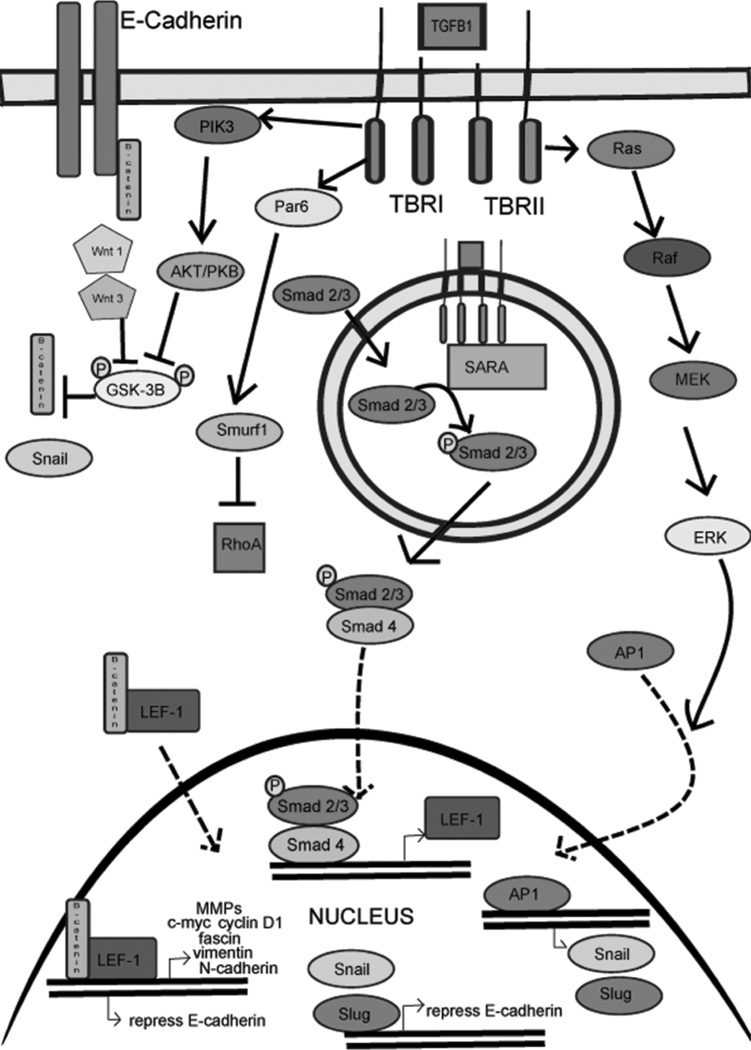
Epithelial-mesenchymal transition (EMT) is a process essential to wound healing and tissue remodeling after a thermal burn or other injury. EMT is characterized by phenotypic changes in epithelial cells that render them apolar, with decreased cell-cell adhesions, increased motility, and changes in cytoskeletal architecture similar to mesenchymal stem cells. With regard to healing a thermal burn wound, many facets of wound healing necessitate cells to undergo these phenotypic changes; two will be described in the following review. The first is the differentiation of epithelial cells into myofibroblasts that rebuild the extracellular matrix and facilitate wound contraction. The second is reepithelialization by keratinocytes. The primary cytokine signal identified in the literature that triggers EMT is transforming growth factor (TGF)-β. In addition to its vital role in the induction of EMT, TGF-β has many other roles in the wound healing process. The following review will provide evidence that EMT is a central event in wound healing. It will also show the importance of a regulated amount of TGF-β for proper wound healing. Finally, osteopontin will be briefly discussed with its relation to wound healing and its connections to EMT and TGF-β.
上皮-间质转化(EMT)是热烧伤或其他损伤后伤口愈合和组织重塑所必需的过程。EMT的特征是上皮细胞的表型变化,使其失去极性,细胞间黏附减少,运动性增加,细胞骨架结构发生变化,类似于间充质干细胞。关于热烧伤伤口的愈合,伤口愈合的许多方面都需要细胞经历这些表型变化;以下综述将描述其中两个方面。第一个是上皮细胞分化为肌成纤维细胞,后者重建细胞外基质并促进伤口收缩。第二个是角质形成细胞的重新上皮化。文献中确定的触发EMT的主要细胞因子信号是转化生长因子(TGF)-β。除了在诱导EMT中起关键作用外,TGF-β在伤口愈合过程中还有许多其他作用。以下综述将提供证据表明EMT是伤口愈合中的核心事件。它还将显示适量的TGF-β对伤口正常愈合的重要性。最后,将简要讨论骨桥蛋白与伤口愈合的关系及其与EMT和TGF-β的联系。