Schuhmann Michael K, Fluri Felix
Department of Neurology, University of Würzburg, 97080 Würzburg, Germany.
Int J Mol Sci. 2017 Aug 17;18(8):1783. doi: 10.3390/ijms18081783.
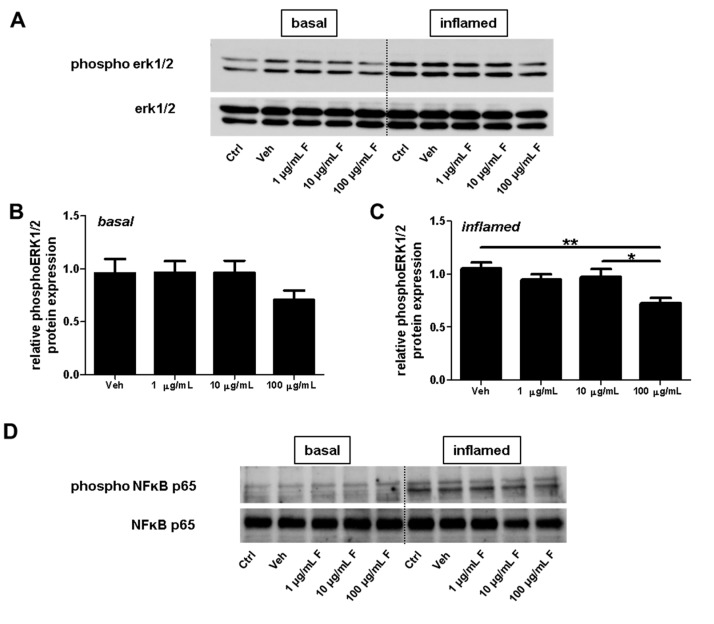
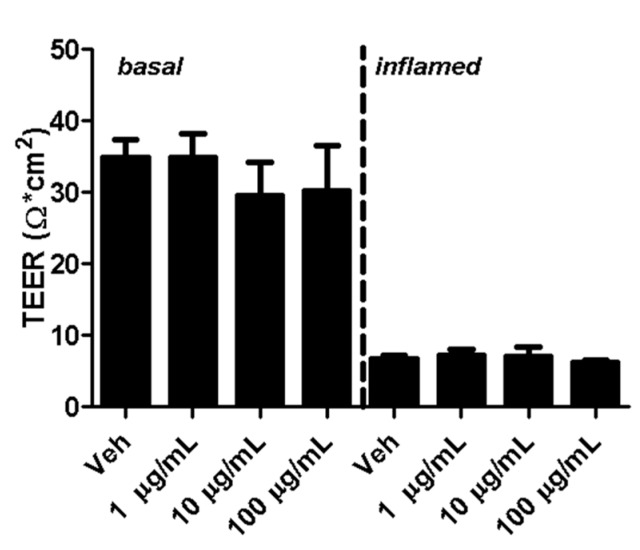
Fullerenols, water-soluble C60-fullerene derivatives, have been shown to exert neuroprotective effects in vitro and in vivo, most likely due to their capability to scavenge free radicals. However, little is known about the effects of fullerenols on the blood-brain barrier (BBB), especially on cerebral endothelial cells under inflammatory conditions. Here, we investigated whether the treatment of primary mouse brain microvascular endothelial cells with fullerenols impacts basal and inflammatory blood-brain barrier (BBB) properties in vitro. While fullerenols (1, 10, and 100 µg/mL) did not change transendothelial electrical resistance under basal and inflammatory conditions, 100 µg/mL of fullerenol significantly reduced erk1/2 activation and resulted in an activation of NFκB in an inflammatory milieu. Our findings suggest that fullerenols might counteract oxidative stress via the erk1/2 and NFκB pathways, and thus are able to protect microvascular endothelial cells under inflammatory conditions.
富勒醇是水溶性的C60-富勒烯衍生物,已被证明在体外和体内均具有神经保护作用,这很可能归因于它们清除自由基的能力。然而,关于富勒醇对血脑屏障(BBB)的影响,尤其是在炎症条件下对脑内皮细胞的影响,人们知之甚少。在此,我们研究了用富勒醇处理原代小鼠脑微血管内皮细胞是否会影响体外基础状态和炎症状态下的血脑屏障(BBB)特性。虽然富勒醇(1、10和100μg/mL)在基础状态和炎症状态下均未改变跨内皮电阻,但100μg/mL的富勒醇在炎症环境中显著降低了erk1/2的激活,并导致NFκB的激活。我们的研究结果表明,富勒醇可能通过erk1/2和NFκB途径对抗氧化应激,从而能够在炎症条件下保护微血管内皮细胞。